
Catalogue Search | MBRL


Are you sure you want to remove the book from the shelf?

{{itemTitle}}
4,269
result(s) for
"Revisionism"
Sort by:
Historians Resisting Tyranny: A Preliminary Evaluation
Since time immemorial, dictators have censored the writing of history and persecuted its practitioners. This policy of history censorship has had many effects, some of which were unintended, such as the development of strategies to counter the distortion of history. This essay therefore opens with a summary overview of the intended and unintended effects of the censorship of the science of history. Against this backdrop, the essay then focuses on one unintended effect of this censorship: resistance to the distortion of history. A tableau is given of the repertoires of available types of resistance under dictatorships and, for comparative purposes, in democracies. The essay uses these repertoires to analyze the resistance of the historians under dictatorships from four perspectives: actors (historians and others); conduct (acts and omissions), motives (ethical, moral, professional, and political), and impact (short-term and long-term). The essay is intended as a tribute, both to historians who once resisted tyrannical power and to historians who retell their stories as an inspiration for present and future battles.
Journal Article
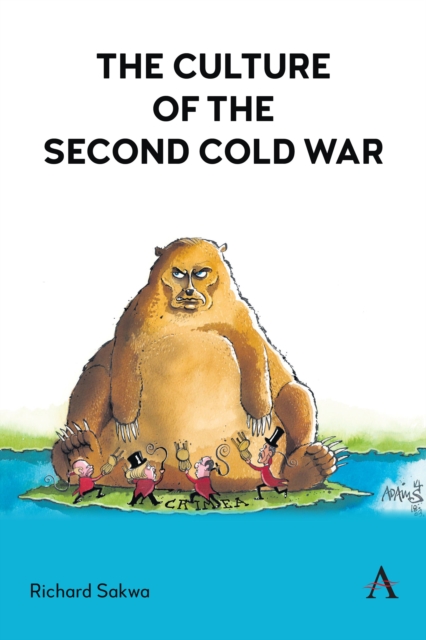
The Culture of the Second Cold War
The work examines the metapolitics of the Second Cold War. The focus is less on the detailed analysis of diplomatic history and processes in international politics, and more on the underlying attitudes and ideologies that have generated and sustained Cold War 2. The work examines the definition of a Cold War and reasons for the persistence of this form of international politics, as well as the clash over interpretations of the causes of renewed conflict. The work then looks at how this Cold War is being conducted, including renewed militarism, the suppression of dissent, the decline of diplomacy and the reduced opportunities for dialogue. The instruments of the Cold War 2 include sanctions and the reinterpretation of history and memory wars. Many of the familiar methods drawn from Cold War 1 are now applied, but in novel ways to reflect technological change as well as the different ideological contexts. The position of the global South in this Cold War is examined, and the work ends with some reflections on possible ways this Cold War could end.
eBook


The Status of Status in World Politics
What is status? How does it work? What effects does it tend to have? A new wave of scholarship on status in international relations has converged on a central definition of status, several causal pathways, and the claim that the pursuit of status tends to produce conflict. The authors take stock of the status literature and argue that this convergence is not only a sign of progress, but also an obstacle to it. They find that the consensus definition conceals critical contradictions between standing and membership, that its causal pathways are promising but often in tension with each other, and that the literature may be overlooking the ways in which status can help states avoid conflict and promote cooperation under certain conditions.
Journal Article
Labours old and new
This study is concerned with the ‘Old’ Labour right at a critical juncture of social democratic and Labour politics. It attempts to understand the complex transition from so-called ‘Old Right’ to ‘New Right’ or ‘New Labour’, and locates at least some of the roots of the latter in the complexity, tensions and fragmentation of the former during the ‘lean’ years of social democracy in the 1970s. The analysis addresses both the short and long-term implications of the emerging ideological, organisational and political complexity and divisions of the parliamentary Labour right and Labour revisionism, previously concealed within the loosely adhesive post-war framework of Keynesian reformist social democracy. It establishes the extent to which ‘New’ Labour is a legatee of at least some elements of the disparate and discordant Labour right and tensions of social democratic revisionism in the 1970s. In so doing, it advances our understanding of a key moment in the development of social democracy and the making of the contemporary British Labour Party.
eBook

The assault on US science: a deep dive with Ashish Jha
The BMJ’s editor met with Ashish Jha, dean of public health and former covid response coordinator to President Biden, to discuss the state of science and public health in the US
Journal Article

Embedded Revisionism: Networks, Institutions, and Challenges to World Order
How do institutions shape revisionist behavior in world politics? Applying a network-relational approach to revisionist states and challenges to institutional order, I conceive of institutions as networks—as patterns of ongoing social transactions in which revisionists are embedded. Revisionist behavior is shaped by how a state is positioned within this existing network of institutions. A state's position significantly influences the material and cultural resources the state can deploy in pursuit of its aims, and thus the revisionist's strategy. Focusing on two measures of network position—access and brokerage—I propose four ideal types of revisionists and their strategies in the international system: integrated revisionists, who are likely to pursue institutional engagement; bridging revisionists, who will seek rule-based revolution; isolated revisionists, who prefer to exit the institutional system; and rogue revisionists, who have few resources at hand, and thus ultimately must resort to hegemonic violence. I test these ideal types in four cases of revisionists and institutional orders: Russia in the 1820s; Prussia in the 1860s; the Soviet Union in the early Cold War; and Japan in the 1920s and 1930s.
Journal Article

Revisiting the modes of China's revisionism: a comment on Natalizia and Termine
Gabriele Natalizia and Lorenzo Termine lay out an innovative framework to analyze the trajectory of the current foreign policy of the People's Republic of China. As it stands, it suffers from serious conceptual ambiguities and generates a set of categories that is too large to guide empirical research. After revision, however, the framework that Natalizia and Termine propose can be deployed to elucidate Beijing's behavior in various parts of the world, most notably the Persian Gulf.
Journal Article
The return of Prometheus. Dominant powers and the management of careful revisionists
After defeating the 20th-century challengers to the international order, the United States must today calibrate its response to the rise of the PRC, whose foreign policy poses problems both for policy-makers and IR scholars. Wilhelmine and Nazi Germany, Imperial Japan and USSR have left a heavy mark on the scholarship on revisionist threats and their management. Like the mythological Titans, these states launched their challenge all the way to ‘Olympus’: they longed to build a new international order by war or a large-scale and long-standing competition. However, the myth of Prometheus teaches us that this ‘revolutionary’ path is not the only road for secondary states to gain primacy. Revisionism can also take a more careful shape, both by means and objectives. The article preliminarily discusses the understudied type of careful revisionism and distinguishes the subtypes of ‘incrementals’, ‘moderates’ and ‘gamblers’. These more nuanced forms compel status quo power(s) to face a dilemma between two strategic options: engagement or confrontation. Then it posits that a wisely gauged assessment of the careful revisionist challenge by the dominant power must inevitably lay at the basis of any grand strategy for preserving the status quo and preventing systemic change. Finally, it tests this hypothesis by investigating the confrontation between a dominant power – the United Kingdom – and six careful revisionists – namely the United States (1814–1860), the Kingdom of Sardinia/Italy (1852–1882), France (1875–1904), Russian Empire (1864–1907), Imperial Japan (1919–1936) and Fascist Italy (1922–1935).
Journal Article
The Geopolitical Dynamism of the Russian Federation: A Multidimensional Strategic Analysis
This paper examines the contemporary geopolitical dynamism of the Russian Federation, identifying the structural and actionable factors that define its strategic revisionism. The analysis investigates the ideological matrix centered on Neo-Eurasianism and the Russkiy Mir (Russian World) concept, the pivot away from the Western liberal order toward multipolarity, and the deployment of hybrid instruments within the post-Soviet Near Abroad. This research argues that Russian foreign policy is governed by a perceived necessity to secure strategic depth and project power as a distinct pole in the international system. While increasingly decoupled from the West, Russia maintains its capacity to disrupt and reshape regional and global orders through asymmetric methods, challenging liberal principles of sovereignty and territorial integrity.
Journal Article