
Catalogue Search | MBRL


Are you sure you want to remove the book from the shelf?

{{itemTitle}}
180,360
result(s) for
"SCHOOL DECISION"
Sort by:


The role and impact of public-private partnerships in education
Enhancing the role of private sector partners in education can lead to significant improvements in education service delivery. However, the realization of such benefits depends in great part on the design of the partnership between the public and private sectors, on the overall regulatory framework of the country, and on the governmental capacity to oversee and enforce its contracts with the private sector. Under the right terms, private sector participation in education can increase efficiency, choice, and access to education services, particularly for students who tend to fail in traditional education settings. Private-for-profit schools across the world are already serving a vast range of usersâ€\"from elite families to children in poor communities. Through balanced public-private partnerships (PPPs) in education, governments can leverage the specialized skills offered by private organizations as well as overcome operating restrictions such as salary scales and work rules that limit public sector responses. 'The Role and Impact of Public-Private Partnerships in Education' presents a conceptualization of the issues related to PPPs in education, a detailed review of rigorous evaluations, and guidleines on how to create successful PPPs. The book shows how this approach can facilitate service delivery, lead to additional financing, expand equitable access, and improve learning outcomes. The book also discusses the best way to set up these arrangements in practice. This information will be of particular interest to policymakers, teachers, researchers, and development practitioners.
eBook

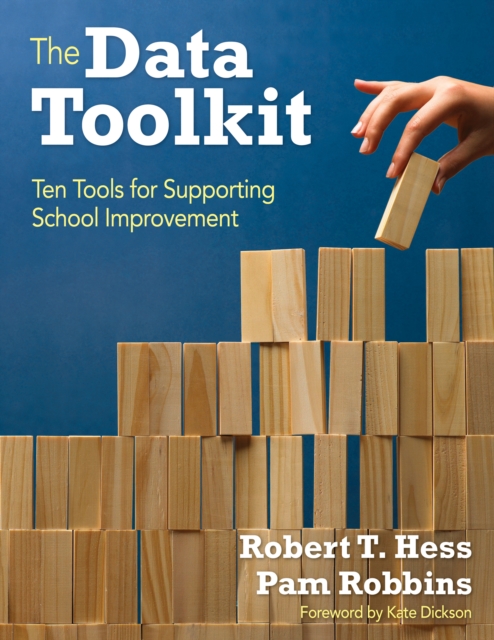
The data toolkit
How to accelerate analysis into actionUsing data for school improvement is a key goal of Race to the Top, and now is the time to make data-driven school improvement a priority. However, many educators are drowning in data. Boost your professional learning community's ability to translate data into action with this new book from Pam Robbins and Robert T. Hess. The Data Toolkit provides ten easy-to-use tools that don't require statistical expertise, can be implemented in a timely manner, and facilitate problem-solving at the classroom, school, and district levels. These proven methods help educators: Frame the questions; Drive the conversation; Engage in productive reflection; Uncover understandings; Create a data-driven plan; Achieve and monitor resultsWritten in an educator-friendly format each chapter contains instructions on using the tool, a sample scenario, and examples—practical resources that will help your PLC be the best it can be.Also included are case studies that show how data teams, PLCs, and individual teachers have used the book's methods in their own settings. The culminating school improvement mapping tool guides the team through designing an action plan focused on increasing student learning and achievement outcomes.
eBook


Decentralized decision-making in schools
Are school-based management reforms improving education? This book analyzes the theory and evidence behind decentralized decision-making in schools worldwide. Decentralized Decision-Making in Schools explores the impact of school-based management (SBM) reforms across diverse countries. It examines how empowering principals and teachers, and strengthening parental involvement, affects educational outcomes. The authors review over 20 country experiences, providing insights into the effectiveness of SBM in various contexts. * Discover the key factors for successful SBM implementation. * Understand the impact of SBM on student achievement and attendance. * Learn how to design effective education projects with decentralized authority. This insightful analysis is for education officials, policymakers, and researchers seeking evidence-based strategies for improving school governance and student outcomes.
eBook


Coparenting and Children's School Readiness: A Mediational Model
We examined the long‐term direct and indirect links between coparenting (conflict, communication, and shared decision‐making) and preschoolers' school readiness (math, literacy, and social skills). The study sample consisted of 5,650 children and their biological mothers and fathers who participated in the Early Childhood Longitudinal Study‐Birth Cohort. Using structural equation modeling and controlling for background characteristics, we found that our conceptual model of the pathways from coparenting to child outcomes is structurally the same for cohabiting and married families. Controlling for a host of background characteristics, we found that coparenting conflict and shared decision‐making were negatively and positively, respectively, linked to children's academic and social skills and co‐parental communication was indirectly linked to academic and social skills through maternal supportiveness. Coparenting conflict was also indirectly linked to children's social skills through maternal depressive symptoms. The overall findings suggest that for both cohabiting and married families, the context of conflicted coparenting may interfere with the development of children's social competencies and academic skills, whereas collaborative coparenting promotes children's school readiness because mothers are more responsive to their children's needs. These findings have implications for programs aimed at promoting positive family processes in cohabiting and married families. 摘要我们考察了共同养育(冲突、交流和共同决策)与学龄前儿童入学准备(数学、识字和社交技能)之间的长期直接和间接联系。研究样本包括5,650名儿童及其亲生父母。这些父母参与了早期儿童纵向研究——出生队列。通过使用结构等式模拟及控制背景特征,我们发现,从共同养育到儿童发展成果路径的概念模式在结构上与同居和已婚家庭一致。我们在控制众多背景特征后发现,共同养育冲突和共同决策与孩子的学业和社交技能消极和积极关联,而共同养育交流通过母亲的支持间接地与学业和社交技能关联。共同养育冲突也通过母亲的抑郁症状间接地与孩子的社交技能关联。综合发现表明,对于同居和已婚家庭,冲突性共同养育的环境可能干扰孩子的社交能力和学业技能,而协作式共同养育则促进孩子做好入学准备,因为母亲对孩子的需求反应更为灵敏。这些发现对促进同居和已婚家庭的正面家庭运作过程有意义。 ResumenAnalizamos los vínculos directos e indirectos a largo plazo entre la cocrianza (el conflicto, la comunicación y la toma de decisiones compartida) y la madurez para la escolaridad de los niños en edad preescolar (matemática, lectoescritura y habilidades sociales). La muestra del estudio consistió en 5650 niños y sus madres y padres biológicos que participaron en el “Estudio Longitudinal de la Primera Infancia, Cohorte de Nacimiento”. Utilizando modelos de ecuaciones estructurales y controlando las características del entorno, descubrimos que nuestro modelo conceptual de las vías que abarcan desde la cocrianza hasta los resultados de los niños es estructuralmente el mismo tanto para las familias formadas por padres concubinos como para las formadas por padres casados. Mediante la evaluación de un sinfín de características del entorno, descubrimos que el conflicto en la cocrianza y la toma de decisiones compartida estuvieron ligados de manera negativa y positiva, respectivamente, a las habilidades académicas y sociales de los niños, y que la comunicación entre el padre y la madre estuvo ligada indirectamente a las habilidades académicas y sociales a través del apoyo materno. El conflicto en la cocrianza también estuvo asociado indirectamente con las habilidades sociales de los niños mediante síntomas depresivos de la madre. Los resultados generales sugieren que tanto para las familias formadas por padres concubinos como para las formadas por padres casados el contexto de cocrianza conflictiva puede obstaculizar el desarrollo de las competencias sociales y las habilidades académicas de los niños, mientras que la cocrianza colaboradora fomenta la madurez para la escolaridad porque las madres responden mejor a las necesidades de sus hijos. Estos resultados tienen consecuencias para los programas orientados a promover los procesos familiares positivos en las familias formadas por parejas en concubinato y las formadas por parejas casadas.
Journal Article


Decision Making for Educational Leaders
Why another book on decision making? In this increasingly complex world, there are many tensions inherent in the daily practice of school leaders. This book illuminates these tensions, and acknowledges the reality that there are already multiple approaches to decision making in any school. The authors offer a guide to integrate the influences of school and community members as well as data and organizational context into the decision making process. They focus on underexamined dimensions of decision making, including 1) the art of theory-use; 2) organizational context; 3) political dynamics; 4) inferential leaps and causal assumptions; 5) the role of intuition; 6) data-driven decision making; 7) the role of emotions and affect; and 8) making the tough decision. Dispositions that enhance success are highlighted. These ideas will empower school principals, superintendents, and other leaders to approach with confidence the decisions they are called on to make.
eBook