
Catalogue Search | MBRL


Are you sure you want to remove the book from the shelf?

{{itemTitle}}
23,688
result(s) for
"Sacred texts"
Sort by:
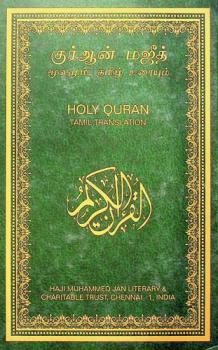
Kur ān̲ majit : mūlamum, Tamil̲ uraiyum = Holy Quran Tamil traslation = القرآن الكريم
On the sacred book of Islam.

A Pictographic Naxi Origin Myth from Southwest China
1.This is the most comprehensive translation of a Naxi text in English to appear for over half a century. By presenting a historically important translation manuscript for both the history of missionary translation in China and for Dutch sinology, this book allows modern audiences a chance to access the unique, semi-oral ritual tradition of the Naxi via detailed annotations. 2. The Naxi source manuscript, presented in high quality images, will be complemented by digital reconstructions of each section of the text, with each graph numbered to allow readers a fuller understanding of how such semi-oral texts are read, making it the first reader of the Naxi script to be produced in English. 3. Back-translation and comparative research has allowed for the recreation of an approximation of the original early twentieth century reading given to the original translator Elise Scharten by a Naxi ritual specialist.
eBook

Srī Gurugītā: A Sanskrit Devotional Text and Musical Yogic Practice
This article investigates the Sanskrit hymn, ´Srī Gurugītā, from a scholarly, scriptural, historical, and ethnographic standpoint. Mystical yogic concepts such as chaitanya-shabda (Consciousness–sound) and shravana samadhi (absorption through reading or listening to holy texts) are introduced in the context of Gurugītā recitation. The history of diverse lineages that practice Gurugītā recitation and several historical dimensions of svadhyaya (long-text chanting) and namasankirtana (short chants) are briefly introduced, and the works of Jeremy Morse and Antonio Rigopoulos are closely considered. This article deals with the significant elements of yogic awakening referenced within the Gurugītā text and the goal of liberation cited therein. Many scholars have researched Hinduism, Tantra, Bhakti yoga, and devotion. This article investigates musical devotion in the context of yogic communities dedicated to Gurugītā recitation with the aim of experiencing the inner Self. The democratization and dissemination of this practice have global dimensions.
Journal Article

A Pictographic Naxi Origin Myth from Southwest China
Starting in the late nineteenth century, unusual pictographic books began to flow from a remote corner of Southwest China into the libraries of the Western world. What made these books so attractive? For one, they possessed the air of mystery that came with being 'magical' books almost indecipherable to all but a select few ritual specialists, but perhaps more importantly, they were written in what looked like an ancient form of picture writing.
In these books, written in the Naxi dongba script of southwest China, the events unfold on the page visually. This book offers a full translation of a central Naxi origin myth in a level of detail never before seen: readers are invited to delve into this unique script in both its original form and digital recreation, alongside historic and updated translations and an accompanying explanation of each individual graph.
eBook

Canonization and sacred text in the Yārsān religion
This paper explains the nature of sacred text and the process of canonization in the Yārsān religion. To this end, we first show how three formative ideas—i.e., the history of divine manifestation, the angelology of scribing, and the scripture of Qabālah—played a major role in the emergence of canonization and sacred text in the Yārsān religion. We then turn to the parallel, heterogeneous processes of canonization in the Yārsān community, showing that factors such as the community's rhizomatic structure, idea of infinite divine manifestation, continuous process of producing holy texts, and the heterogeneous nature of its oral tradition hindered the emergence of an ultimate canon in the Yārsān community. Additionally, the sacred Yārsān texts, as the outputs of canonization procedures, are divided into three categories: narrative, testimony, and ritual. Finally, following scrutiny of the linguistic nature of Gorāni koine, the paper attempts to clarify the relationship between different types of religious texts and the formative idea of Qabālah as the archetypal sacred text in the Yārsān religion.
Journal Article
