
Catalogue Search | MBRL


Are you sure you want to remove the book from the shelf?

{{itemTitle}}
23,141
result(s) for
"School districts Administration."
Sort by:

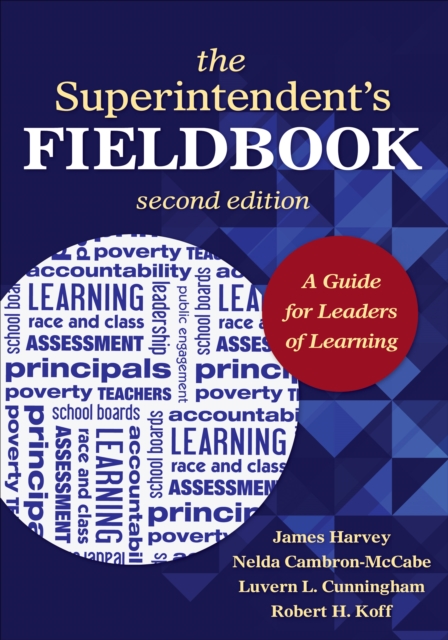
The superintendent's fieldbook: a guide for leaders of learning
An updated edition of the most comprehensive, complete handbook for the superintendency! The original book grew out of extensive funding and professional development from the highly-respected Danforth Foundation, and examines the role of the superintendent through field-based research with over 150 superintendents over ten years. Intended for urban, rural, and suburban superintendents, the book is designed to help these dirtrict leaders improve their effectiveness, learn from best practices, and fully understand the tenets of NCLB and other critical legislation. As a fieldbook, the book reflects stories, anecdotes, vignettes from practicing superintendents and is truly a practioner-friendly resource for school leaders. In updating The Superintendent's Fieldbook, the authors draw on their five-year experience with some 100 members of the National Superintendents Roundtable. Internationally, this experience involves extensive attention to education in China and Europe, including four site visits to China, plans to send a delegation of Roundtable superintendents to Finland later this year, and a month spent in England and Israel by one of our colleagues examining principal development.
eBook


When Mayors Take Charge: School Governance in the City
Large urban school systems have been the weakest link in American education, driving middle-class families into the suburbs while contributing mightily to the racial learning gap. Activist mayors in several major cities have responded by taking control of their public schools. When Mayors Take Charge is the most up-to-date assessment available on this phenomenon. It brings together the topic's leading experts to analyze the factors and people driving the trend, its achievements and shortcomings, its prospects for the future, and ways to improve it. Part One of the book assesses the results of mayoral control nationwide. The second section details the experience in three key cities: Boston and Chicago, the major prototypes for mayoral control, and Detroit, where mayoral control ended in disaster. The final section provides the first in-depth examination of New York City, where the law installing mayoral control sunsets in 2009. Viteritti's opening essay and postscript frame the analysis to shed light on the significance and limitations of governance reform. Contributors include Clara Hemphill (formerly NewYork Newsday), Jeffrey R. Henig (Columbia University), Michael Kirst (Stanford University), John Portz (Northeastern University), Diane Ravitch (NYU),Wilbur C. Rich (Wellesley College), Robert Schwartz (Harvard University), Dorothy Shipps (Baruch College), and Kenneth K.Wong (Brown University).
eBook


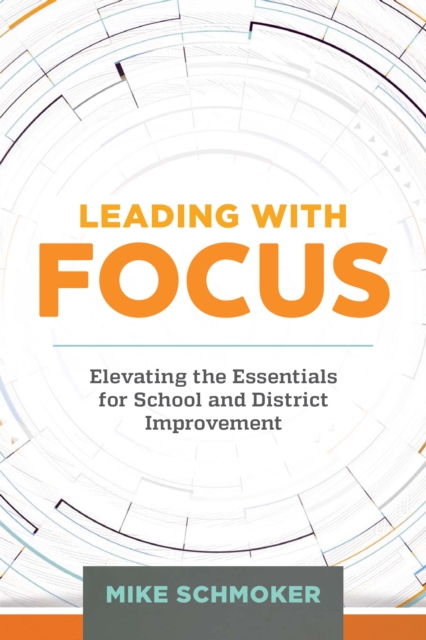
Leading with Focus
In his 2011 ASCD best-seller \"Focus: Elevating the Essentials to Radically Improve Student Learning,\" author Mike Schmoker described a fresh approach to K-12 teaching built on three core elements: a focused and coherent curriculum; clear, structured lessons; and purposeful reading and writing, or authentic literacy. Now, in \"Leading with Focus,\" he shows administrators, principals, and other education leaders how to apply his model to the work of running schools and districts. In this companion to his previous book, Schmoker offers: (1) An overview of the case for simple, focused school and district leadership--demonstrating its power for vastly improving the work of teachers and leaders; (2) Examples of real schools and districts that have embraced focused leadership--and the incredible results for student learning; and (3) A practical, flexible, and easy-to-follow implementation guide for ensuring focused leadership in schools and districts. All students deserve to learn in schools where educators eschew distractions and superfluous activities to concentrate on what's most important. To that end, this book is an essential resource for leaders ready to streamline their practice and focus their efforts on radically improving student learning. Two appendices are included: (1) The Elements of Effective Lessons; and (2) Prototype Curriculum Templates.
eBook

Enhancing Culturally Responsive Practice in a District: A District's Support of Principals' Culturally Responsive Leadership Practice
This qualitative single-site case study examined how district administrators in one racially, culturally, and linguistically diverse Massachusetts school district supported and strengthened principals’ culturally responsive leadership practice. Building coherent culture and structures that provide space to critically self-reflect and collaboratively learn are essential. Data collection included interviews with district administrators and principals, observations of leadership meetings, document review, and a survey. Findings revealed district administrators established collaborative relationships with principals by employing a coherent service-oriented approach. Participants perceived the intentionality of the superintendent’s efforts as foundational to building trust, however prior experiences with district leadership impeded these efforts. The superintendent controlled sensemaking to signal equity as a district priority, yet the lack of a shared understanding of culturally responsive practice led participants to conflate culturally responsive practice with other district endorsed equity practices. Attempts were made to align structures and tools to equity priorities, however culturally responsive practices were subsumed within other equity initiatives creating variance in the perception of the effectiveness of how structures and tools support principals’ culturally responsive leadership practice. Implications include developing a district definition of culturally responsive practice and using equity practices as a scaffold to support principals’ understanding and enactment of culturally responsive practices that bring critical self-reflection and conversations about racial and cultural bias to the forefront. Future research may extend this study to analyze sensegiving interactions and examine the impact of these interactions on principals’ culturally responsive leadership practice
Dissertation

Addressing Food Insecurity through a Health Equity Lens: a Case Study of Large Urban School Districts during the COVID-19 Pandemic
Reduced access to school meals during public health emergencies can accelerate food insecurity and nutritional status, particularly for low-income children in urban areas. To prevent the exacerbation of health disparities, there is a need to understand the implementation of meal distribution among large urban school districts during emergencies and to what degree these strategies provide equitable meal access. Our case study of four large urban school districts during the COVID-19 pandemic aims to address these knowledge gaps. Guided by the Getting to Equity (GTE) framework, we conducted a mixed-methods study evaluating emergency meal distribution and strategy implementation in four large urban school districts (Chicago Public Schools, Houston Independent School District, Los Angeles Unified School District, and New York City Department of Education). We gathered data from school district websites on (1) meal service and delivery sites and (2) district documents, policies, communication, and resources. Using qualitative coding approaches, we identified unique and shared district strategies to address meal distribution and communications during the pandemic according to the four components of the GTE framework: increase healthy options, reduce deterrents, build on community capacity, and increase social and economic resources. We matched district census tract boundaries to demographic data from the 2018 American Community Survey and United States Department of Agriculture food desert data, and used geographic information systems (GIS) software to identify meal site locations relative to student population, areas of high poverty and high minority populations, and food deserts. We found that all districts developed strategies to optimize meal provision, which varied across case site. Strategies to increase healthy options included serving adults and other members of the general public, providing timely information on meal site locations, and promoting consumption of a balanced diet. The quantity and frequency of meals served varied, and the degree to which districts promoted high-quality nutrition was limited. Reducing deterrents related to using inclusive language and images and providing safety information on social distancing practices in multiple languages. Districts built community capacity through partnering with first responder, relief, and other community organizations. Increased social and economic resources were illustrated by providing technology assistance to families, childcare referrals for essential workers, and other wellness resources. Geospatial analysis suggests that service locations across cities varied to some degree by demographics and food environment, with potential gaps in reach. This study identifies strategies that have the potential to increase equitable access to nutrition assistance programs. Our findings can support (1) ongoing efforts to address child food insecurity during the pandemic and (2) future meal provision through programs like the Summer Food Service Program and Seamless Summer Option. Future research should further examine the rationale behind meal site placement and how site availability changed over time.
Journal Article

School Closures During COVID-19: Opportunities for Innovation in Meal Service
In 2019, the National School Lunch Program and School Breakfast Program served approximately 15 million breakfasts and 30 million lunches daily at low or no cost to students. Access to these meals has been disrupted as a result of long-term school closures related to the COVID-19 pandemic, potentially decreasing both student nutrient intake and household food security. By the week of March 23, 2020, all states had mandated statewide school closures as a result of the pandemic, and the number of weekly missed breakfasts and lunches served at school reached a peak of approximately 169.6 million; this weekly estimate remained steady through the final week of April. We highlight strategies that states and school districts are using to replace these missed meals, including a case study from Maryland and the US Department of Agriculture waivers that, in many cases, have introduced flexibility to allow for innovation. Also, we explore lessons learned from the pandemic with the goal of informing and strengthening future school nutrition policies for out-of-school time, such as over the summer.
Journal Article