
Catalogue Search | MBRL


Are you sure you want to remove the book from the shelf?

{{itemTitle}}
157
result(s) for
"Schreib- und Lesefähigkeit"
Sort by:

Science Literacy
Science is a way of knowing about the world. At once a process, a product, and an institution, science enables people to both engage in the construction of new knowledge as well as use information to achieve desired ends. Access to science-whether using knowledge or creating it-necessitates some level of familiarity with the enterprise and practice of science: we refer to this as science literacy.
Science literacy is desirable not only for individuals, but also for the health and well- being of communities and society. More than just basic knowledge of science facts, contemporary definitions of science literacy have expanded to include understandings of scientific processes and practices, familiarity with how science and scientists work, a capacity to weigh and evaluate the products of science, and an ability to engage in civic decisions about the value of science. Although science literacy has traditionally been seen as the responsibility of individuals, individuals are nested within communities that are nested within societies-and, as a result, individual science literacy is limited or enhanced by the circumstances of that nesting.
Science Literacy studies the role of science literacy in public support of science. This report synthesizes the available research literature on science literacy, makes recommendations on the need to improve the understanding of science and scientific research in the United States, and considers the relationship between scientific literacy and support for and use of science and research.
eBook
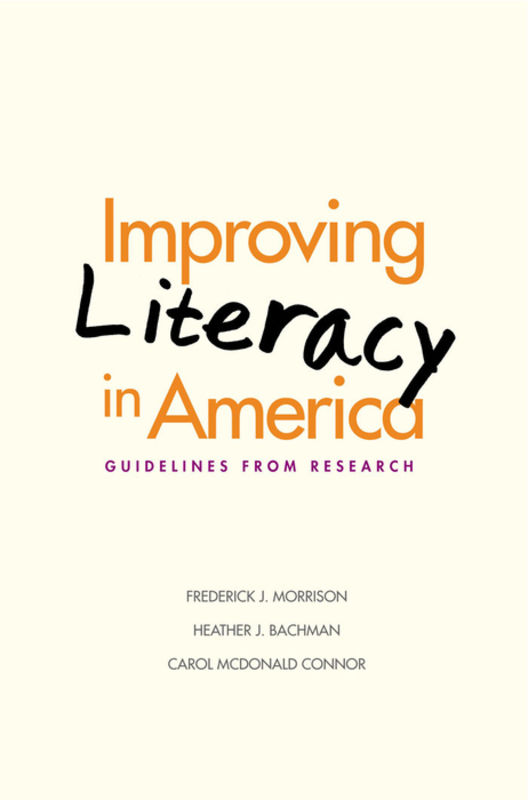
Improving literacy in America
An alarmingly high number of American students continue to lack proficiency in reading, math, and science. The various attempts to address this problem have all too often resulted in \"silver bullet\" solutions such as reducing class size or implementing voucher programs. But as the authors of this critically important book show, improving literacy also requires an understanding of complex and interrelated social issues that shape a child's learning. More than twenty years of research demonstrate that literacy success is determined by a combination of sociocultural forces including parenting, preschool, classroom instruction, and other factors that have a direct impact on a child's development.Here, Frederick J. Morrison, Heather J. Bachman, and Carol McDonald Connor present the most up-to-date research on the diverse factors that relate to a child's literacy development from preschool through early elementary school. Urging greater emphasis on the immediate sources of influence on children, the authors warn against simple, single solutions that ignore other pivotal aspects of the problem. In a concluding chapter, the authors propose seven specific recommendations for improving literacy-recommendations that can make a real difference in American education.
eBook
Raising Standards in Literacy
Raising Standards in Literacy represents the best current thinking and research about literacy. The book is the outcome of a high-profile series of seminars on raising standards in literacy, and includes contributions from an impressive group of international researchers and policymakers.
By offering a rich and unique mix of contemporary perspectives on literacy education, this book provides an invaluable source of study and insight into the latest research and developments in the teaching of literacy. It includes sections on:
* how research into literacy teaching can inform new approaches found in England, the USA and Australia * the ways in which literacy education is developing in England, the USA and Australia * the issues involved in assessing progress in literacy and the validity of research claims made about standards of attainment.
The book celebrates the apparent success of current literacy initiatives at the same time as raising questions about the feasibility and relevance of such initiatives to the literacy co-ordinators and consultants and for all those undertaking further study or research in literacy education.
eBook

Hauptsache Literacy - egal in welcher Sprache? Effekte einer mehrsprachigen informellen familiären Lernumwelt auf das Leseverstehen im Deutschen im Grundschulalter
In der vorliegenden Studie werden Effekte einer mehrsprachigen informellen familiären Lernumwelt (\"home literacy environment\", HLE) im Vorschulalter auf das Leseverstehen im Deutschen im Grundschulalter anhand eines Pfadmodells untersucht (N = 105). Es zeigen sich signifikante direkte Effekte für Anteile der HLE sowohl in Deutsch als auch in weiteren Sprachen bei moderaten Effektstärken. Der Einfluss der mehrsprachigen HLE ist vermittelt über das Leseverstehen in früheren Schuljahren bis ins dritte Schuljahr signifikant. (DIPF/Orig.).
In the present study, the effects of a multilingual informal home literacy environment (HLE) at pre-school age on reading comprehension in German at primary school age are investigated using a path model (N = 105). Significant direct effects are found for HLE in both German and other languages with moderate effect sizes. Mediated by reading comprehension in school age, pre-school HLE is a significant predictor of reading comprehension up to grade 3. (DIPF/Orig.).
Journal Article
Das Projekt Kooperativ, kompetent, motiviert Schreiben. Ein Interventionsprojekt zur Förderung von Schreibkompetenz, Schreibmotivation und sozialer Partizipation in Grundschule und Ganztag (\KommSchreib!\)
Vorgestellt wird das noch laufende BMBF-geförderte Interventionsprojekt \"KommSchreib!\" an Grundschulen, dessen Ziel die Förderung von Schreibkompetenz, Schreibmotivation und sozialer Partizipation ist. Die Interventionsmaßnahmen werden im Unterricht und ergänzend in Arbeitsgemeinschaften im Offenen Ganztag in den Jahrgängen 3 und 4 durchgeführt. Zentrale Bausteine sind dabei die Förderung prozessorientierten Schreibens und die Stärkung kooperativen Lernens. (DIPF/Orig.).
We introduce the ongoing BMBF-funded intervention project \"Let's write!\" The aim is to promote writing competence, writing motivation, and social participation in primary schools. The intervention is conducted in regular classes and additionally in extracurricular afternoon activities in Years 3 and 4. Key elements involve fostering process-oriented writing and reinforcing cooperative learning. (DIPF/Orig.).
Journal Article
Literacy and Literacies
Literacy and Literacies is an engaging account of literacy and its relation to power. The book develops a synthesis of literacy studies, moving beyond received categories, and exploring the domain of power through questions of colonialism, modern state formation, educational systems and official versus popular literacies. Collins and Blot offer in-depth critical discussion of particular cases and discuss the role of literacies in the formation of class, gender, and ethnic identity. Through their analysis of two domains - those of literacies and power, and of literacies and subjectivity - they challenge received assumptions about literacy, intellectual development and social progress and argue that neither 'universalist' nor 'particularist' accounts offer satisfactory approaches to the phenomenon. This is a sustained exploration of the domain of power in relation to literacy. It will be welcomed by students and researchers in anthropology, linguistics, literacy studies and history.
eBook
Die Entwicklung von Schreibfähigkeit in mehreren Sprachen im Verlauf der Sekundarstufe - eine sprachpragmatische Sicht
Zur Erschließung und Vertiefung des Lernstoffs im Unterricht sowie zur Bewältigung schriftlicher Tests bei der Leistungsstandsüberprüfung müssen Schüler*innen in der Lage sein, die von unterschiedlichen Kontexten abhängigen Anforderungen schriftlicher Aufgaben zu verstehen und die zur kontextangemessenen Bewältigung der Aufgabe notwendigen sprachlichen Ressourcen effektiv im Schreibprozess einzusetzen. Sie benötigen also sprachpragmatische Kompetenz. Ziel der vorliegenden Studie ist es, Erkenntnisse darüber zu liefern, wie sich die pragmatische Fähigkeit der Aufgabenbewältigung beim Schreiben in der Sekundarstufe in mehrsprachigen Repertoires der Schüler*innen mit und ohne Migrationshintergrund entwickelt. Analysiert wurden Testdaten zu mehrsprachigen Schreibfähigkeiten aus der Studie \"Mehrsprachigkeitsentwicklung im Zeitverlauf (MEZ)\". Die Ergebnisse der vorliegenden Studie zeigen, dass die untersuchten Schüler*innen (n = 1773) eine zunehmende Entwicklung sprachpragmatischer Schreibfähigkeit über die Zeit in allen Sprachen aufweisen. Dabei wurden unterschiedliche sprachspezifische Entwicklungsverläufe und Muster auf unterschiedlichen Fähigkeitsniveaus festgestellt. Lebensweltlich einsprachige und mehrsprachige Schüler*innen wiesen ähnliche Entwicklungsverläufe auf. Unterschiede zwischen den Sprachen in der Aufgabenbewältigung wurden festgestellt, wobei Deutsch am besten und Französisch am schlechtesten bewältigt wurde. Die Ergebnisse bieten Einblicke in mehrsprachige Schreibentwicklung und betonen die Bedeutung von deren institutioneller Unterstützung. (DIPF/Orig.).
To master writing as a key to educational success, students need to understand the requirements of a variety of written tasks in different contexts to effectively utilize the linguistic resources necessary to complete the task in writing. The present study aims to provide insights into how the linguistic-pragmatic writing ability of task mastery develops in multilingual repertoires of students with and without a migration background at secondary level. We analyzed test data on multilingual writing skills from the study \"Multilingual development: a longitudinal perspective (MEZ)\". The results of the present study show that the secondary school students (n = 1773) exhibit an increasing development of language-pragmatic writing skills over time in all languages. We identified different language-specific development trajectories and patterns at different ability levels. Monolingual and multilingual students showed similar developmental courses. Differences were found between the languages regarding task mastery, with German being the best and French being the worst. The results offer insights into multilingual writing development and emphasize the importance of its institutional support. (DIPF/Orig.).
Journal Article
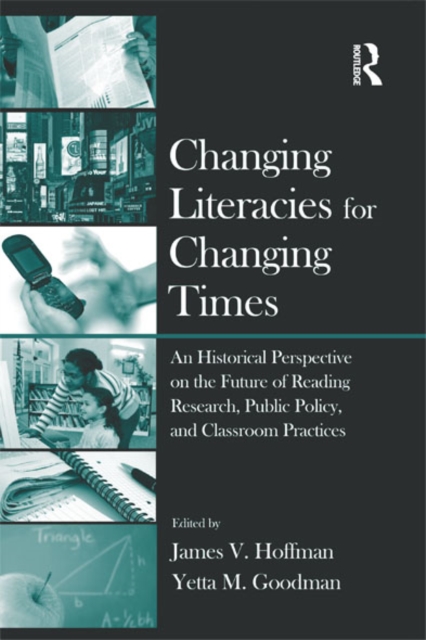
Changing Literacies for Changing Times
Offering the wisdom that only experience and expertise in the field can bring, this book takes a critical look into the present and the future of literacy as envisioned by leading reading researchers. The lead author of each chapter, and in some cases more than one, of the authors, is a distinguished reading researcher elected by their peers into the Reading Hall of Fame. In this book these distinguished literacy leaders extend their role as researchers to speak directly to issues of practice and policy.
All chapters address the theme of literacy and the teaching of literacy as being in a constant state of change. The authors are theoretical as they describe literacy, literacy acquisition, and the teaching of literacy; they are practical as they examine the issues that classroom teachers and reading specialists engage with on a daily basis; and they are political as they advocate for informed policy at the local, state and national levels. A key message in this book is that literacy professionals must take an active role to shape change.
James V. Hoffman is Professor, College of Education, University of Texas at Austin.
Yetta M. Goodman is Regents Professor of Education Emerita at the University of Arizona.
Contents
Preface
Yetta Goodman and James V. Hoffman
Part I: Expanding Views of Literacy
1. Communicative, Visual and Performative Arts:
Core Components of Literacy Education
Diane Lapp, James Flood, Shirley Brice Heath & Judith Langer;
2. Learning within a Profession: From Gray to Google
Nancy L. Roser & Sam Weintraub
3. Multimodality: In Perspective
Jerome Harste
4. Surveying the Hopescape
Rudine Sims Bishop
Part II: Literacy Development
5. The Transformation of Children’s Knowledge of Language Units during Beginning and Initial Literacy
Emilia Ferreiro
6. Early Literacy: Then and Now
William H. Teale, Jessica Hoffman, Kathleen Paciga, Jennifer Garrette,
Samantha Richardson and Charlise Berkel
7. Reaching/Teaching Adolescents: Literacies with a History
Donna E. Alvermann
8. The Lamplighters: Pioneers of Adult Literacy Education in the
United States
Thomas Sticht
Part III: Foundational Issues in the Teaching of Reading
9. 'Doin' What Comes Naturally': Revisiting The Concept of \"Natural Learning\"
Brian Cambourne
10. Beyond Word Recognition: How Retrospective and Future Perspectives on Miscue Analysis Can Inform Our Teaching
Kenneth Goodman, Yetta Goodman and Eric Paulson
11. Spelling and its Role in Literacy Education – An Historical Perspective
Richard Hodges
12. Readability: Insights, Sidelights, and Hindsight
Ed Fry
Part IV: Teaching, Teacher Education and Professional Development
13. Literacy Education at a Crossroad: Can We Counter the Trend To
Marginalize Quality Teacher Education?
Gerald G. Duffy, Sandra Webb & Stephanie Davis
14. Whole School Instructional Improvement through the Standards-Based Change Process:
A Developmental Model
Taffy E. Raphael, Kathy H. Au & Susan R. Goldman
Part V: Policy and Practice in Literacy Education
15. Language Policy and Literacy Instruction:
The View From South Africa to South Texas
James V. Hoffman, Misty Sailors, Leketi Makalela & Bertus Matthee
16. 50 Years of Federal Government Involvement in Reading Education
Patrick Shannon, Jacqueline Edmondson, Leticia Ortega, Susan
Pitcher, and Christopher Robbins;
17. Literacy Policies that are Needed: Thinking Beyond \"No Child Left Behind\"
Richard L. Allington
18. Literacy 2.0: Looking through the Rear Vision Mirror as We Move Ahead
Rob Tierney
\"This book would be an excellent one to use in literacy foundation courses...It is rare to find a book that contextualizes current literacy practices and policies historically. This contextualization allows current researchers and teachers to have a better understanding of various topics, and to better appreciate current circumstances in literacy research and instruction.\"-- Diane Barone, Teachers College Record (November 2009)
eBook
Listening to learn
Drawing on decades of audiobook experience and research, librarians Grover and Hannegan convincingly make the case that audiobooks not only present excellent opportunities to engage the attention of young people but also advance literacy. Listening to Learn connects audiobooks with K-12 curricula and demonstrates how the format can support national learning standards and literacy skills by * Presenting a concise history of the audiobook, with commentary from experts in the field * Showing librarians how to harness their library s audiobook collection and practice effective collection development * Including thematic lists of quality titles and suggested group listening activities, ready for use in the classroom by teachers * Helping parents use audiobooks as an incentive to read and encourage skill development Complete with a research bibliography and resource guide, Listening to Learn ensures that librarians, educators, and parents can make audiobooks a major component of literacy advancement.
eBook
School discourse
Writing development has been a key area of research in applied linguistics for some time but most work has focused on children's writing at particular ages, for example, at the early primary, late primary or secondary stage. Christie and Derewianka draw on extensive research in both primary and secondary years to trace the developmental.
eBook