
Catalogue Search | MBRL


Are you sure you want to remove the book from the shelf?

{{itemTitle}}
17
result(s) for
"Selbststudium"
Sort by:


The Business of Innovating Online
The Business of Innovating Online responds to a critical need for concrete narratives of innovation success that can serve as a foundation for administrators and leaders who are in need of practical guidance as they scale and grow their online learning organizations.
Through specific examples and practical suggestions from experienced e-learning leaders, readers will be introduced to concrete strategies for how to create a climate of creativity and innovation that can lead to more successful and scalable online programs and initiatives. The Business of Innovating Online demystifies the relationship between business, creativity, and innovation by describing the logistics required to create an agile online education enterprise. Topics discussed will include:
Defining innovation and creativity for online education and e-learning
Knowing when and how to innovate
Creating a culture of innovation
Effectively leading innovation
Collaborative innovation
Making innovation stick and transitioning innovative strategies into day-to-day practice
Assuring quality in the midst of innovation
Staffing structures/administrative stability to support creativity and innovation
The Business of Innovating Online provides both novice and experienced online education administrators with a comprehensive overview of a range of online innovations, how they came to be created, the components that led to their success, and concrete steps that they can take to create a more innovative culture for their own e-learning organization.
eBook

Dear SSHRC, what do you want? An epistolary narrative of expertise, identity, and time in grant writing
Im derzeitigen Forschungsbetrieb sind die Erwartungen an sozialwissenschaftlich Forschende zunehmend hoch, Forschungsgelder einzuwerben - zugleich erscheint diese Art des Antragswesens kompetitiver denn je. Als Folge kommt es aufseiten der Forschenden zu Angst, Verwirrung, Vertrauensverlust, Zweifel und Mangel an Zutrauen in das System und in sich selbst. In dieser autoethnografischen Studie werfen wir einen Insider-Blick auf die intellektuelle, emotionale und körperliche Erfahrung des Schreibens von Förderanträgen. Als Team kanadischer Wissenschaftlerinnen und Wissenschaftler dokumentieren wir die Produktion eines Mittelantrags an die wichtigste nationale Förderagentur, das Social Sciences and Humanities Research Council of Canada. Die Geschichte wird gewissermaßen \"epistulär\" dargestellt in Form der Präsentation einer Reihe nicht versendeter Briefe, die wir an die Fördereinrichtung adressiert haben. In diesen Briefen fokussieren wir Themen wie Expertise, Identität und Zeit, die durch den Prozess des Antragschreibens geprägt worden sind. In unserer Analyse weisen wir auf unnötige Komplexitäten und Herausforderungen hin, die im Rahmen von Forschungsförderungsprozeduren eliminiert werden könnten und sollten, wenn es darum geht, Forschungsqualität zu unterstützen und Forschungskapazität zu stärken. Die Schlussfolgerungen aus der Analyse können für Antragstellende, für die Unterstützung des eingesetzten Personals sowie für mittelvergebende Einrichtungen nützlich sein.
Journal Article
Dear SSHRC, What Do You Want? An Epistolary Narrative of Expertise, Identity, and Time in Grant Writing
Im derzeitigen Forschungsbetrieb sind die Erwartungen an sozialwissenschaftlich Forschende zunehmend hoch, Forschungsgelder einzuwerben – zugleich erscheint diese Art des Antragswesens kompetitiver denn je. Als Folge kommt es aufseiten der Forschenden zu Angst, Verwirrung, Vertrauensverlust, Zweifel und Mangel an Zutrauen in das System und in sich selbst. In dieser autoethnografischen Studie werfen wir einen Insider-Blick auf die intellektuelle, emotionale und körperliche Erfahrung des Schreibens von Förderanträgen. Als Team kanadischer Wissenschaftlerinnen und Wissenschaftler dokumentieren wir die Produktion eines Mittelantrags an die wichtigste nationale Förderagentur, das Social Sciences and Humanities Research Council of Canada. Die Geschichte wird gewissermaßen \"epistulär\" dargestellt in Form der Präsentation einer Reihe nicht versendeter Briefe, die wir an die Fördereinrichtung adressiert haben. In diesen Briefen fokussieren wir Themen wie Expertise, Identität und Zeit, die durch den Prozess des Antragschreibens geprägt worden sind. In unserer Analyse weisen wir auf unnötige Komplexitäten und Herausforderungen hin, die im Rahmen von Forschungsförderungsprozeduren eliminiert werden könnten und sollten, wenn es darum geht, Forschungsqualität zu unterstützen und Forschungskapazität zu stärken. Die Schlussfolgerungen aus der Analyse können für Antragstellende, für die Unterstützung des eingesetzten Personals sowie für mittelvergebende Einrichtungen nützlich sein.
Journal Article

Selbstwirksamkeit in selbstregulierten Lernprozessen an Hochschulen mithilfe von Podcasts fördern - eine Interventionsstudie mit Interaktivem Ambulantem Assessment
Selbstwirksamkeit (SW) im Selbstregulierten Lernprozess (SRLP) gilt als wichtiger Faktor, um Studienerfolg an Hochschulen vorauszusagen. Wir verwendeten Interaktives Ambulantes Assessment in Kombination mit Podcasts, um die SW im SRLP zu fördern. Dafür bearbeiteten Studierende (N = 106) drei Mal täglich Abfragen zu ihrem Lernprozess, die ihnen über elektronische Tagebücher präsentiert wurden. Unterschiede zwischen der Kontrollgruppe (KG) ohne Feedback und der Interventionsgruppe (IG) mit täglichem individualisiertem Feedback, basierend auf den Tagebucheinträgen, in Kombination mit Podcasts, wurden mittels Multilevelanalysen geprüft. Die Ergebnisse zeigen, dass die SW im SRLP der IG innerhalb der Interventionsphase, in Relation zu einer Baselinephase und im Vergleich zur KG, gefördert werden konnte. Entsprechend konnte im Prä-Post-Vergleich eine größere Steigerung der SW-Erwartung (vgl. Schwarzer & Jerusalem, 1999) bei der IG (im Vergleich zur KG) nachgewiesen werden. (HoF/Text übernommen).
Self-efficacy (SE) in self-regulated learning processes (SRLP) is considered an important factor to predict student success in higher education. We used interactive ambulatory assessment in combination with podcasts to promote SE in SRLP. For this purpose, students (N = 106) completed queries regarding their learning process three times a day, which were presented to them via electronic diaries. Differences between the control group (CG) without feedback and the intervention group (IG) with daily individualized feedback, based on the entries in the electronic diaries, in combination with podcasts, were tested using multilevel analyses. The results show that SE in SRLP was promoted in the IG within the intervention phase compared to the CG and the baseline phase. In the pre/post comparison, a stronger increase in SE-expectancy (cf., Schwarzer & Jerusalem, 1999) was revealed for the IG, in comparison to the CG. (DIPF/Orig.).
Journal Article

Der Bedarf nach mehr
This paper addresses the question how Japanese shadow education, the juku-industry, managed to maintain strong despite steadily decreasing Student populations and major changes in the formal education system which were believed to make this industry superfluous until 2009. Since the implications of a high dependence on shadow education for a national system of education regarding educational opportunities and social inequality, issues are hardly overestimated, following a neo-institutionalist approach, the ongoing success of the juku-industry is explored. Findings show that the originally highly specialized juku evolved by taking on additional functions responding to changed educational demands of families. Thus, instead of vanishing, the juku-industry further gains importance as educational gap-closer and authority in educational and social matters. (DIPF/Orig.).
Journal Article

Verantwortung für das eigene Lernen im Selbststudium
Der vorliegende Artikel beschäftigt sich mit dem Zusammenhang zwischen Wissenstransfer und Selbststudium bzw. eigenverantwortlichem Arbeiten und Lernen mit Unterstützung durch Lerntechnologien. Gegenstand der empirischen Studie bilden qualitative Erhebungen bei Bachelorstudierenden des Fachbereichs Ernährung an der Pädagogischen Hochschule Wien. (DIPF/Orig.).
This article deals with the connection between knowledge transfer and self-study or independent work and learning supported by learning technologies. The subject of the empirical study is a qualitative survey of bachelor students of the nutrition department at the Vienna University of Teacher Education. (DIPF/Orig.).
Journal Article

E-learning and the science of instruction : proven guidelines for consumers and designers of multimedia learning
The essential e-learning design manual, updated with the latest research, design principles, and examplese-Learning and the Science of Instructionis the ultimate handbook for evidence-based e-learning design. Since the first edition of this book, e-learning has grown to account for at least 40% of all training delivery media. However, digital courses often fail to reach their potential for learning effectiveness and efficiency. This guide provides research-based guidelines on how best to present content with text, graphics, and audio as well as the conditions under which those guidelines are most effective. This updated fourth edition describes the guidelines, psychology, and applications for ways to improve learning through personalization techniques, coherence, animations, and a new chapter on evidence-based game design. The chapter on the Cognitive Theory of Multimedia Learning introduces three forms of cognitive load which are revisited throughout each chapter as the psychological basis for chapter principles. A new chapter on engagement in learning lays the groundwork for in-depth reviews of how to leverage worked examples, practice, online collaboration, and learner control to optimize learning. The updated instructor's materials include a syllabus, assignments, storyboard projects, and test items that you can adapt to your own course schedule and students.Co-authored by the most productive instructional research scientist in the world, Dr. Richard E. Mayer, this book distills copious e-learning research into a practical manual for improving learning through optimal design and delivery.Get up to date on the latest e-learning researchAdopt best practices for communicating information effectivelyUse evidence-based techniques to engage your learnersReplace popular instructional ideas, such as learning styles with evidence-based guidelinesApply evidence-based design techniques to optimize learning gamese-Learning continues to grow as an alternative or adjunct to the classroom, and correspondingly, has become a focus among researchers in learning-related fields. New findings from research laboratories can inform the design and development of e-learning. However, much of this research published in technical journals is inaccessible to those who actually design e-learning material. By collecting the latest evidence into a single volume and translating the theoretical into the practical, e-Learning and the Science of Instructionhas become an essential resource for consumers and designers of multimedia learning.
eBook

Explaining individual differences in reading
Research into reading development and reading disabilities has been dominated by phonologically guided theories for several decades. In this volume, the authors of 11 chapters report on a wide array of current research topics, examining the scope, limits and implications of a phonological theory. The chapters are organized in four sections. The first concerns the nature of the relations between script and speech that make reading possible, considering how different theories of phonology may illuminate the implication of these relations for reading development and skill. The second set of chapters focuses on phonological factors in reading acquisition that pertain to early language development, effects of dialect, the role of instruction, and orthographic learning. The third section identifies factors beyond the phonological that may influence success in learning to read by examining cognitive limitations that are sometimes co-morbid with reading disabilities, contrasting the profiles of specific language impairment and dyslexia, and considering the impact of particular languages and orthographies on language acquisition. Finally, in the fourth section, behavioral-genetic and neurological methods are used to further develop explanations of reading differences and early literacy development. The volume is an essential resource for researchers interested in the cognitive foundations of reading and literacy, language and communication disorders, or psycholinguistics; and those working in reading disabilities, learning disabilities, special education, and the teaching of reading. (Verlag).
eBook
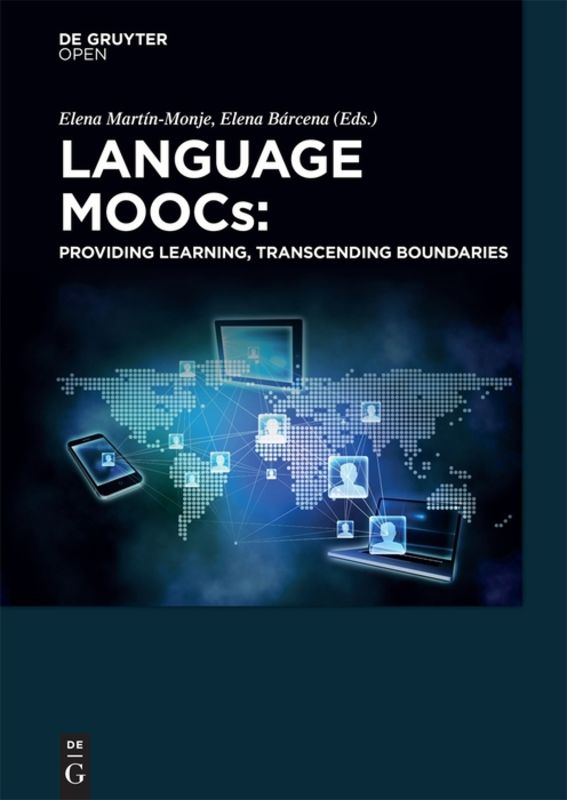
Language MOOCs
Language MOOCs (or LMOOCs) are dedicated Web-based online courses for second languages with unrestricted access and potentially unlimited participation. They are generating interest and expectation in the contexts of university education, lifelong learning and online training in general. This pioneering book presents an initial analysis of the theoretical and methodological issues underlying LMOOCs and presents empirical evidence of their potential for the development of language communicative competences, based upon previously unpublished research. It provides a mosaic-like view of LMOOC research, not only with respect to the geographical and institutional origin of its authors, but also to the heterogeneous nature of their respective academic backgrounds, and suggests directions for future development. As in other types of online language courses, the integration of the results of multidisciplinary research projects and teaching experiences related to LMOOCs is fundamental to make the field advance steadily and respond to some of the real challenges and problems faced by individuals working and living in competitive plurilingual societies today.
eBook