
Catalogue Search | MBRL


Are you sure you want to remove the book from the shelf?

{{itemTitle}}
291
result(s) for
"Shadow puppet plays"
Sort by:

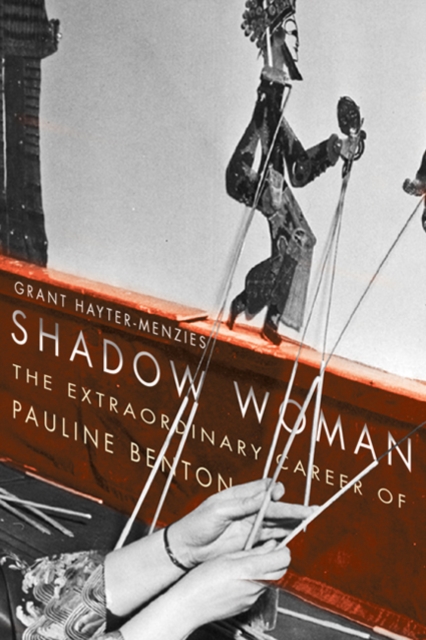
Shadow Woman
Kansas-born Pauline Benton (1898-1974) was encouraged by her father, one of America's earliest feminist male educators, to reach for the stars. Instead, she reached for shadows. In 1920s Beijing, she discovered shadow theatre (piyingxi), a performance art where translucent painted puppets are manipulated by highly trained masters to cast coloured shadows against an illuminated screen. Finding that this thousand-year-old forerunner of motion pictures was declining in China, Benton believed she could save the tradition by taking it to America. Mastering the male-dominated art form in China, Benton enchanted audiences eager for the exotic in Depression-era America. Her touring company, Red Gate Shadow Theatre, was lauded by theatre and art critics and even performed at Franklin Roosevelt's White House. Grant Hayter-Menzies traces Benton's performance history and her efforts to preserve shadow theatre as a global cultural treasure by drawing on her unpublished writings, the recollections of her colleagues, the testimonies of shadow masters who survived China's Cultural Revolution, as well as young innovators who have carried on Benton's pioneering work.
eBook


Chinese Shadow Theatre
Chinese Shadow Theatre includes several rare transcriptions of oral performances, including a didactic play on the Eighteen Levels of Hell, and Investiture of the Gods, a sacred saga, and translations of three rare, hand-copied shadow plays featuring religious themes and women warrior characters.
eBook

TheMaṣlaḥaof Film Production in Pre-Revolutionary Egypt, 1896–1952: A Sanctioning Apparatus or Covert Censorship?
At the turn of the twentieth century, the lawfulness of film, like other modern innovations, posed a challenge for many Muslim‘ulamā’. The fact that the film camera was a foreign invention coming from colonialist Europe complicated the challenge. Focusing on the formative years of Egyptian cinema, I analyze Islamic public discourses and legal opinions on the lawfulness of photography and acting, the two principal components of cinema production. I argue that the use of the Islamic legal concept of “public interest”(maṣlaḥa)enabled reformist‘ulamā’to positively sanction photography and acting, thereby permitting the production of motion pictures. However,maṣlaḥawas also used as a covert form of censorship. This seeming contradiction resulted from the fact thatmaṣlaḥawas sometimes reduced to a utilitarian tool that accepted this new medium of communication as a means of promoting Islamic cultural hegemony but disregarded the innovative aspects of film as a domain for creativity and freedom of expression.
Journal Article

The Monk's Daughter and Her Suitor: An Egyptian Shadow Play of Interfaith Romance and Insanity
The Egyptian shadow play commonly known asʿAlam wa-Taʿādīrtells the story of a Coptic monk whose daughter falls in love with a Muslim merchant. Since its initial discovery in the 1900s, this remarkable play has slipped into oblivion. This article presents a survey of earlier research, an outline of the layers of the composite text based on all known textual and visual testimonies, an analysis of the building blocks—themedzajalsong-cycles—and a summary of the sole working script that features dialogue as well. These findings will hopefully form a solid foundation for future research into this work, which in many ways is representative of Egyptian shadow plays in the Ottoman and early modern times.
Journal Article

The Art of Noise: Understanding Digital Sound Effects in Wayang Kulit (Shadow Puppets)
The music amalgam of Wayang Kulit provides a unique variation inside its performances. The various roles of music in Wayang Kulit are not very well understood and the possibilities of sound are underused or lack exposure, which points at possible slow extinction of Wayang Kulit. This study presents a framework for better understanding and using Wayang Kulit sounds which is based on distinguishing between diegetic and nondiegetic sound as motives, melody and reference. Diegetic is something that belongs to the shadow puppet realm, whereas nondiegetic is something from outside the Wayang Kulit fictive environment. The framework provides a tool for classifying Wayang Kulit sounds and audio effects, but may also be used as a design tool. This paper will study and examine the existing culture or aesthetic values related to sound motives used in Wayang Kulit. Glazbeni amalgam Wayang Kulita (lutkarskog kazališta sjena) pruža jedinstvenu raznolikost u svojim izvedbama. Razne uloge glazbe u Wayang Kulitu često se ne razumiju dobro, a zvukovne mogućnosti nisu dovoljno upotrebljavane ili istaknute, što upućuje na mogućnost polaganog odumiranja Wayang Kulita. U ovom se članku predstavlja okvir za razumijevanje i uporabu zvukova Wayang Kulita kako bi se situacija poboljšala. Taj se okvir temelji na ispitivanju i istraživanju zvukovnih efekata i razlikovanja između diegetičkog i nediegetičkog zvuka kao motiva, melodije i reference. U Wayang Kulitu diegetičko je nešto što pripada području lutkarskog kazališta sjena, dok je nediegetičko nešto izvan fiktivog okoliša Wayang Kulita. Okvir pruža oruđe za klasificiranje zvukova i audio-efekata Wayang Kulita, ali ga se može upotrijebiti i kao oruđe za dizajniranje. U članku se ispituje i proučava postojeća kultura i estetičke vrijednosti što se odnose na zvukovne motive Wayang Kulita.
Journal Article


No More Masterpieces: Tangible Impacts and Intangible Cultural Heritage in Bordered Worlds
UNESCO since the 1970s has debated the best way to support and preserve cultural heritage forms. Masterpieces of Oral and Intangible Cultural Heritage of Humanity were declared from 2001 until 2006, when the new Intangible Cultural Hentage convention replaced that program. Japan provided models and leadership for the masterpieces program. New thinking in museum practice, interest in finding ways to value performing arts as much as geographical or architectural monuments, and hopes for safeguarding and giving communities ownership of genres concerned were involved in the evolution from the masterpieces model to the Intangible Cultural Héritage model. The needs of Southeast Asian groups and their ownership of the process are queued.
Journal Article
Wayang Hip Hop: Java's Oldest Performance Tradition Meets Global Youth Culture
Wayang Hip Hop is a group led by dalang Ki Catur \"Benyek\" Kuncoro that combines Javanese wayang kulit conventions and hip hop music. This article traces the history of the group in relation to key developments in wayang kontemporer, while exploring controversies in its reception. Wayang Hip Hop is analyzed as an important new version of wayang that has garnered substantial attention from young spectators. Five reasons for the appeal of the performance are identified: (1) its complex musical intersections, (2) the radical adaptation of classical wayang stones to address contemporary problems, (3) the extension of the conventions of the gara-gara comic interlude into a full performance, (4) the adaption of Javanese wisdom to new settings, and (5) the adaptability of the production, which can has been presented in very diverse contexts.
Journal Article