
Catalogue Search | MBRL


Are you sure you want to remove the book from the shelf?

{{itemTitle}}
670
result(s) for
"Simões"
Sort by:

Contribution to the development of a new value chain in the marine renewable energy sector
As part of the commitments made in the NECP2030 for Portugal, an increase in wind capacity is planned, including an additional 10.4 GW onshore and 2 GW offshore. In this sense, it is necessary to assess the conditions for the creation of a new industrial value chain that will accelerate this development and offer attractive conditions for the involvement of the industrial sector, providing conditions for the objectives recommended in the NECP 2030 to be met. Projects OffshorePlan - Planning for the Use of Offshore Renewable Energies in Portugal, and OceanTrans - Ocean energy technologies transformative potential analyzed the relevant socio-economic component for this sector, namely the process of creating a new industrial value chain to support the development of marine renewable energies. As part of this research, a questionnaire survey was conducted targeting companies in sectors with complementary skills and resources, directly or indirectly related to the development of projects in this area. The questionnaire yielded 114 responses from companies already active and 182 from companies willing to become involved in the future. The results allowed us to obtain a global view of the actual and potential involvement of the industrial sector, as well as to gain some insight into how companies view the requirements to operate in this area and the main barriers to their performance. This article presents the main findings obtained in the scope of this research and discusses their contribution to the advancement of the marine renewable energy sector and, as such, to the development of offshore wind energy in Portugal.
Journal Article

Mezi městem a venkovem: jazyk brazilského regionalismu | Between the City and the Backlands: The Language of Brazilian Regionalism
The article deals with the evolution of the language of Brazilian regionalism in the second half of the 19th and the first decades of the 20th century. Beginning with O gaúcho and O sertanejo, “sertanist” novels by José de Alencar, it briefly comments on the “bilingualism” of the regionalist short-stories of the turn of the century and their switching between the story-tellersʼ flowery language and the uncouth language of the rustic characters. Having examined the narrative shift to the first person narrative, capable of relating the personal experience of the villagers, it brings the example of short-stories penned by Simões Lopes Neto as a case of a successful transposition of the dialect of Rio Grande do Sul into a full literary language. This language conveys not only the peculiarity of the “gaúcho” narrator Blau Nunes but also a whole world-view of a character wedded to the archaic understanding of life.
Journal Article

When Modern Housing Built Optimistic Suburbia: A Comparative Analysis Between Lisbon and Luanda
Throughout the 1960s, the urban peripheries in several Portuguese colonial cities embarked on a profound process of transformation. With different urban histories and distant geographical contexts, Lisbon and Luanda were united by urban planning and public policies defined by the Estado Novo’s response to the lack of housing supply. The neighbourhoods that expressed modern affiliation in their architecture witnessed profound changes brought about by the April 25th Revolution and the consequent process of democracy in Portugal (1974) and independence in Angola (1975). This article proposes a comparative analysis of middle-class housing complexes, demystifying the urban peripheries by an optimistic architecture that helped shape the built environment and echoed its time’s urban and political concerns. It analyses four case studies, taking into account their inherent characteristics (urban layout, architecture, and interior design), their significance as a testimony to the social and political aspirations of the time, and the quality of life and lifestyles of their current population. It draws on sociological surveys and analysis of plans, photographs, and maps to carry out a broader picture of modern housing through the work of Fernando Silva in Lisbon and Fernão Simões de Carvalho in Luanda. Based on current research, this article aims to assess the resilience of these neighbourhoods by analysing the housing landscape from an urban and architectural perspective. By mapping the changes after 50 years of use, the intention is to understand how they have adapted to current conditions (urban and social) and support future actions.
Journal Article
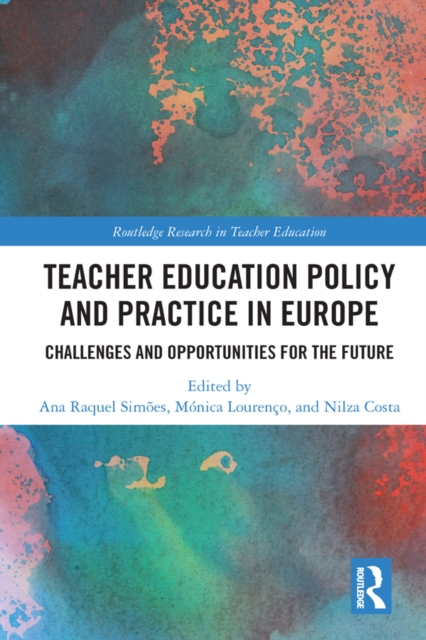
Teacher Education Policy and Practice in Europe
Teacher Education Policy and Practice in Europe provides a critical overview of the current challenges facing teacher education policy and practice in Europe. Drawing on a wide range of contributions, the book demonstrates that in order for teachers to reassume their role as agents of change, it is crucial to create a vision of a future European teacher and promote active engagement in preparing children to live and act in a multicultural and increasingly changing world. The book suggests ways in which teachers could be prepared to meet and overcome the struggles they will encounter in the classroom, including recommendations for teacher education, which open up new possibilities for policy, practice, and research. Considering their own experiences as teachers, contributors also cover topics such as teacher education for the 21st century, the profile of the European teacher, citizenship and identity, social inclusion, linguistic and cultural diversity, and comparative education. Teacher Education Policy and Practice in Europe is essential reading for academics, researchers, and postgraduate students engaged in the study of teacher education, educational policy and educational theory. It should also be of great interest to research-active teacher educators and practising teachers.
eBook

Diálogos epistolares de Jorge de Sena e João Gaspar Simões
As cartas trocadas entre Jorge de Sena e João Gaspar Simões, entre 1943 e 1977, mostram-se bastante ricas em vários aspetos, apesar da sua escassez. As suas existências enquanto escritores e críticos literários têm alguns pontos de aproximação. Contudo, são muito mais as diferenças que os separam. Tudo isso explica o afastamento que aconteceu entre os dois intelectuais, superado por um reencontro final. O importante é o saldo desta correspondência, materializado no amplo interesse documental, em termos culturais e literários.
Journal Article

Doando brindes e construindo relações através de imagens e documentos do Serviço de Proteção aos Índios (SPI)
Este artigo faz um diálogo entre imagens e palavras produzidas entre 1910 e 1945 que compõem o acervo documental do Serviço de Proteção aos Índios (SPI). A metodologia baseia-se em elementos enquadrados nas fotografias nos colocando temas e questões que serão trilhadas na documentação textual e tratadas à luz dos campos da antropologia, fotografia e história. As fotografias são de uma solenidade comemorativa à Proclamação da República, no pátio do Posto Indígena Simões Lopes, que abrigava índios Bakairi e servia como lugar de atração para os “índios do Xingu”. As imagens levantam questões que perpassam as ações que envolvem a doação de brindes/presentes. E isso evoca a documentação textual para compor o contexto mais amplo, que, colocado em contraponto, contribui para trazer ao plano da visibilidade as relações produzidas da situação do contato iluminando as ações, agências indígenas e outras histórias possíveis.
Journal Article

The history of Luiz Simoes Lopes: a leader between administration and politics/ Luiz Simoes Lopes entre administracao e politica: a trajetoria de um dirigente/ Luiz Simoes Lopes, entre administracion y politica: la trayectoria de un dirigente
This study is based on a biographical methodology and aims to analyze the social origin, history, ascension strategies, and inherited or acquired social resources of Luiz Simoes Lopes. The research observes the respective principles of legitimation of Luiz Simoes Lopes, a man trusted by Getulio Vargas in the direction of the Administrative Department of Public Service (Dasp) during the Brazilian period called Estado Novo (New State). Given the hypothesis of a peripheral condition of Brazilian society and, consequently, the absence of social structures in which the professional title is the main criterion of social hierarchy, this article explains the conditions that led Simoes Lopes to be part of a ruling elite that imported models and principles from the North American scientific administration. The conclusion is that, due to the existing roots of personal domination in Brazil, the new rational-formal resources were established in the political struggles for Brazilian state control. Keywords: Luiz Simoes Lopes; ruling classes; Vargas Era. A partir da utilizacao do metodo biografico, este estudo teve por objetivo analisar a origem social, a trajetoria, as estrategias de ascensao, os recursos sociais herdados ou adquiridos e os respectivos principios de legitimacao de Luiz Simoes Lopes, um dos homens de confianca de Getulio Vargas incumbido de dirigir o Departamento Administrativo do Servico Publico (Dasp) durante o periodo do Estado Novo. Seguindo a hipotese que afirma acerca da condicao periferica da sociedade brasileira e, consequentemente, da inexistencia de estruturas sociais em que o titulo profissional seja o principal criterio de hierarquizacao de uma sociedade humana, propos-se aqui explicitar e analisar os condicionantes sociais que levaram Luiz Simoes Lopes a condicao e ao reconhecimento enquanto elite dirigente responsavel pela importacao de modelos e principios da administracao cientifica norteamericana. Assim concluiu-se que, em funcao das bases de dominacao pessoal ja existentes, os novos recursos racional-formais importados foram redefinidos nas lutas politicas pelo controle do Estado brasileiro. Palavras-chave: Luiz Simoes Lopes; elites dirigentes; Era Vargas. A partir del metodo biografico, este estudio tiene como objetivo analizar el origen social, la trayectoria, las estrategias de ascenso, los recursos sociales heredados o adquiridos y los respectivos principios de legitimacion de Luiz Simoes Lopes, uno de los hombres de confianza de Getulio Vargas en la direccion del Departamento Administrativo del Servicio Publico (DASP) durante el Estado Nuevo. Por la hipotesis sobre la condicion periferica de la sociedad brasilena y, consecuentemente, la inexistencia de estructuras sociales en que el titulo profesional sea el principal criterio de jerarquizacion de una sociedad humana, este estudio se propone explicitar y analizar los condicionantes que llevaron a Luiz Simoes Lopes a la condicion de elite dirigente responsable de la importacion de modelos y principios de la administracion cientifica estadounidense. Se concluyo que, en funcion de las bases de dominacion personal ya existentes, los nuevos recursos racionales-formales importados se redefinieron en las luchas politicas por el control del Estado brasileno. Palabras clave: Luiz Simoes Lopes; elites dirigentes; Era Vargas.
Journal Article
Doando brindes e construindo relações através de imagens e documentos do Serviço de Proteção aos Índios (SPI)
Resumo Este artigo faz um diálogo entre imagens e palavras produzidas entre 1910 e 1945 que compõem o acervo documental do Serviço de Proteção aos Índios (SPI). A metodologia baseia-se em elementos enquadrados nas fotografias nos colocando temas e questões que serão trilhadas na documentação textual e tratadas à luz dos campos da antropologia, fotografia e história. As fotografias são de uma solenidade comemorativa à Proclamação da República, no pátio do Posto Indígena Simões Lopes, que abrigava índios Bakairi e servia como lugar de atração para os “índios do Xingu”. As imagens levantam questões que perpassam as ações que envolvem a doação de brindes/presentes. E isso evoca a documentação textual para compor o contexto mais amplo, que, colocado em contraponto, contribui para trazer ao plano da visibilidade as relações produzidas da situação do contato iluminando as ações, agências indígenas e outras histórias possíveis. Abstract This article promotes a dialogue between images and words produced between 1910 and 1945 that compose the documental archive of the Brazilian Indian Protection Service (Serviço de Proteção aos Índios - SPI). The methodology is based on the observation of elements framed in the photographs, which pose themes and questions that are addressed in light of anthropological, photographic and historical considerations. The photographs register a commemorative solemnity - that of the Proclamation of the Republic - at the Simões Lopes’ Indigenous Post’s yard, which housed Bakairi Indians and served as an attraction post for the “Indians of the Xingu.” The images raise questions that traverse actions involving the donation of gifts/souvenirs. This evokes the textual documentation in composing the wider context: placed as counterpoint, it contributes to highlight the relationships produced from the context of contact, shedding light on indigenous actions and agency, as well as other possible histories.
Journal Article

Santos Simões and the Azulejo identity in Portugal
The present article focuses on the work of João Miguel dos Santos Simões (1907-1972), a researcher, historian, scholar and promoter of Portuguese azulejos and their use in Portugal, as well as the founder of the National Azulejo Museum. Santos Simões played a very important role in the identification both of the azulejo’s specific characteristics and of their use in Portugal. He was, in the 20th century, one of the most important promoters of the azulejo as a distinctly Portuguese art form. His main theoretical contribution concerns the recognition of the azulejo’s unique expression in Portugal — and, by extension, in Brazil. Its use gave rise to monumental decorations and helped shape the architecture in original ways. Apart from identifying the main characteristics of the use of azulejos in Portugal, Santos Simões also compared it to the situation in other countries, namely in Spain. Moreover, he studied the azulejo as a touristic phenomenon, a subject whose topicality warrants, according to the author of the present article, a detailed examination.
Journal Article
Luiz Simões Lopes entre administração e política: a trajetória de um dirigente
Resumo A partir da utilização do método biográfico, este estudo teve por objetivo analisar a origem social, a trajetória, as estratégias de ascensão, os recursos sociais herdados ou adquiridos e os respectivos princípios de legitimação de Luiz Simões Lopes, um dos homens de confiança de Getúlio Vargas incumbido de dirigir o Departamento Administrativo do Serviço Público (Dasp) durante o período do Estado Novo. Seguindo a hipótese que afirma acerca da condição periférica da sociedade brasileira e, consequentemente, da inexistência de estruturas sociais em que o título profissional seja o principal critério de hierarquização de uma sociedade humana, propôs-se aqui explicitar e analisar os condicionantes sociais que levaram Luiz Simões Lopes à condição e ao reconhecimento enquanto elite dirigente responsável pela importação de modelos e princípios da administração científica norte-americana. Assim concluiu-se que, em função das bases de dominação pessoal já existentes, os novos recursos racional-formais importados foram redefinidos nas lutas políticas pelo controle do Estado brasileiro. Abstract This study is based on a biographical methodology and aims to analyze the social origin, history, ascension strategies, and inherited or acquired social resources of Luiz Simões Lopes. The research observes the respective principles of legitimation of Luiz Simões Lopes, a man trusted by Getúlio Vargas in the direction of the Administrative Department of Public Service (Dasp) during the Brazilian period called Estado Novo (New State). Given the hypothesis of a peripheral condition of Brazilian society and, consequently, the absence of social structures in which the professional title is the main criterion of social hierarchy, this article explains the conditions that led Simões Lopes to be part of a ruling elite that imported models and principles from the North American scientific administration. The conclusion is that, due to the existing roots of personal domination in Brazil, the new rational-formal resources were established in the political struggles for Brazilian state control. Resumen A partir del método biográfico, este estudio tiene como objetivo analizar el origen social, la trayectoria, las estrategias de ascenso, los recursos sociales heredados o adquiridos y los respectivos principios de legitimación de Luiz Simões Lopes, uno de los hombres de confianza de Getúlio Vargas en la dirección del Departamento Administrativo del Servicio Público (DASP) durante el Estado Nuevo. Por la hipótesis sobre la condición periférica de la sociedad brasileña y, consecuentemente, la inexistencia de estructuras sociales en que el título profesional sea el principal criterio de jerarquización de una sociedad humana, este estudio se propone explicitar y analizar los condicionantes que llevaron a Luiz Simões Lopes a la condición de elite dirigente responsable de la importación de modelos y principios de la administración científica estadounidense. Se concluyó que, en función de las bases de dominación personal ya existentes, los nuevos recursos racionales-formales importados se redefinieron en las luchas políticas por el control del Estado brasileño.
Journal Article