
Catalogue Search | MBRL


Are you sure you want to remove the book from the shelf?

{{itemTitle}}
95,354
result(s) for
"Spring"
Sort by:

It's spring
\"Welcome to Spring, when rainy days and puddle jumping accompany new buds on the trees. Readers will follow a relatable narrator as they explore this special season.\"--Amazon.com.
Book

Hydrogeochemical signatures of spring water in geologically diverse terrains: a case study of Southern Western Ghats, India
Out of 5 million Indian spring water systems, a few were characterised for hydrochemistry and freshwater potential. The present study focuses on analysing the hydrochemistry, discharge, and drinking/irrigation water quality of both cold and thermal spring clusters namely Southern Kerala Springs (SKS) and Dakshina Kannada Springs (DKS) of Southern Western Ghats, India. Currently, eleven springs from SKS and ten from DKS including one thermal spring (TS) with temperature ranges from 34 to 37 °C were considered. The study revealed that cold springs (CS) of SKS are Na-Cl type, while the thermal and cold-water springs in DKS are Na-HCO
3
and mixing water type, respectively. Two distinct mechanisms predominantly define the hydro-chemical composition of the springs—SKS are influenced by precipitation, whereas DKS is likely by chemical weathering processes. While comparing the major ions and saturation indices of thermal springs (TS), it is evident that silicate minerals predominantly affect the chemical composition of water. CaCO
3
−
is oversaturated in TS water and tends to precipitate as a scale layer. PCA showed that both geogenic and anthropogenic factors influence water chemistry. WQI categorized the CS in both the clusters are in the “Excellent” rank as compared to TS. Irrigation water quality signifies that the cold springs are only suitable for irrigation. Moreover, it is evident from the discharge that both SKS and DKS were rainfed in nature. Discharge monitoring designated that the CS could augment drinking water supplies in the nearby regions indicating the necessity of conservation and sustainable use considering future freshwater scarcity.
Journal Article
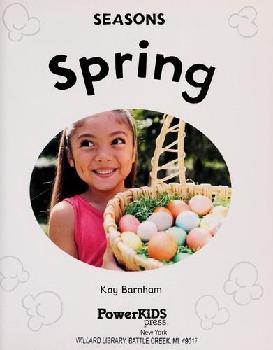
Spring
Photographs and simple text describe the weather, plants, animals, foods, festivals, and fun things to do in spring. Includes instructions for a related activity.
Book

Carbon and Nitrogen Fractions in Dryland Soil Aggregates Affected by Long‐term Tillage and Cropping Sequence
Tillage and cropping sequence may influence C and N sequestration, microbial activities, and N mineralization in dryland soil aggregates. We evaluated the 21‐yr effect of tillage and cropping sequence combinations on C and N fractions in aggregates of a Dooley sandy loam (fine‐loamy, mixed, superactive, frigid Typic Argiustolls) at the 0‐ to 20‐cm depth in eastern Montana. Tillage and cropping sequences were no‐tilled continuous spring wheat (NTCW) (Triticum aestivum L.), spring‐tilled continuous spring wheat (STCW), fall‐ and spring‐tilled continuous spring wheat (FSTCW), fall‐ and spring‐tilled spring wheat‐barley (Hordeum vulgare L.) (1984–1999) followed by spring wheat‐pea (Pisum sativum L.)(2000–2004)(FSTW‐B/P), and spring‐tilled spring wheat‐fallow (STW‐F). Carbon and N fractions were soil organic C (SOC), total N (STN), particulate organic C and N (POC and PON), microbial biomass C and N (MBC and MBN), potential C and N mineralization (PCM and PNM), NH4–N, and NO3–N. Aggregate proportion was greater in NTCW than in FSTCW in the 4.75‐ to 2.00‐mm aggregate‐size class at 0 to 5 cm but was greater in STW‐F than in STCW in the 2.00‐ to 0.25‐mm size class at 5 to 20 cm. After 21 yr, STW‐F reduced SOC, STN, POC, and PON concentrations in aggregates by 34 to 42% at 0‐ to 5‐cm and by 20 to 32% at 5‐ to 20‐cm compared with NTCW and STCW. The PCM and MBC were greater in NTCW and STCW than in STW‐F in the <2.00‐mm size class at 0 to 5 cm but MBN varied with treatments, aggregate‐size classes, and soil depths. Compared with other treatments, NH4–N concentration was lower in STW‐F in the 4.75‐ to 0.25‐mm size class but PNM and NO3–N were greater in FSTW‐B/P in the <2.00‐mm size class. Long‐term reduced tillage with continuous spring wheat increased soil aggregation, C and N sequestration, and microbial biomass and activities in all aggregates but increased tillage intensity with spring wheat‐barley/pea rotation increased N mineralization and availability in small aggregates compared with the conventional STW‐F.
Journal Article

The sound of spring
When a sound starts driving Branch crazy, Poppy and Cloud Guy help him find out where it's coming from.
Book

Late spring freezes coupled with warming winters alter temperate tree phenology and growth
• Spring phenology is advancing with warming but late spring freezes may not advance at the same rate, potentially leading to an increase in freezes after trees initiate budburst. Research suggests warming winters may delay budburst through reduced chilling, which may cause plants to leafout more slowly, thus decreasing spring freeze tolerance.
• Here, we assessed the effects of late spring freezes and reduced over-winter chilling on sapling phenology, growth and tissue traits, across eight temperate tree and shrub species in a laboratory experiment.
• We found that spring freezes delayed leafout – extending the period of greatest risk for freeze damage – increased damage to the shoot apical meristem, and decreased leaf toughness and leaf thickness. Longer chilling accelerated budburst and leafout, even under spring freeze conditions. Thus, chilling compensated for the adverse effects of late spring freezes on phenology. Despite the effects of spring freezes and chilling on phenology, we did not see any major reordering in the sequence of species leafout.
• Our results suggest climate change may impact forest communities not through temporal reassembly, but rather through impacts on phenology and growth from the coupled effects of late spring freezes and decreased over-winter chilling under climate change.
Journal Article

Art for spring
Offers step-by-step instructions on how to create spring crafts, including a fish wind sock, mini greenhouse, and rain painting.
Book

Risk of crop failure due to compound dry and hot extremes estimated with nested copulas
The interaction between co-occurring drought and hot conditions is often particularly damaging to crop's health and may cause crop failure. Climate change exacerbates such risks due to an increase in the intensity and frequency of dry and hot events in many land regions. Hence, here we model the trivariate dependence between spring maximum temperature and spring precipitation and wheat and barley yields over two province regions in Spain with nested copulas. Based on the full trivariate joint distribution, we (i) estimate the impact of compound hot and dry conditions on wheat and barley loss and (ii) estimate the additional impact due to compound hazards compared to individual hazards. We find that crop loss increases when drought or heat stress is aggravated to form compound dry and hot conditions and that an increase in the severity of compound conditions leads to larger damage. For instance, compared to moderate drought only, moderate compound dry and hot conditions increase the likelihood of crop loss by 8 % to 11 %, while when starting with moderate heat, the increase is between 19 % to 29 % (depending on the cereal and region). These findings suggest that the likelihood of crop loss is driven primarily by drought stress rather than by heat stress, suggesting that drought plays the dominant role in the compound event; that is, drought stress is not required to be as extreme as heat stress to cause similar damage. Furthermore, when compound dry and hot conditions aggravate stress from moderate to severe or extreme levels, crop loss probabilities increase 5 % to 6 % and 6 % to 8 %, respectively (depending on the cereal and region). Our results highlight the additional value of a trivariate approach for estimating the compounding effects of dry and hot extremes on crop failure risk. Therefore, this approach can effectively contribute to design management options and guide the decision-making process in agricultural practices.
Journal Article


Toxicological risk assessment using spring water quality indices in plateaus of Giresun Province/Türkiye: a holistic hydrogeochemical data analysis
Water scarcity is a growing concern due to rapid urbanization and population growth. This study assesses spring water quality at 20 stations in Giresun province, Türkiye, focusing on potentially toxic elements and physicochemical parameters. The Water Quality Index rated most samples as \"excellent\" during the rainy season and \"good\" during the dry season, except at stations 4 (40° 35′ 12″ North/38° 26′ 34″ East) and 19 (40° 44′ 28″ North/38° 06′ 53″ West), indicating \"poor\" quality. Mean macro-element concentrations (mg/L) were: Ca (34.27), Na (10.36), Mg (8.26), and K (1.48). Mean trace element values (μg/L) were: Al (1093), Zn (110.54), Fe (67.45), Mn (23.03), Cu (9.79), As (3.75), Ni (3.00), Cr (2.84), Pb (2.70), Co (1.93), and Cd (0.76). Health risk assessments showed minimal non-carcinogenic risks, while carcinogenic risk from arsenic slightly exceeded safe limits (CR = 1.75E−04). Higher arsenic concentrations during the rainy season were due to increased recharge, arsenic-laden surface runoff, and human activities. Statistical analyses (PCA, PCC, HCA) suggested that metals and physico-chemical parameters originated from lithogenic, anthropogenic, or mixed sources. Regular monitoring of spring water is recommended to mitigate potential public health risks from waterborne contaminants.
Journal Article