
Catalogue Search | MBRL


Are you sure you want to remove the book from the shelf?

{{itemTitle}}
19
result(s) for
"Symbolism in architecture History To 1500."
Sort by:

The afterlife of the Roman city : architecture and ceremony in late antiquity and the early middle ages
\"This book offers a new and surprising perspective on the evolution of cities across the Roman Empire in late antiquity and the early Middle Ages (third to ninth centuries AD). It suggests that the tenacious persistence of leading cities across most of the Roman world is due, far more than previously thought, to the persistent inclination of kings, emperors, caliphs, bishops, and their leading subordinates to manifest the glory of their offices on an urban stage, before crowds of city dwellers. Long after the dissolution of the Roman Empire in the fifth century, these communal leaders continued to maintain and embellish monumental architectural corridors established in late antiquity, the narrow but grandiose urban itineraries, essentially processional ways, in which their parades and solemn public appearances consistently unfolded. Hendrik W. Dey's approach selectively integrates urban topography with the actors who unceasingly strove to animate it for many centuries\"-- Provided by publisher.
Book

Toledo Cathedral : building histories in medieval castile
Medieval Toledo is famous as a center of Arabic learning and as a home to sizable Jewish, Muslim, and Christian communities. Yet its cathedral—one of the largest, richest, and best preserved in all of Europe—is little known outside Spain. In Toledo Cathedral, Tom Nickson provides the first in-depth analysis of the cathedral's art and architecture. Focusing on the early thirteenth to the late fourteenth centuries, he examines over two hundred years of change and consolidation, tracing the growth of the cathedral in the city as well as the evolution of sacred places within the cathedral itself. He goes on to consider this substantial monument in terms of its location in Toledo, Spain's most cosmopolitan city in the medieval period. Nickson also addresses the importance and symbolic significance of Toledo's cathedral to the city and the art and architecture of the medieval Iberian Peninsula, showing how it fits in with broader narratives of change in the arts, culture, and ideology of the late medieval period in Spain and in Mediterranean Europe as a whole.
eBook
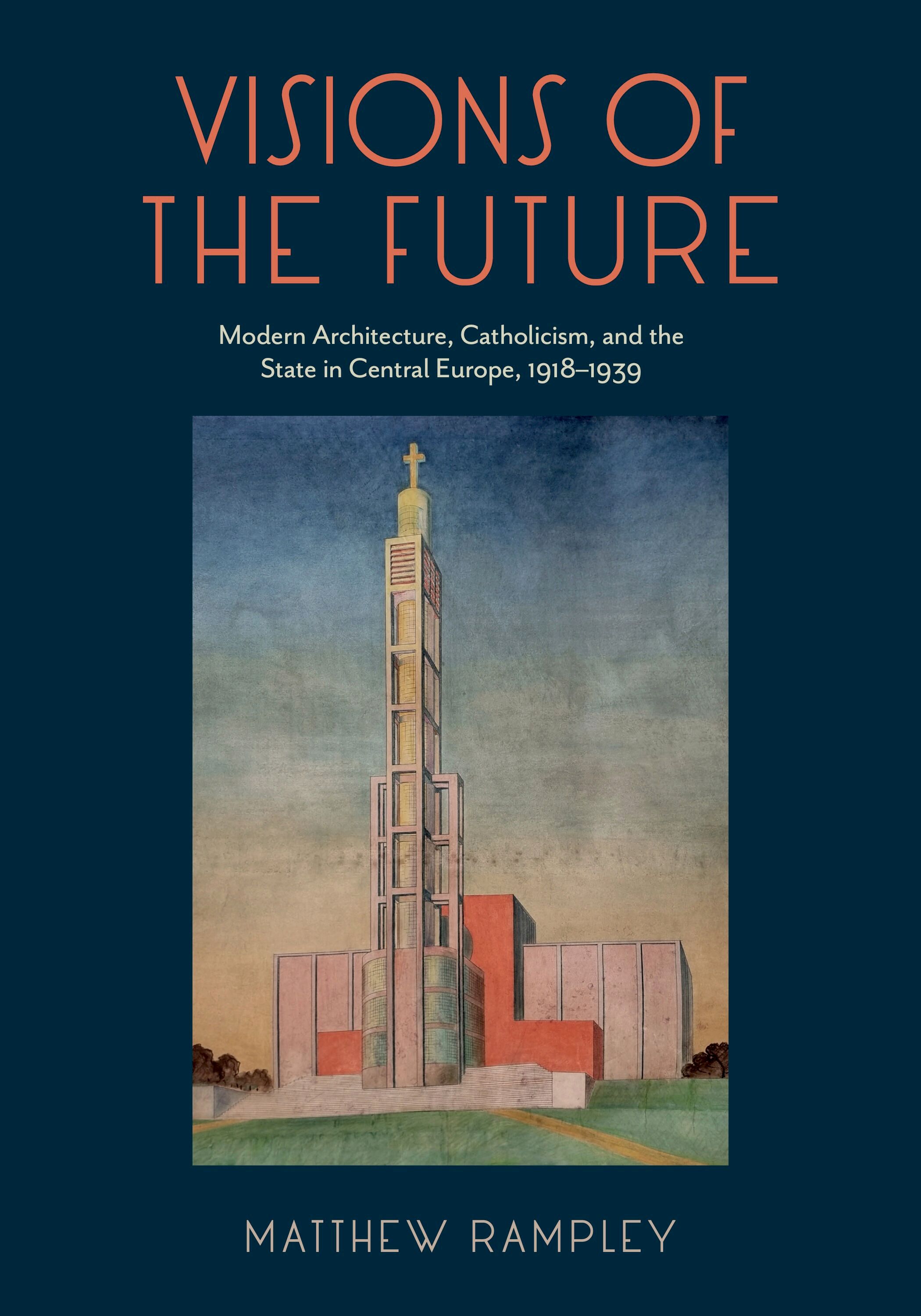
Visions of the Future
Some of the most striking examples of modernist architecture are churches, yet they have seldom been subject to extended critical analysis. In this book, Matthew Rampley provides just such an analysis, focusing on the Catholic Church in interwar Austria, Czechoslovakia, and Hungary. A powerful institution in the Habsburg Empire, the Catholic Church continued to be a central social, political, and cultural agent after 1918, working in alliance with political parties and national governments to promote visions of a new national culture. As a result, church building took on an important ideological and political function. Rampley’s study is set against the backdrop of two interrelated issues: the role of architecture in the Catholic Church’s response to an increasingly secular modernity, and church architecture as part of the Church’s attempts to shape social and political life in the states that emerged after the collapse of Austria-Hungary. Rampley also examines the aesthetic, cultural, and political contexts that informed architectural projects, including the conflict between Catholicism and social democracy, the embrace of fascism, Catholic theories of technology, and discourses of regionalism and ruralism. In bringing to light an untold chapter in the history of modern architecture, this book also engages in methodological reflection on the implications of the study of modern church architecture for the historiography of modernism. This book will appeal to students and scholars of architectural history, religious and political history, and interwar Central European history.
eBook

Bar Locks and Early Church Security in the British Isles
This book examines the evidence for the measures taken to make church buildings secure or defensible from their earliest times until the later medieval period. In particular it examines the phenomenon of 'bar locks' which the author identifies in many different contexts throughout England, Wales, Scotland and Ireland.
eBook

Early Christian Chapels in the West
Gillian Mackie examines the decorative schemes, now often the only way to determine the function, patronage, and meaning of the building, of surviving early medieval chapels built in Italy and Istria from AD312-740.
eBook

Living Water: Images, Symbols, and Settings of Early Christian Baptism
An interdisciplinary study of the practice and purpose of early Christian baptism as it is depicted in pictorial art and as it was practiced in-built structures, this book integrates physical remains with literary evidence for the early Christian initiation rite.
eBook

In the shadow of the church : the building of mosques in early medieval Syria
In his book In the Shadow of the Church: The Building of Mosques in Early Medieval Syria Mattia Guidetti explains how late antique church architecture influenced the rise of Islamic religious architecture in the Syrian region.
eBook

Early medieval architecture as bearer of meaning
At last available in English, this classic text was originally published in Germany in 1951 and has been continuously in print since then. Gunter Bandmann analyzes the architecture of societies in western Europe up to the twelfth century that aspired to be the heirs to the Roman Empire. He examines the occurrence and recurrence of basic forms not as stylistic evolutions but as meaningful expressions of meta-material content and develops an architectural iconography of symbolic, historical, and aesthetic elements.
eBook
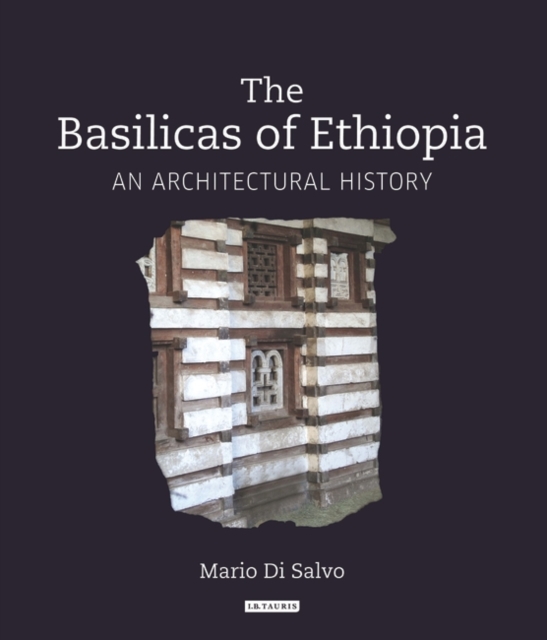
The Basilicas of Ethiopia
The basilica is symbolic of the history of Christianity in Ethiopia. Aizan, the first Christian king of the Aksumite empire was responsible for the creation of the large, five-aisled church of M?ry?m ??yon, sadly destroyed in 1535, and since then many hundreds of basilicas have been built in Ethiopia, many, including the UNESCO World Heritage site of Lalibela, literally 'hewn from the rock'. In this book, architectural historian and architect Mario di Salvo considers the unique architectural features of Ethiopia's basilicas and explains how they developed over time. Featuring almost 200 colour illustrations, this book is an attractive and comprehensive guide to some of Ethiopia's most inspiring religious buildings.
eBook

The Architecture and Liturgy of the Bema in Fourth- to Sixth-Century Syrian Churches
In fourth to sixth century Syria a nave-platform known as the Bema became popular in some regions before mysteriously disappearing; this study seeks to explain how these bemata functioned and which elements led to their decline.
eBook