
Catalogue Search | MBRL


Are you sure you want to remove the book from the shelf?

{{itemTitle}}
586
result(s) for
"THEATRES - SPAIN"
Sort by:

Space, Drama, and Empire
Spanish poet, playwright, and novelist Félix Lope de Vega (1562-1635) was a key figure of Golden Age Spanish literature, second only in stature to Cervantes, and is considered the founder of Spain's classical theater.
eBook


Staging Habla de Negros
In this volume, Nicholas R. Jones analyzes white appropriations of black African voices in Spanish theater from the 1500s through the 1700s, when the performance of Africanized Castilian, commonly referred to as habla de negros (black speech), was in vogue. Focusing on Spanish Golden Age theater and performative poetry from authors such as Calderón de la Barca, Lope de Rueda, and Rodrigo de Reinosa, Jones makes a strong case for revising the belief, long held by literary critics and linguists, that white appropriations and representations of habla de negros language are \"racist buffoonery\" or stereotype. Instead, Jones shows black characters who laugh, sing, and shout, ultimately combating the violent desire of white supremacy. By placing early modern Iberia in conversation with discourses on African diaspora studies, Jones showcases how black Africans and their descendants who built communities in early modern Spain were rendered legible in performative literary texts. Accessibly written and theoretically sophisticated, Jones's groundbreaking study elucidates the ways that habla de negros animated black Africans' agency, empowered their resistance, and highlighted their African cultural retentions. This must-read book on identity building, performance, and race will captivate audiences across disciplines.
eBook

The Stages of Property
Through an integrative historicist approach to a wide range of literary texts and archival documents,The Stages of Propertymakes an important statement about the cultural, societal, and political roles of the theatre in Spain during the 1800s.
eBook
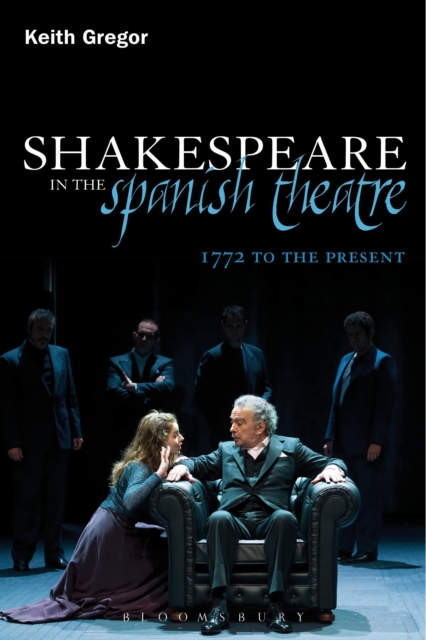
Shakespeare in the Spanish Theatre
Shakespeare in the Spanish Theatre offers an account of Shakespeare's presence on the Spanish stage, from a production of the first Spanish rendering of Jean-François Ducis's Hamlet in 1772 to the creative and controversial work of directors like Calixto Bieito and Alex Rigola in the early 21st century.
eBook
Golden age drama in contemporary Spain
This jargon-free book on Spanish classical theatre is the first monograph to examine this rich dramatic tradition in terms of modern-day performance.
eBook
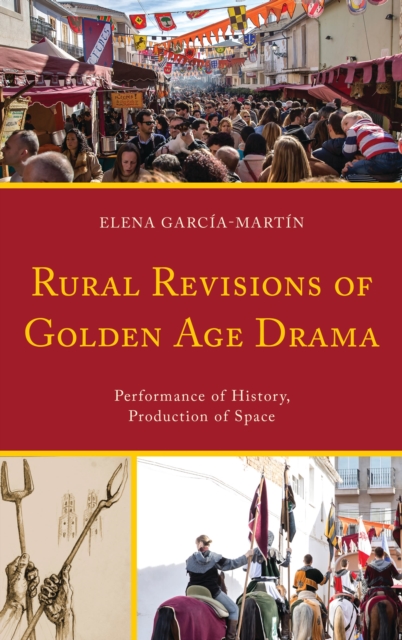
Rural Revisions of Golden Age Drama
This work focuses on rural community versions of Spanish Early Modern Theatre and deals with cultural heritage and the contemporary impact of Golden Age theatre on local rural communities. To this end, I examine the burgeoning of annual rural Golden Age theatre festivals that generate site-centered, non-professional productions of the plays, and revisit the conflict between tradition and innovation, between popular and high culture between authority of literary heritage and the people's right to the canon. The selection of Early Modern plays set in actual Spanish communities—Fuenteovejuna, El Alcalde de Zalamea, Numancia and Los tres blasones de España—renders an overview of the effect of these important works on their respective communities and focuses on the theatrical festivals as peripheral, subaltern, hybrid cultural phenomena. I take into consideration not only traditional and significant studies on these four renowned plays, but recent theories on staging, performance and popular reception and agency. The research involved crosses traditional disciplinary boundaries between literature, history, geography, and politics by centering on the appropriation and re-examination of a past that is continuously revised through contemporary performance, and which is adjusted to fit the needs and desires of the context in which it is interpreted. This diachronic approach allows for a new perspective on contemporary performances which question cultural politics, redefine tradition and transcend geo-political boundaries.
eBook

Staging Habla de Negros
In this volume, Nicholas R. Jones analyzes white appropriations
of black African voices in Spanish theater from the 1500s through
the 1700s, when the performance of Africanized Castilian, commonly
referred to as habla de negros (black speech), was in
vogue.
Focusing on Spanish Golden Age theater and performative poetry
from authors such as Calderón de la Barca, Lope de Rueda, and
Rodrigo de Reinosa, Jones makes a strong case for revising the
belief, long held by literary critics and linguists, that white
appropriations and representations of habla de negros
language are \"racist buffoonery\" or stereotype. Instead, Jones
shows black characters who laugh, sing, and shout, ultimately
combating the violent desire of white supremacy. By placing early
modern Iberia in conversation with discourses on African diaspora
studies, Jones showcases how black Africans and their descendants
who built communities in early modern Spain were rendered legible
in performative literary texts.
Accessibly written and theoretically sophisticated, Jones's
groundbreaking study elucidates the ways that habla de
negros animated black Africans' agency, empowered their
resistance, and highlighted their African cultural retentions. This
must-read book on identity building, performance, and race will
captivate audiences across disciplines.
eBook
The cultural politics of twentieth-century Spanish theater
The Cultural Politics of Twentieth-Century Spanish Theater argues that twentieth-century artists used the Golden Age Eucharist plays called autos sacramentales to reassess the way politics and the arts interact in the Spanish nation’s past and present, and to posit new ideas for future relations between the state and the national culture industry. The book traces the phenomenon of the twentieth-century auto to show how theater practitioners revisited this national genre to manifest different, oftentimes opposing, ideological and aesthetic agendas. It follows the auto from the avant-garde stagings and rewritings of the form in the early twentieth century, to the Francoist productions by the Teatro Nacional de la Falange, to postmodern parodies of the form in the era following Franco’s death to demonstrate how twentieth-century Spanish dramatists use the auto in their reassessment of the nation’s political and artistic past, and as a way of envisioning its future.
eBook
From silver screen to Spanish stage
This book examines responses in print and on stage of five Spanish humorists to Hollywood cinema from the 1920s to the 1960s. After detailing their viewing habits and film-making experiences in the USA and Spain, I devise and apply a method for the analysis of the influence of screen on stage that draws on the disciplines of film and theatre studies. I argue that these experiments, had they not been curtailed by the culture of Francoism, might have developed into a significant contribution to European theatre.
eBook