
Catalogue Search | MBRL


Are you sure you want to remove the book from the shelf?

{{itemTitle}}
598
result(s) for
"Taiwan - ethnology"
Sort by:


Effects of a Parent–Child Interactive Program for Families on Reducing the Exposure of School-Aged Children to Household Smoking
Parental smoking has been identified as the major source of children's exposure to environmental tobacco smoke (ETS). Therefore, parental involvement is critical in ETS exposure prevention programs. This study examined the effects of a parent-child interactive program on reducing children's exposure to ETS at home and enhancing parents' and children's prevention strategies.
A clustered randomized controlled trial was administered to 75 families of school-aged children from six primary schools in New Taipei City, Taiwan. Families in the intervention group received a parent-child interactive intervention, and parents in the control group received written materials on tobacco hazards. Data on children's exposure and the prevention of children's exposure to ETS at home were obtained at baseline, 8-week, and 20-week or 6-month assessments.
The percentage of children with urine cotinine levels greater than or equal to 6 ng/ml was significantly lower in the intervention group than it was in the control group at both the 8-week and 6-month assessments. The intervention significantly reduced parental smoking in the presence of children and increased parents' prevention of children's ETS exposure and children's ETS avoidance behavior from the baseline to the 20-week assessment.
This is a preliminary study design aimed at creating a program for reducing children's ETS exposure at home. Further research to produce evidence supporting the application of the parent-child interactive program in primary schools is suggested. The theoretical basis of the intervention design can serve as a reference for nursing education and the design of health education programs.
Journal Article


Association between Alanine Aminotransferase and Intracerebral Hemorrhage in East Asian Populations
Background: Intracerebral hemorrhage (ICH) and chronic liver disease are relatively common in East Asian countries. However, the relationship between the two diseases is unclear. Thus, we investigated the association between serum alanine aminotransferase (ALT) levels and ICH risk in East Asian populations. Methods: The East Asian Network for Stroke Prevention enrolled 279,982 participants with ALT measurements from four cohort studies in Korea, Taiwan, Japan and mainland China. Among them, 1,324 ICH events and 493 ICH deaths were observed. Cox's proportional hazard regression analysis was performed in each cohort to estimate the hazard ratio (HR) after adjusting for age, blood pressure, diabetes, total cholesterol, smoking and alcohol intake. Combined HRs were then estimated using pooled analyses with fixed-effects models. Results: The multivariate-adjusted pooled HRs (with 95% confidence interval, CI) for ICH incidence per 10 IU/l increments of ALT were 1.04 (1.03-1.04) in men and 1.01 (0.98-1.04) in women. Corresponding HRs for ICH mortality were 1.04 (1.02-1.05) in men and 1.04 (1.00-1.08) in women. The pooled HRs for ICH incidence in participants with ALT levels greater than or equal to 50 IU/l compared to those with levels less than 20 IU/l were 1.74 (1.41-2.16) in men and 1.60 (1.06-2.40) in women. The corresponding HRs for ICH mortality were 1.72 (1.21-2.44) in men and 1.63 (0.79-3.36) in women. Conclusions: An elevated ALT level was independently and significantly associated with an increased risk of ICH in East Asian men, but the association was less prominent in women.
Journal Article
Art for social change and cultural awakening
Artistic residency has become widely adopted in Western countries while only recently having become popular and well-supported within Taiwan. This book explores the challenges that this form of art practice faced in contemporary Taiwan from the revocation of Martial Law in 1987 to the 2000s—arguably one of the most exciting periods in the sociocultural history of the island. Case studies show what is at stake politically, historically, and socially in artists’ endeavours to give shape to a sense of Taiwanese identity. Despite the prevalence of artists engaged in social issues in today’s world and the undeniable contributions of artistic residency to contemporary art practice, little literature or scholarly research has been conducted on the practical, conceptual, and ideological aspects of artist residency. Very often, it is perceived in very narrow terms, overlooking explicit or hidden issues of localism, nationalism and globalization. If artistic residence did indeed emerge from the radical movements of the 1960s and 70s in the Western world—and especially Britain—then this book argues that the contemporary sociocultural context of Taiwan calls for redefined, culturally-specific models of residency. The precarious geo-political situation of Taiwan has made issues of cultural identity—tackled by artists and successive governments alike—very sensitive. A new genre of artistic residence in Taiwan would mean that artists involved from whatever cultural background operate as engaging interpreters; their roles would not be confined to mirroring culture and society. These artists-in-residence would contribute to cultural awakening by offering ways of negotiating creatively with otherness, and this for the sake of a better social life and shared identity.
eBook

Ploughshare Village
This anthropological study of a workers village in North Taiwan makes an important contribution to the comparative literature on Chinese and Taiwanese social organization. Based on fieldwork conducted in 1973 and 1978, the study is exceptional not only because of its excellent data but also because the village itself was unique. Unlike villages previously studied and written about, Ploughshare was neither an agricultural nor a fishing village, but rather one whose inhabitants earned their living mostly from coal mining, knitting, and other non-agrarian activities. Culture and environmental context thus shaped social organization there differently than in other Taiwanese villages. This ethnography links local data to surrounding socioeconomic spheres: it shows the village s relationship to its region, to Taiwan as a whole, and to the international economy. It also captures an important point in time, as Taiwan was undergoing the economic miracle that brought it into the ranks of developed countries. Stevan Harrell s new preface highlights changes not only in the village over the last several decades, but also in the ways that anthropologists think about culture and Taiwan.
Ploughshare Village, with its rich descriptions and analyses, will be of value to anthropologists, sociologists, economists, and China specialists.
eBook

Interpersonal symptoms in adolescence depression across Asian and European regions: a network approach
Background
Major Depressive Disorder (MDD) poses a significant global health challenge, with symptom presentation potentially varying between adolescents and adults. Adolescence is a critical period marked by heightened vulnerability to interpersonal stresses, yet the impact of these stresses on the structure of depressive symptoms is not well understood. Recognizing the cultural nuances in how depression manifests among adolescents is crucial. To this end, this paper employs a network analysis approach, utilizing a comprehensive symptom checklist from the Multidimensional Depression Assessment Scale (MDAS). Our study investigates the role of interpersonal symptoms within the broader cluster of emotional, cognitive, and somatic symptoms and explores variations in adolescent groups in four Asian and European regions.
Methods
We recruited a diverse sample of 6,348 adolescents aged 12 to 18 from Hong Kong, Taiwan, the UK, China, and the Netherlands using the Qualtrics platform. Employing the Gaussian Graphical Model, we established a network model of depressive symptoms as measured by the MDAS, segregating the sample into Asian and European regions to examine the interconnections between them. The study focused on identifying central symptom nodes and comparing the network structures between the two groups.
Results
The analysis identified
feeling worthless
,
low energy
,
being a burden to others
, and
low mood
as central symptoms of depression. Notably, there were significant differences in the connections between depressive symptoms among Asian (Hong Kong, China and Taiwan) and European (UK and the Netherlands) adolescents, highlighting cultural variations in how interpersonal symptoms interact with emotional, cognitive, and somatic symptoms.
Conclusion
This study is pioneering in applying network analysis to include interpersonal symptoms in examining depression among a diverse adolescent population. It demonstrates that interpersonal symptoms are integral to the central features of depressive symptoms. Furthermore, our findings suggest that, compared to their UK and Dutch peers, interpersonal symptoms in Asian adolescents are uniquely connected to other symptom clusters, reflecting distinct cultural patterns. Limitations: The study engaged a broad community sample; however, future research could benefit from including a larger sample size to allow for a more detailed analysis of a greater number of symptom nodes.
Journal Article

Two Signatures of Implicit Intergroup Attitudes: Developmental Invariance and Early Enculturation
Long traditions in the social sciences have emphasized the gradual internalization of intergroup attitudes and the putatively more basic tendency to prefer the groups to which one belongs. In four experiments (N = 883) spanning two cultures and two status groups within one of those cultures, we obtained new evidence that implicit intergroup attitudes emerge in young children in a form indistinguishable from adult attitudes. Strikingly, this invariance from childhood to adulthood holds for members of socially dominant majorities, who consistently favor their in-group, as well as for members of a disadvantaged minority, who, from the early moments of race-based categorization, do not show a preference for their in-group. Far from requiring a protracted period of internalization, implicit intergroup attitudes are characterized by early enculturation and developmental invariance.
Journal Article

Reconstructing Austronesian population history in Island Southeast Asia
Austronesian languages are spread across half the globe, from Easter Island to Madagascar. Evidence from linguistics and archaeology indicates that the ‘Austronesian expansion,’ which began 4,000–5,000 years ago, likely had roots in Taiwan, but the ancestry of present-day Austronesian-speaking populations remains controversial. Here, we analyse genome-wide data from 56 populations using new methods for tracing ancestral gene flow, focusing primarily on Island Southeast Asia. We show that all sampled Austronesian groups harbour ancestry that is more closely related to aboriginal Taiwanese than to any present-day mainland population. Surprisingly, western Island Southeast Asian populations have also inherited ancestry from a source nested within the variation of present-day populations speaking Austro-Asiatic languages, which have historically been nearly exclusive to the mainland. Thus, either there was once a substantial Austro-Asiatic presence in Island Southeast Asia, or Austronesian speakers migrated to and through the mainland, admixing there before continuing to western Indonesia.
Populations speaking Austronesian languages are numerous and widespread, but their history remains controversial. Here, the authors analyse genetic data from Southeast Asia and show that all populations harbour ancestry most closely related to aboriginal Taiwanese, while some also contain a component closest to Austro-Asiatic speakers.
Journal Article
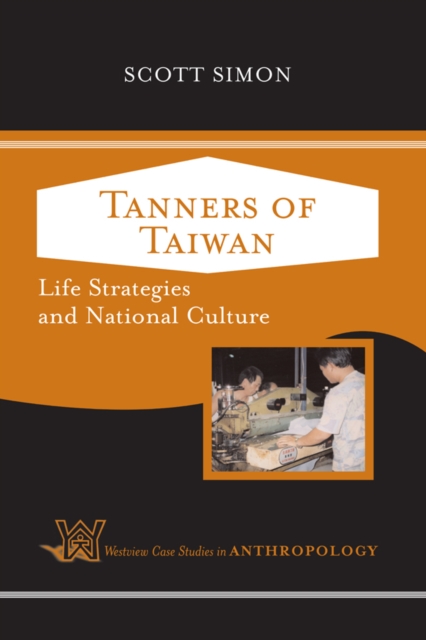
Tanners of Taiwan
Tanners of Taiwan is an ethnography of identity construction set in the leather-tanning communities of Southern Taiwan. Through life history analysis and ethnographic observation, author Scott Simon examines what it means to be Chinese—or alternatively Taiwanese—in contemporary Taiwan. Under forty years of martial law from 1947 to 1987, the Chinese Nationalist Party tried to create a Chinese identity in Taiwan through ideological campaigns that reached deep into families, schools and workplaces. They justified their rule through a development narrative that Chinese culture and good policy contributed to the prosperity of the Taiwan miracle. These ideological claims and cultural identities, however, have never been fully accepted in Southern Taiwan. This ethnography is the first to document from the ground level how those claims have been contested, and how a new Taiwanese identity has been constructed since democratization. Tanners of Taiwan provides more than a description of workplaces in Taiwan. Looking at the different perspectives of tanners, women managers, and workers, it demonstrates how cultural and other identities are constructed through dynamics of power and political economy.
eBook