
Catalogue Search | MBRL


Are you sure you want to remove the book from the shelf?

{{itemTitle}}
181,456
result(s) for
"Technology Marketing."
Sort by:

Marketing 6.0 : the future is immersive
\"In Marketing 6.0, the celebrated promoter of the \"Four P's of Marketing,\" Philip Kotler, explains how marketers can use technology to address customers' needs and make a difference in the world. In a new age of metamarketing, this book provides marketers with a way to integrate technological and business model evolution with the dramatic shifts in consumer behavior that have happened in the last decade.\"-- Provided by publisher.
Book

Employing digital twin technology in the pursuit to avert sustainable marketing myopia
Purpose
This study investigates the relationship between entrepreneurial marketing and digital twin technology in sustainable marketing, focusing on overcoming sustainable marketing myopia. It aims to determine how combining these approaches can help businesses avoid the pitfalls associated with short-sighted sustainability practices.
Design/methodology/approach
This research uses an interview methodology focused on the Swedish market to analyse the dynamics of entrepreneurial marketing, characterised by innovation and a strong focus on customer needs. It specifically examines how such marketing strategies serve as a defence against short-sighted or myopic sustainable marketing practices.
Findings
The study demonstrates that integrating entrepreneurial marketing with digital twin technology can effectively prevent sustainable marketing myopia. This approach helps businesses maintain authentic sustainability claims, comply with data privacy laws and navigate customer-centric models. The findings highlight the advantages of merging entrepreneurial marketing with advanced technologies, promoting sustainable marketing, ensuring long-term industrial success and enhancing transparency and accuracy.
Originality/value
This research offers unique insights for firms, arguing that merging entrepreneurial marketing with digital twin technology is crucial for enhancing sustainable marketing while sustainable marketing myopia and ensuring long-term success. It underscores the need to balance customer-centric, credible sustainable claims with privacy standards, providing a nuanced approach in the digital era. Additionally, it contributes a range of conceptual and practical propositions to the field.
Journal Article


Consumers and Artificial Intelligence
Artificial intelligence (AI) helps companies offer important benefits to consumers, such as health monitoring with wearable devices, advice with recommender systems, peace of mind with smart household products, and convenience with voice-activated virtual assistants. However, although AI can be seen as a neutral tool to be evaluated on efficiency and accuracy, this approach does not consider the social and individual challenges that can occur when AI is deployed. This research aims to bridge these two perspectives: on one side, the authors acknowledge the value that embedding AI technology into products and services can provide to consumers. On the other side, the authors build on and integrate sociological and psychological scholarship to examine some of the costs consumers experience in their interactions with AI. In doing so, the authors identify four types of consumer experiences with AI: (1) data capture, (2) classification, (3) delegation, and (4) social. This approach allows the authors to discuss policy and managerial avenues to address the ways in which consumers may fail to experience value in organizations’ investments into AI and to lay out an agenda for future research.
Journal Article

Drucker’s insights on market orientation and innovation: implications for emerging areas in high-technology marketing
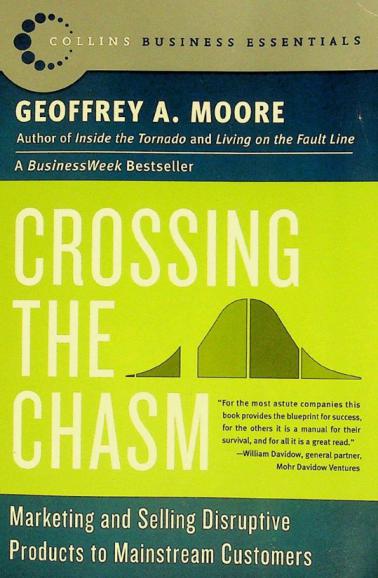
In 1954, Drucker boldly declared that organizations have only two basic functions, marketing and innovation. While true for any organization, this insight is particularly pertinent for technology-based businesses. The complicated environment surrounding high-tech companies creates a great need for sophisticated marketing. Yet these companies continue to have under-developed competencies in marketing and in understanding customer needs. This essay explores Drucker’s insights with respect to two particularly salient issues for high-tech companies: developing and implementing a market orientation and break-through innovations. We review Drucker’s insights and synthesize them with the scholarly research on these issues. Finally, we discuss three emerging areas in high-tech marketing where academics and managers could build on Drucker’s insights to guide future research and practice: market driving, customer co-creation, and corporate social responsibility. These illustrative examples highlight that even today, Drucker’s writings continue to offer remarkable guidance to scholars and managers who are willing to take the time to reflect, understand, and incorporate his insights in the unique context of high-tech industries.
Journal Article

Technology distribution channels : understanding and managing channels to market
\"Using numerous examples from global technology corporations, Technology Distribution Channels explores the chain that makes products and services available for market and explains how to make the most of each step of the process. By defining the role and significance of the various partners involved, including distributors, wholesalers, and final-tier channel players, the text provides a clear understanding of the entire go-to-market process, while also explaining channel partners' business models and how to engage with them for effective market access.Technology Distribution Channels covers both the tactical and strategic dimensions of channel economics and includes information on accessing and servicing markets and customers, controlling brands, integrating web and online channels, building the value proposition and creating differentiation. Comprehensive and clear, this book provides the knowledge needed to improve business models to ensure maximum market exposure and successful product delivery\"-- Provided by publisher.
Book

Online sentiment analysis in marketing research: a review
Purpose
The explosion of internet-generated content, coupled with methodologies such as sentiment analysis, present exciting opportunities for marketers to generate market intelligence on consumer attitudes and brand opinions. The purpose of this paper is to review the marketing literature on online sentiment analysis and examines the application of sentiment analysis from three main perspectives: the unit of analysis, sampling design and methods used in sentiment detection and statistical analysis.
Design/methodology/approach
The paper reviews the prior literature on the application of online sentiment analysis published in marketing journals over the period 2008-2016.
Findings
The findings highlight the uniqueness of online sentiment analysis in action-oriented marketing research and examine the technical, practical and ethical challenges faced by researchers.
Practical implications
The paper discusses the application of sentiment analysis in marketing research and offers recommendations to address the challenges researchers confront in using this technique.
Originality/value
This study provides academics and practitioners with a comprehensive review of the application of online sentiment analysis within the marketing discipline. The paper focuses attention on the limitations surrounding the utilization of this technique and provides suggestions for mitigating these challenges.
Journal Article


Convergence of marketing technologies and artificial intelligence: a bibliometric review (1987-2025)
This article explores the intersection of artificial intelligence (AI) and marketing technologies (MarTech) by conducting a comprehensive bibliometric analysis. The aim is to identify dominant research themes, key contributors, and major gaps in the existing literature. MarTech is conceptualised as a system of digital tools that enables marketing transformation. Scopus and Web of Science were used to collect records. Following a preliminary comparison, the final analytical corpus of peer-reviewed scientific publications (n=492) was drawn solely from Scopus. The study is based on a dataset from 1987 to 2025. Using Biblioshiny, the analysis examined publication dynamics, citation patterns, co-authorship networks, and thematic clusters. The results indicate consistent growth in scholarly attention, with an annual publication increase of 7.39 % across the full period and 36.53 % between 2015 and 2025. Five primary thematic clusters were identified: (1) AI-Marketing Core and Innovation, this cluster acts as a motor theme, integrating innovation, AI applications, and marketing outcomes, and providing conceptual and methodological scaffolding for the field; (2) Technology Adoption, functioning as a basic theme, it connects sources of innovation with market outcomes; (3) Market Applications and Digital Commerce, this cluster reflects the operationalisation of value in commerce and digital marketing, exhibiting high centrality and moving towards motor-theme status; (4) Perception and Human-Centred Factors, representing a niche but strategically important human perspective; it moderates the relationship between adoption and outcomes. (5) Generative Artificial Intelligence (e.g., ChatGPT), this is the most emerging stream, acting as an accelerator for innovation, adoption, and applications, while simultaneously elevating the importance of quality, safety, and ethics. The United States, India, and China lead in publication volume, while the United Kingdom, France, and Australia demonstrate the highest citation impact. Despite the growing literature base, theoretical fragmentation persists, and limited studies address the ethical, social, and emotional implications of AI in marketing.
Journal Article