
Catalogue Search | MBRL


Are you sure you want to remove the book from the shelf?

{{itemTitle}}
10,037
result(s) for
"Ventilators, mechanical"
Sort by:

The efficacy of medical masks and respirators against respiratory infection in healthcare workers
Objective We aimed to examine the efficacy of medical masks and respirators in protecting against respiratory infections using pooled data from two homogenous randomised control clinical trials (RCTs). Methods The data collected on 3591 subjects in two similar RCTs conducted in Beijing, China, which examined the same infection outcomes, were pooled. Four interventions were compared: (i) continuous N95 respirator use, (ii) targeted N95 respirator use, (iii) medical mask use and (iv) control arm. The outcomes were laboratory‐confirmed viral respiratory infection, influenza A or B, laboratory‐confirmed bacterial colonisation and pathogens grouped by mode of transmission. Results Rates of all outcomes were consistently lower in the continuous N95 and/or targeted N95 arms. In adjusted analysis, rates of laboratory‐confirmed bacterial colonisation (RR 0.33, 95% CI 0.21‐0.51), laboratory‐confirmed viral infections (RR 0.46, 95% CI 0.23‐0.91) and droplet‐transmitted infections (RR 0.26, 95% CI 0.16‐0.42) were significantly lower in the continuous N95 arm. Laboratory‐confirmed influenza was also lowest in the continuous N95 arm (RR 0.34, 95% CI 0.10‐1.11), but the difference was not statistically significant. Rates of laboratory‐confirmed bacterial colonisation (RR 0.54, 95% CI 0.33‐0.87) and droplet‐transmitted infections (RR 0.43, 95% CI 0.25‐0.72) were also lower in the targeted N95 arm, but not in medical mask arm. Conclusion The results suggest that the classification of infections into droplet versus airborne transmission is an oversimplification. Most guidelines recommend masks for infections spread by droplets. N95 respirators, as “airborne precautions,” provide superior protection for droplet‐transmitted infections. To ensure the occupational health and safety of healthcare worker, the superiority of respirators in preventing respiratory infections should be reflected in infection control guidelines.
Journal Article

Transnasal humidified rapid insufflation ventilatory exchange vs. facemask oxygenation in elderly patients undergoing general anaesthesia: a randomized controlled trial
Transnasal humidified rapid insufflation ventilator exchange (THRIVE) may be effective in delaying hypoxia, but the efficacy of THRIVE for oxygenation in elderly patients under general anaesthesia has not been assessed. This study assessed whether THRIVE prolonged the apnoea time in the elderly patients after induction. This was a single centre, two-group, randomized controlled trial. 60 patients (65 to 80 years of age) with American Society of Anesthesiologists (ASA) grades I ~ III who required tracheal intubation or the application of a laryngeal mask under general anaesthesia were randomly allocated to receive oxygenation using THRIVE (100% oxygen, 30~70 litres min
−1
) or a facemask (100% oxygen, 10 litres min
−1
) during the pre-oxygenation period and during apnoea. The apnoea time, which was defined as the time from the cessation of spontaneous breathing until the SpO
2
decreased to 90% or the apnoea time reached 10 minutes was recorded as the primary outcome. No significant differences were found on the baseline characteristics between the groups. The apnoea time was significantly increased (
P
< 0.01) in the THRIVE group. The median (interquartile range) apnoea times were 600 (600–600) s in the THRIVE group and 600 (231.5–600) s in the facemask group. No significant differences were found in the PaO
2
, PaCO
2
and vital parameters between the THRIVE and facemask groups. No increased occurrence of complications, including haemodynamic instability, resistant arrhythmia or nasal discomfort, were reported in both the THRIVE group and the facemask group. THRIVE prolongs the apnoea time in elderly patients. THRIVE may be a more effective method for pre-oxygenation than a facemask in the elderly without pulmonary dysfunction.
Journal Article

Toward Improved Surveillance: The Impact of Ventilator-Associated Complications on Length of Stay and Antibiotic Use in Patients in Intensive Care Units
Background. Hospitals and quality improvement agencies are vigorously focusing on reducing rates of hospital-acquired infection. Ventilator-associated pneumonia (VAP) is notoriously difficult to diagnose and surveillance is thwarted by the subjectivity of many components of the surveillance definition. Alternative surveillance strategies are needed. Ventilator-associated complications (VAC) is a simple, objective measure of respiratory deterioration. Methods. VAC is defined by increases in fraction of inspired oxygen (FiO 2 ) by ≥15% or positive end-expiratory pressure (PEEP) by ≥2.5 cm H 2 O lasting ≥2 days after stable or decreasing FiO 2 or PEEP lasting ≥2 days. We retrospectively assessed patients on mechanical ventilation for ≥48 hours in our study intensive care unit (ICU) using electronic medical record data. We analyzed the association between VAC and clinical diagnoses, ICU length of stay, duration of mechanical ventilation, antibiotic use, and mortality. Results. We assessed 153 patients with VAC and 390 without VAC. VAC events were associated with significantly increased ICU length of stay, duration of mechanical ventilation, and consumption of broad-spectrum antibiotics but not with longer hospital stays or ICU mortality. Conclusions. Surveillance for VAP is subjective and labor intensive. VAC is an objective measure which can be readily obtained from electronic records. It is associated with adverse outcomes and increased broad-spectrum antibiotic usage. VAC may be a useful surveillance tool. The utility of VAC prevention bundles merits assessment.
Journal Article

Association between blood transfusion and ventilator-associated events: a nested case-control study
The association between blood transfusion and ventilator-associated events (VAEs) has not been fully understood. We sought to determine whether blood transfusion increases the risk of a VAE.
Nested case-control study.
This study was based on a registry of healthcare-associated infections in intensive care units at West China Hospital system.
1,657 VAE cases and 3,293 matched controls were identified.
For each case, 2 controls were randomly selected using incidence density sampling. We defined blood transfusion as a time-dependent variable, and we used weighted Cox models to calculate hazard ratios (HRs) for all 3 tiers of VAEs.
Blood transfusion was associated with increased risk of ventilator-associated complication-plus (VAC-plus; HR, 1.47; 95% CI, 1.22-1.77; P <.001), VAC-only (HR, 1.29; 95% CI, 1.01-1.65; P = .038), infection-related VAC-plus (IVAC-plus; HR, 1.78; 95% CI, 1.33-2.39; P < .001), and possible ventilator-associated pneumonia (PVAP; HR, 2.10; 95% CI, 1.10-3.99; P = .024). Red blood cell (RBC) transfusion was also associated with increased risk of VAC-plus (HR, 1.34; 95% CI, 1.08-1.65; P = .007), IVAC-plus (HR, 1.70; 95% CI, 1.22-2.36; P = .002), and PVAP (HR, 2.49; 95% CI, 1.17-5.28; P = .018). Compared to patients without transfusion, the risk of VAE was significantly higher in patients with RBC transfusions of >3 units (HR, 1.73; 95% CI, 1.25-2.40; P = .001) but not in those with RBC transfusions of 0-3 units.
Blood transfusions were associated with increased risk of all tiers of VAE. The risk was significantly higher among patients who were transfused with >3 units of RBCs.
Journal Article
Qualitative and quantitative evaluation of the usability of transport ventilators using eye tracking
Deficiencies in the usability of transport ventilators may lead to operating errors and patient harm. Intuitively operable devices and optimized ergonomics can reduce cognitive workload and critical events. In order to identify shortcomings of specific devices we compared the user interfaces of four modern transport ventilators. We hypothesized that the task-specific usability of user interfaces differs between transport ventilators. Therefore, we investigated the usability of modern transport ventilators from four manufacturers by means of subjective and objective usability measures, including eye-tracking analysis in 20 typical subsequent tasks. Thirty-four anesthesia residents without extensive experience in the use of transport ventilation were asked to perform a series of tasks on each of four transport ventilators of different manufacturers (Hamilton-T1, Medumat Transport, Dräger Oxylog 3000 plus and Monnal T60). Number of assistances and task failure rates were counted, and task completion times were measured. Further the systems’ usability was assessed via questionnaires and rating scales. In addition, eye-tracking was used to analyze gaze direction, time to first fixation and heatmaps superimposed to snapshots. Data are presented as means ± SD and compared by Chi Square tests or two-way ANOVA where appropriate. Task failure rate was highest with the Monnal T60 (10.9%), followed by Hamilton-T1 (8.6%), Oxylog 3000 plus (4.2%) and Medumat Transport (3.0%). Cumulative task completion times differed between the devices. To render all tasks took longest with the Monnal T60 (368 ± 228 s), followed by the Hamilton-T1 (294 ± 136 s), the Oxylog 3000 plus (214 ± 116 s) and the Medumat Transport (204 ± 111 s). System usability scores were comparable between the Oxylog 3000 plus, the Hamilton-T1 and the Medumat Transport, but significantly lower for the Monnal T60. Eye movement analysis showed that, depending on the device and task, some functions were recognized quickly and tasks were solved immediately. Heatmaps showed marked differences in operators´ visual focuses. The systems under test revealed relevant task and design related differences in their usability. The comparison of the four devices highlights the importance of intuitive user guidance to reduce potential sources of error.
Journal Article

Invasive ventilator exhaust in critical care: aerosol transmission risks and management strategies-a narrative review
Invasive mechanical ventilation (IMV) is essential in intensive care, yet aerosols released with ventilator exhaust remain an under-recognized source of airborne transmission and occupational exposure. This review outlines how exhaust-borne aerosols are generated and dispersed in clinical workflows, with amplification during airway suctioning, therapeutic nebulization, and inhaled volatile sedation. We compare principal mitigation options-including heat-and-moisture exchanger (HME) devices and high-efficiency particulate air filtration (HEPA), directed discharge, and chemical inactivation-across effectiveness, operational complexity, adaptability, and strength of evidence. Building on a patient-device-environment framework, we propose a scenario-based, three-tier prevention strategy that aligns patient-side filtration, circuit and exhaust-end control, and ICU room-level airflow engineering with context-appropriate monitoring.
Conclusion
: Ventilator-exhaust management is feasible with current technologies, but standardized performance indicators and multicenter studies are needed to quantify reductions in cross-infection and occupational exposure and to inform harmonized technical standards and guidance.
Graphical abstract
Journal Article
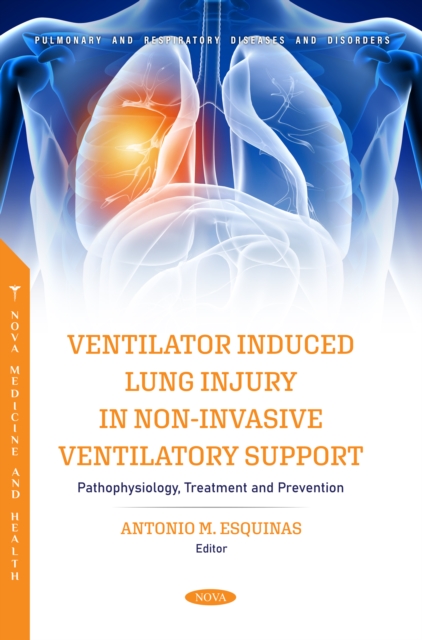
Ventilator Induced Lung Injury in Non-Invasive Ventilatory Support: Pathophysiology, Treatment and Prevention
This book describes the impact that can be had on treatments in patients with hypoxemic respiratory failure (pneumonia, acute respiratory distress syndrome, etc.) The impact that COVID-19 has had on a large number of patients treated and a large demand for these techniques. This book describes these treatment options and how they should be applied to avoid inducing damage or injury associated with the patient, a concept that has been called \"patient self-inflicted lung injury\". This book discusses its importance in the prognosis and mortality of patients.
eBook

Obstructive sleep apnea in pulmonary critical care: essential ventilatory approach
The prevalence of Obstructive Sleep Apnea is very important because it is a comorbidity factor that impacts the prognosis of patients who need admission to an intensive care unit. This book offers the reader a complete overview of all the advances in the field and its most interesting aspects.
eBook

Precise identification of respiratory system air leakage via dynamic ventilator waveform monitoring: a controlled trial to improve mechanical ventilation care efficiency
Background
Mechanical ventilation is a crucial intervention for respiratory support in intensive care unit (ICU) patients. However, air leakage in the ventilator system often compromises patient outcomes. Conventional leakage detection methods are limited by low sensitivity and delayed response, necessitating more precise approaches. This study focuses on the systematic implementation of a nurse-led waveform analysis protocol for respiratory air leakage detection, optimized for mechanically ventilated patients in cardiothoracic ICUs.
Methods
This comparative study was conducted in the cardiothoracic intensive care unit of a hospital in Nantong, China, from June 2019 to May 2020. Three hundred and two patients requiring mechanical ventilation were categorized into the control group or experimental group depending on the time of admission: empirical leakage detection methods were used in the control group and a ventilator waveform-based detection method in the experimental group. The primary outcome was time to detect leakage in the ventilator pipeline, while secondary outcomes included time to detect airway leakage and nurse satisfaction with the detection methods.
Results
Pipeline air leakage was detected within significantly shorter durations in the experimental group than in the control group (27.25 ± 18.42 vs. 7.21 ± 4.39 min; t = 13.86;
P
< 0.0001), even at a minimum cuff pressure of 30–50 cmH₂O (experimental group t = 17.48;
P
< 0.0001). Additionally, nurses in the experimental group expressed greater satisfaction with the leakage detection method (χ
2
= 20.50,
P
< 0.001).
Conclusion
The use of ventilator waveforms for detecting ventilator system leakage is more efficient and accurate than conventional empirical approaches. This innovative technique reduces the time to identify leaks while also enhancing nurse satisfaction, thereby potentially improving patient outcomes in ICU settings.
Graphical Abstract
Journal Article
