
Catalogue Search | MBRL


Are you sure you want to remove the book from the shelf?

{{itemTitle}}
5,426
result(s) for
"american film culture"
Sort by:

The rural gothic in American popular culture : backwoods horror and terror in the wilderness
\"From the very beginnings of an independent literary culture, the North American wilderness has often served as the setting for narratives in which the boundaries between order and chaos, savagery and civilization are torn down, and the natural world - as well as the individuals and creatures associated with it - becomes a threat to physical and moral safety. The Rural Gothic in American Popular Culture argues that complex and often negative initial responses early European settlers expressed toward the North American Wilderness continue to influence American horror and gothic narratives to this day. The book undertakes a detailed and historically grounded analysis of key literary and filmic texts. The works of canonical authors such as Mary Rowlandson, Charles Brockden Brown and Nathaniel Hawthorne are discussed, as are the origins and characteristics of the backwoods horror film tradition and the post-1960 eco-horror narrative. \"-- Provided by publisher.
Book

American Cinema of the 2010s
The 2010s were perhaps the most tumultuous decade since the 1960s. The effects of the Great Recession continued to be felt. The administration of Barack Obama, the first African-American president, encouraged many to think that America was now 'post-racial', an illusion broken by the election of Donald Trump. Polarisation reigned, communicated on social media. Netflix and Amazon jumped into production. By 2019, Netflix produced more feature films than the traditional studios combined. Cinema's move from film to digital, in production and in exhibition, was complete by mid-decade. `MeToo and `Oscarssowhite signaled a reckoning with gross gender and racial inequalities in the media, matched by that in the wider culture. The essays of this book explore the blockbusters, low-budget sleepers, and films in between.
eBook

African, American : from Tarzan to Dreams from my father : Africa in the US imagination
A panoramic account of the role Africa has played in the American psyche, covering books, movies, music and more.
Book

Hollywood Be Thy Name
From the earliest years of sound film in America, Hollywood studios and independent producers of \"race films\" for black audiences created stories featuring African American religious practices. In the first book to examine how the movies constructed images of African American religion, Judith Weisenfeld explores these cinematic representations and how they reflected and contributed to complicated discourses about race, the social and moral requirements of American citizenship, and the very nature of American identity. Drawing on such textual sources as studio production files, censorship records, and discussions and debates about religion and film in the black press, as well as providing close readings of films, this richly illustrated and meticulously researched book brings religious studies and film history together in innovative ways.
eBook

Hoo-doo cowboys and bronze buckaroos : conceptions of the African American West
\"Hoo-Doo Cowboys and Bronze Buckaroos undertakes an interdisciplinary exploration of the African American West through close readings of texts from a variety of media. This approach allows for both an in-depth analysis of individual texts and a discussion of material often left out or underrepresented in studies focused only on traditional literary material. The book engages heretofore unexamined writing by Rose Gordon, who wrote for local Montana newspapers rather than for a national audience; memoirs and letters of musicians, performers, and singers (such as W. C. Handy and Taylor Gordon), who lived in or wrote about touring the American West; the novels and films of Oscar Micheaux; black-cast westerns starring Herb Jeffries; largely unappreciated and unexamined episodes from the \"golden age of western television\" that feature African American actors; film and television westerns that use science fiction settings to imagine a \"postracial\" or \"postsoul\" frontier; Percival Everett's fiction addressing contemporary black western experience; and movies as recent as Quentin Tarantino's Django Unchained.Despite recent interest in the history of the African American West, we know very little about how the African American past in the West has been depicted in a full range of imaginative forms. Hoo-Doo Cowboys and Bronze Buckaroos advances our discovery of how the African American West has been experienced, imagined, portrayed, and performed\"-- Provided by publisher.
Book
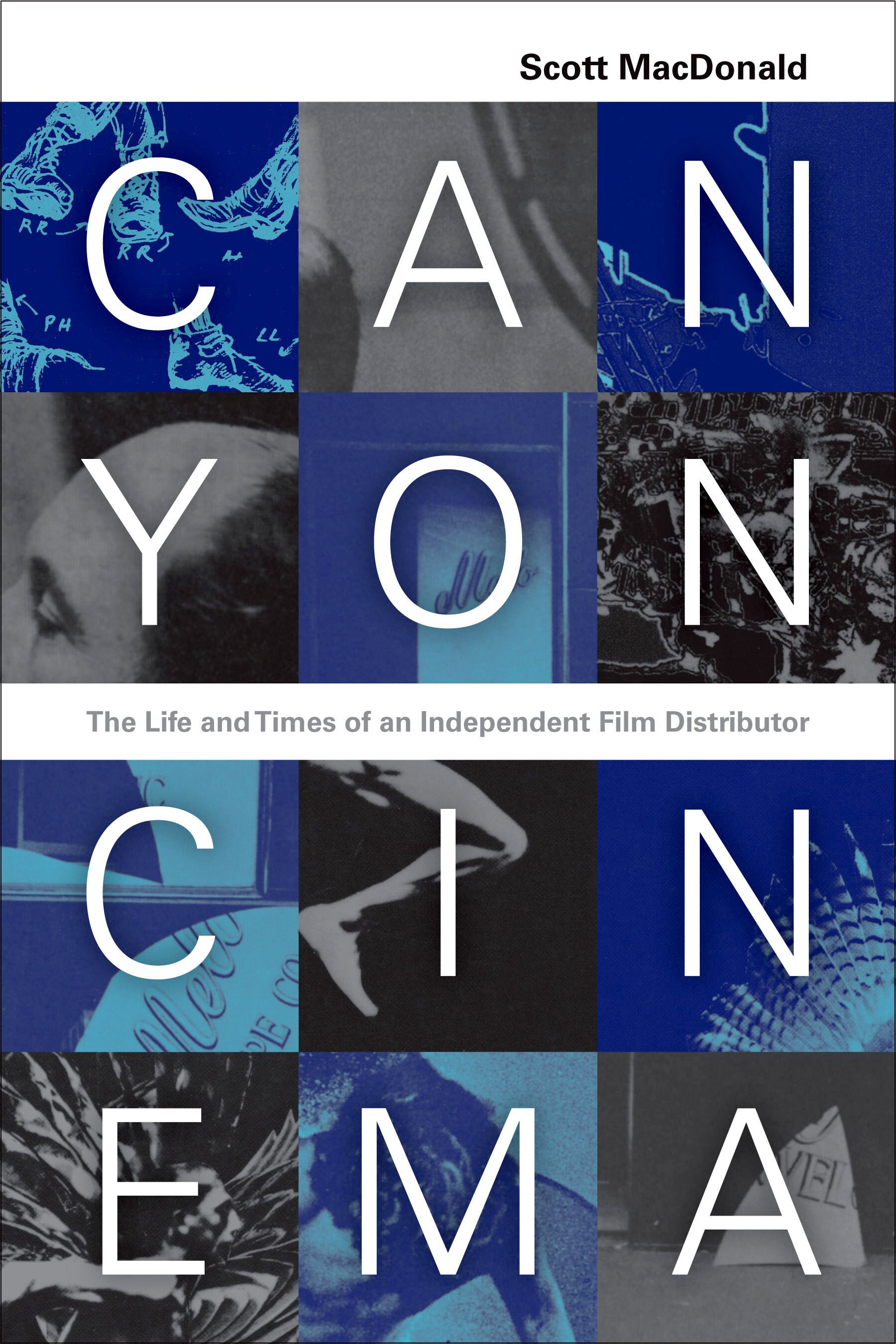
Canyon Cinema
Bringing alive a remarkable moment in American cultural history, Scott MacDonald tells the colorful story of how a small, backyard organization in the San Francisco Bay Area emerged in the 1960s and evolved to become a major force in the development of independent cinema. Drawing from extensive conversations with men and women crucial to Canyon Cinema, from its newsletter Canyon Cinemanews, and from other key sources, MacDonald offers a lively chronicle of the life and times of this influential, idiosyncratic film exhibition and distribution collective. His book features many primary documents that are as engaging and relevant now as they were when originally published, including essays, poetry, experimental writing, and drawings.
eBook

The literary and linguistic construction of obsessive-compulsive disorder : no ordinary doubt
\"What does it mean to live with obsessive-compulsive disorder in a time when the word \"obsession\" has become synonymous with \"driven\", \"focused\" or \"infatuated\"? This book presents a literary and linguistic reading of obsessive-compulsive disorder, both in its contemporary form and its historical antecedent, to argue that medical understandings of disability need their social, political, literary and linguistic counterparts, especially if we aspire to create a more inclusive society. The chapters visit memoirs, historical texts, novels and movies to demonstrate how each of these manifestations becomes a part of the \"story\" of OCD. In that sense, we construct reality based on the discourses that are available to us, and the discourses of OCD are yet to encompass all of its diversity and complexity\"-- Provided by publisher.
Book

Hollywood Be Thy Name
From the earliest years of sound film in America, Hollywood studios and independent producers of \"race films\" for black audiences created stories featuring African American religious practices. In the first book to examine how the movies constructed images of African American religion, Judith Weisenfeld explores these cinematic representations and how they reflected and contributed to complicated discourses about race, the social and moral requirements of American citizenship, and the very nature of American identity. Drawing on such textual sources as studio production files, censorship records, and discussions and debates about religion and film in the black press, as well as providing close readings of films, this richly illustrated and meticulously researched book brings religious studies and film history together in innovative ways.
eBook

American Cinema of the 1920s
During the 1920s, sound revolutionized the motion picture industry and cinema continued as one of the most significant and popular forms of mass entertainment in the world. Film studios were transformed into major corporations, hiring a host of craftsmen and technicians including cinematographers, editors, screenwriters, and set designers. The birth of the star system supported the meteoric rise and celebrity status of actors including Charlie Chaplin, Mary Pickford, Joan Crawford, Greta Garbo, and Rudolph Valentino while black performers (relegated to \"race films\") appeared infrequently in mainstream movies. The classic Hollywood film style was perfected and significant film genres were established: the melodrama, western, historical epic, and romantic comedy, along with slapstick, science fiction, and fantasy.
In ten original essays,American Cinema of the 1920sexamines the film industry's continued growth and prosperity while focusing on important themes of the era.
eBook

Canyon Cinema
Bringing alive a remarkable moment in American cultural history, Scott MacDonald tells the colorful story of how a small, backyard organization in the San Francisco Bay Area emerged in the 1960s and evolved to become a major force in the development of independent cinema. Drawing from extensive conversations with men and women crucial to Canyon Cinema, from its newsletter Canyon Cinemanews, and from other key sources, MacDonald offers a lively chronicle of the life and times of this influential, idiosyncratic film exhibition and distribution collective. His book features many primary documents that are as engaging and relevant now as they were when originally published, including essays, poetry, experimental writing, and drawings.
eBook