
Catalogue Search | MBRL


Are you sure you want to remove the book from the shelf?

{{itemTitle}}
51
result(s) for
"colonial gaze"
Sort by:

Three plays and a shared socio-spiritual horizon in the modern Buddhist revivals in India and China
The current study reveals that the Buddhist egalitarian spiritual message found global resonance in an era of globalized inequality. By comparing three modern retellings of an ancient romance between an outcaste (untouchable/Dalit) maiden and the Buddha's attendant Ānanda, this study showcases a shared socio-spiritual horizon that emerged in the Indian and Chinese Buddhist revivals and that thwarted colonial epistemic domination and offered powerful social critiques. More specifically, this study shows that the Indian and Chinese afterlives of the romance display innovative formations of Buddhist social consciousness. The authors reinterpreted equality and freedom on Buddhist terms, creating a new standard of civilization. Employing this “already democratic” Buddhist civilization, they launched critiques of the Indian caste system and Chinese patriarchy. This socio-spiritual horizon subverts the typecast images of “spiritual India” and “rational China.” Whereas these images reflect the limits of the comparative lens based on political regimes – namely, Indian democracy and Chinese socialism – the current study goes beyond regime types by examining diverse formations of universal religion in the cultural sphere. More broadly, a critical strategy for provincializing Europe is to block the colonial gaze and instead showcase the vibrant cultural productions and meaning-making that circulated at the margins of empire.
Journal Article

GENDERING THE WAR: THE COLONIAL GAZE IN HINO ASHIHEI'S \HANA TO HEITAI\
Despite its initial success, the 1939 novel Hana to heitai by Hino Ashihei - the most famous war literature writer in wartime Japan - was underestimated in the post-war years and dismissed as trivial and naïve, tinged as it is with Imperial propaganda. In this paper, I question this view by discussing the socio-political significance of the work at the time of its publication and its role in shaping public opinion. I will also carry out a close reading of its content aimed at bringing to the surface Hino's underlying narratives regarding the war in China. I contend that the significance of the novel is twofold: on the one hand, it offered a narrative of the war with China that was to some extent new, since it focuses on civil contexts and portrays the Japanese invasion as a «peace-keeping» mission. On the other hand, it provided a gendered view of the war that was based on Chinese female characters and that envisaged in the relationship between Japanese soldiers and young Chinese women a future of co-prosperity and friendly cooperation of Japan and China.
Journal Article

Decolonizing Contemplation: Toward a Nonviolent Gaze
Contemplation, as the act of gazing or beholding the other, is often entangled with the colonial white gaze that objectifies the other. This essay attempts to revisit the notion of Christian contemplation by arguing that decolonizing contemplation requires a shift toward a nonviolent gaze. By utilizing Frantz Fanon’s analysis of the black colonized subjects, I reframe contemplation as a transcending act of delinking from the Western colonial matrix and relinking to the voices and epistemologies from the margin. Thus, contemplation must involve two gazes: attentiveness to the woundedness of the self and the world, and embracing the other.
Journal Article
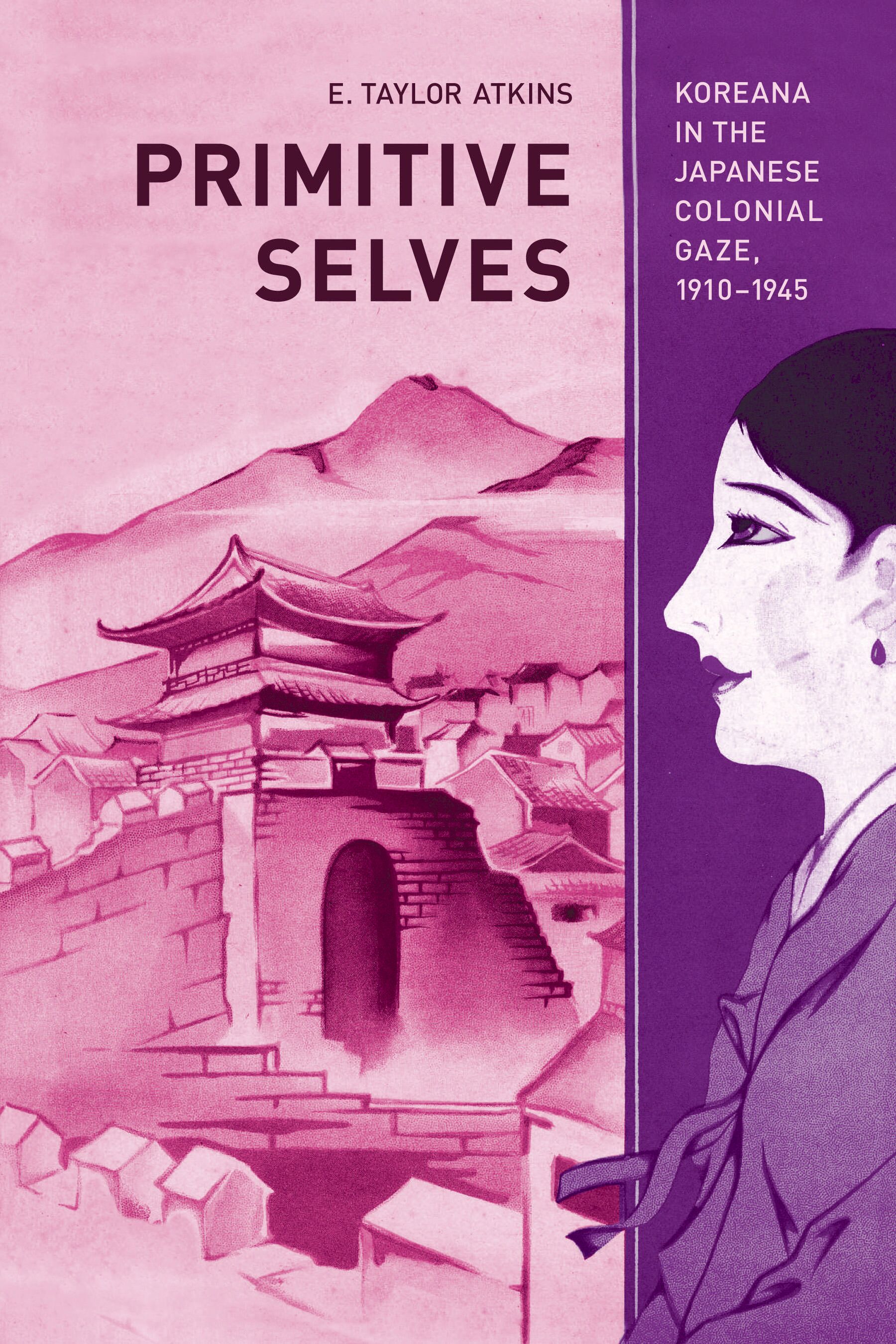
Primitive Selves
This remarkable book examines the complex history of Japanese colonial and postcolonial interactions with Korea, particularly in matters of cultural policy. E. Taylor Atkins focuses on past and present Japanese fascination with Korean culture as he reassesses colonial anthropology, heritage curation, cultural policy, and Korean performance art in Japanese mass media culture. Atkins challenges the prevailing view that imperial Japan demonstrated contempt for Koreans through suppression of Korean culture. In his analysis, the Japanese preoccupation with Koreana provided the empire with a poignant vision of its own past, now lost--including communal living and social solidarity--which then allowed Japanese to grieve for their former selves. At the same time, the specific objects of Japan's gaze--folk theater, dances, shamanism, music, and material heritage--became emblems of national identity in postcolonial Korea.
eBook

Madness, Medicine, and Masculinity in Kim Tongin’s “Oh, the Frail-Hearted!”
This article examines how a major twentieth-century Korean writer, Kim Tongin, adopted the language of Western medical science to produce the effect of literary interiority as an iteration of the individual in his novella “Oh, the Frail-Hearted!” (1919–20). My reading of the story unravels the ways in which this work draws several equations between the practice of medical science and that of literature. The main character’s diary and letter are treated as his medical records; a well-known man of letters acts as his doctor by identifying his symptoms through the “medical” gaze; readers are invited to read his “mind” the way doctors examine those of their patients; his illness gives his interiority an identifiable form; and his extramarital affair is not only a love story but also a trigger of his mental illness. The medical gaze allows him to explore his sexuality beyond the traditional conjugal norm—whether via a heterosexual love affair or homoeroticism. His pursuit of individuality is, however, bounded by the “colonial” gaze, under which he appears as an accomplice of the collective debilitation of the colony through a moralistic prism.
Journal Article

Seeing the image of an Eritrean Hero
The paper focuses on the shifts in the iconic representation of war heroes of the Eritrean struggle for freedom, by studying key iconic photographs and their significance to the Eritrean national identity construction process. The article focuses on one of the most famous photographs in the country which has been related to the discourse that indebts peace and freedom of the country to the history of the nation's freedom fighters. The photograph analysed in this paper is that of Hamid Idris Awate, the man credited with starting the 30-year-long Eritrean armed struggle for independence from Ethiopian rule. This image is compared to another photograph taken at the end of the Thirty Years' War. The two images, which have a 30-year gap between them, exhibit a shift from the aspiration of individual heroes and figures towards a collective spirit of sacrifice and achievement in the development of the national Eritrean narrative. This study shows that Awate's photograph ascended to the state of a national icon owing to contextual connotations derived from its content. Early Orthodox Christian imagery is comparatively analysed as a possible factor for the potency of the compositional style in the photograph. Moreover, the essay relates the photograph to Italian pictorial representations of black native recruits and comparatively links it with the visual representation of Eritrean society by Italian colonizers.
Journal Article

The figure of the imaginary gypsy in film: I Even Met Happy Gypsies (1967)
The article presents a critical study of Aleksandar Petrović’s celebrated work I Even Met Happy Gypsies (1967). The analysis focuses on the content and functions of the cinematic gypsy figure drawing its insights from Yuri M. Lotman’s spatial model of culture, Critical Whiteness Studies, Postcolonial Studies and Antigypsyism. The transposition of the fictional gypsy into the idiom of film is considered in detail on the level of plot, character delineation and visual aesthetics. The work of the renowned Serbian director makes a superb example of the artistic strategies by which the gypsy myth is rendered into an ‘authentic’ ethnographic document. Also, a parallel is drawn between gypsy films and blackface minstrelsy shows as a way of elucidating the three central functions of racial masquerade staged in effect in all gypsy films that make a claim to ethnographic truthfulness.
Journal Article

Dialogical Subjectivity, Epistolary Gaze, and Temporalities of Becoming in Mariama Bâ’s So Long a Letter (1979)
This article argues that So Long a Letter (1979) constructs African female subjectivity as a dialogical self forged through the confessional epistle’s denouncement of colonial and patriarchal forces that have long sought to bend African women’s heads to external and internal orderings of their society. It contends that Bâ carves temporal and narrative spaces for African women by casting a subversive gaze on the interlocking systems of oppression that repress their sense of agency. Through the enabling potential of epistolary writing, the Senegalese writer fashions her heroine into a subjectivity that is neither given nor fixed, but constructed in the shifting positions of friend, wife, mother, widow, and at times Bâ’s own mouthpiece, and through a continuing dialogue with past memories, present dilemmas, and alternative temporalities beyond dominant chrononorms. Drawing on Bakhtinian dialogism, Anzaldúa’s mestiza consciousness, Freeman’s chrononormativity, and Barrett’s affective continuum, this analysis therefore seeks to offer a transdisciplinary investigation into the ways how the novel reimagines African female subjectivity as a dialogic process of becoming emanating from the interstices of epistolary voice, affective temporalities, and the repudiation of colonial and patriarchal chrononormative imperatives. Ultimately, the paper concludes that the novel becomes a canvas onto which Bâ inscribes alternative modes of self-articulation, collective agency, and female futurity for African women.
Journal Article

Gaze, Nomad, Dwelling
Abstract This article traces the enduring legacy of metaphorical thinking in John Urry's work. It begins with a reflection on metaphorical thinking as a mobile epistemology and then details the impact of three key metaphors Urry proposed in his work: the tourist gaze, nomads, and dwelling-in-mobility. The article focuses on the way these metaphors have informed my own research on mobile lifestyles, but also discusses the broader impact of Urry's metaphorical thinking on the current and future field of mobilities studies.
Journal Article

Resisting the Settler Gaze: California Indigenous Feminisms
The settler gaze has created the conditions in which Indigenous women and Two-Spirit people experience high levels of violence both historically and in current times. This essay analyzes California Indigenous feminist resistance to the violences in the mission impacted region of the Californias. Toypurina, Bárbara Gandiaga, and Yaquenonsat are discussed as examples of California Indigenous feminist resistance to settler colonial systems that contributed to the murdered and missing Indigenous women, girl, and Two-Spirit (MMIWG2S+) crisis during their time period. These historic California Indigenous women are then compared with current efforts to address the MMIWG2S+ crisis in California and beyond. Counter-colonial Indigenous intergenerational storytelling is used as a methodology to read these stories and the settler records in order to resist the settler gaze.
Journal Article