
Catalogue Search | MBRL


Are you sure you want to remove the book from the shelf?

{{itemTitle}}
1,933
result(s) for
"electromagnetic compatibility"
Sort by:

EMC for Product Designers (4th Edition)
Widely regarded as the standard text on EMC, this book provides all the key information needed to meet the requirements of the latest EMC Directive. Most importantly, it shows how to incorporate EMC principles into the product design process, avoiding cost and performance penalties, meeting the needs of specific standards and resulting in a better overall product. As well as covering the very latest legal requirements, the Fourth Edition has been thoroughly updated in line with the latest best practice in EMC compliance and product design. Coverage has been considerably expanded to include the R&TTE and Automotive EMC Directives, as well the military aerospace standards of DEF STAN 59-41 and DO160E. A new chapter on systems EMC is included, while short case studies demonstrate how EMC product design is put into practice. Electronic design engineers, compliance engineers, regulatory engineers, test engineers, EMC consultants, and managers responsible for product compliance and product design will benefit from this book.
eBook

Verification of the Radio Wave Absorption Effect in the Millimeter Wave Band of SWCNTs and Conventional Carbon-Based Materials
Using a sample coated with three types of carbon-based paints, namely single-wall carbon nanotube (SWCNTs), carbon black, and graphite, the amount of radio wave absorption for each was measured. SWCNTs proved to have the superior radio wave absorption effect in the millimeter band. Considering the change in the amount of radio wave absorption depending on the coating amount, three different coating thicknesses were prepared for each test material. The measurement frequency was set to two frequency bands of 28 GHz and 75 GHz, and the measurement method was carried out based on Japanese Industrial Standard (JIS) R1679 “Radio wave absorption characteristic measurement method in the millimeter wave band of the radio wave absorber.” As for the amount of radio wave absorption in the 28 GHz band, a maximum amount of radio wave absorption of about 6 dB was obtained when 35 m of CNT spray paint was applied. It was confirmed that the carbon black paint came to about 60% that of the SWCNT, and the graphite paint did not obtain much radio wave absorption even when the coating thickness was changed. Furthermore, even in the 75 GHz band, the radio wave absorption was about 7 dB when 16 μm of CNT spray paint was applied, showing the maximum value. Within these experimental results, the CNT spray paint has a higher amount of radio wave absorption in the millimeter wave band than paints using general carbon materials. Its effectiveness could be confirmed even with a very thin coating thickness of 35 μm or less. It was also confirmed that even with the same paint, the radio wave absorption effect changes depending on the difference in coating thickness and the condition of the coated surface.
Journal Article
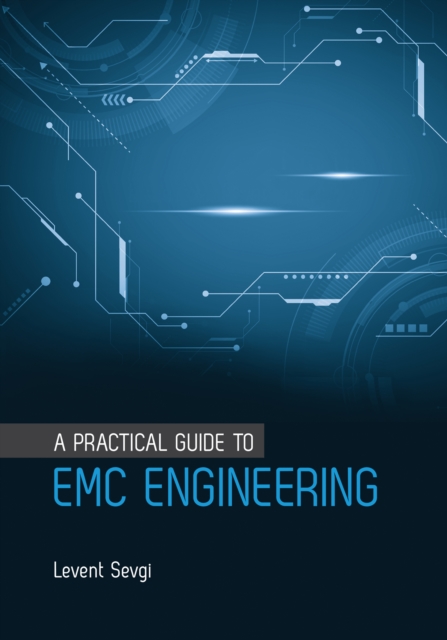
Practical Guide to EMC Engineering
This practical new resource explores the fundamentals of EMC engineering and examines the concepts and underpinnings of electromagnetics. This book highlights the procedures from design to market for both technical and non-technical issues, including market control, accreditation, calibration, EMC tests and measurement, and EMC protection. Basic electrical engineering theories, Maxwell equations, EM scattering, diffraction and propagation in the electromagnetic model are presented. The circuit model, including lumped parameter circuit elements, two-port circuit definitions, grounding, common and differential model currents, and microstripline circuits are explored. This book also covers antennas and antenna calibration, including communication antennas, normalized site attenuation (NSA), loop antennas, and loop antenna calibration (LAC). Noise and frequency analysis on fundamental electromagnetic signals, noise, and transforms is explained. Readers find insight into EMC test and measurement environments and devices. Time-saving MATLAB code is included in this resource to help engineers with their projects in the field.
eBook

Electromagnetic Interference from Solar Photovoltaic Systems: A Review
Rapid expansion of solar photovoltaic (PV) installations worldwide has increased the importance of electromagnetic compatibility (EMC) of PV components and systems. This has been highlighted by interference reported from PV installations (PVI) in the Netherlands, the United States, Sweden, etc. Significant research and development efforts are seen in the domain of enhancing efficiency and economic viability of PVI, whereas the EMC aspects have received less attention and are mainly focused on the PV system acting as a victim of lightning and a victim of changing grid impedance. This article presents a review of the important EMC aspects of PVI as a disturbance source. It has the following main parts: (a) reported cases of emissions and interference from PV installations; (b) modeling and analysis of PV subcomponents from an EMC perspective; and (c) the main standards related to the topic. Mitigation techniques for improving EMC aspects of PVI are also described, along with suggested directions for future research. The compilation brings together wide-ranging sources, both for EMC engineers who want to understand the EMC context of PV systems and for PV system designers seeking to improve EMC performance.
Journal Article

Verification of a Low-Cost Electromagnetic Field (EMF) Tester for Electromagnetic Compatibility (EMC) Investigations
Electromagnetic compatibility (EMC) issues are increasingly prevalent in modern electronic devices. One contributing factor is the ongoing pressure to reduce production costs, which can lead to design compromises that negatively impact EMC performance. EMC measurements are often complex and typically require specialised facilities and instrumentation, such as anechoic chambers and spectrum analysers, to ensure accurate assessments. In this study, low-cost, handheld electromagnetic field (EMF) testers are presented as valuable tools for preliminary electromagnetic interference (EMI) investigations. Measurements indicate that these simple testers can serve as effective initial instruments for EMC assessments. However, accurate interpretation of measurement results is crucial. Adherence to general usage guidelines is essential, as misinterpretation may lead to an overestimation of EMC issues. For comprehensive analysis, particularly in identifying complex interference sources, more sophisticated measurement instrumentation remains necessary, such as a spectrum analyser and various types of antennas.
Journal Article
Fast and Accurate Source Reconstruction for TSV-Based Chips via Contribution-Driven Dipole Pruning
Electromagnetic compatibility (EMC) diagnostics for high-density through-silicon via (TSV)-based chips face significant challenges due to complex three-dimensional electromagnetic coupling and inefficient source reconstruction workflows. This paper proposes a universal contribution-driven dipole preprocessing technique tailored for dipole array-based source reconstruction methods, addressing the critical efficiency-accuracy trade-off inherent in traditional approaches. The core innovation is an influence factor-based evaluation-elimination mechanism that extracts effective dipole components aligned with the structural characteristics of TSV-based chips and multilayer printed circuit boards, while eliminating redundant dipoles independently of the downstream source reconstruction algorithm. Validation on a multilayer PCB (1 GHz) and a TSV-based chip (4 GHz) demonstrates that the technique maintains high reconstruction accuracy, with error increase limited to ≤0.2% for the simulated PCB and ≤0.05% for the physically measured TSV-based chip. Computational time is reduced by 28–61% for the PCB and 20–28% for the TSV chip compared to traditional source reconstruction without preprocessing. For TSV-based chips exhibiting complex electromagnetic behavior, the technique delivers consistent performance across different dipole configurations, providing a fast, robust, and universal EMC diagnostic tool for high-density electronic devices.
Journal Article

Electromagnetic Compatibility Evaluation for Vehicular Communication Systems Based on Urban High-Resolution Satellite Remote Sensing Images
With the expansion of urban areas and the increase in the number of vehicles, the complexity and harshness of the electromagnetic environment for vehicular communication in cities have significantly intensified. Traditional methods for evaluating the electromagnetic compatibility (EMC) of vehicular communication systems face substantial limitations. With the advancement of high-resolution satellite remote sensing image technology, the acquisition of high-precision urban models has become more accessible, significantly enhancing applications in the field of communication systems. Therefore, a novel EMC evaluation method for vehicular wireless communication systems based on urban high-resolution satellite remote sensing images is proposed in this paper. By analyzing the characteristics of such systems and integrating the requirements of practical urban communication scenarios and vehicular tasks, EMC evaluation indicators were selected, and a hierarchical evaluation indicators system was constructed, comprising target, criterion, and sub-criterion layers. The proposed method leverages the strengths of TOPSIS, AHP, and FCE methods, utilizing quantitative TOPSIS and qualitative AHP to determine the weights of the criterion and sub-criterion layers, respectively. The FCE method was employed to evaluate the EMC of the vehicular wireless communication system. The rationality and feasibility of the method were validated through practical communication experiments conducted with a vehicle in an urban environment.
Journal Article

Electromagnetic interference (EMI) in underground coal mines: A literature review and practical considerations
This paper is aimed at helping the mining industry to better understand the challenges posed by electromagnetic interference (EMI) and to promote electromagnetic compatibility (EMC) in underground coal mines. The paper begins with a review of EMI standards in other industries, then presents some representative examples of EMI instances that have occurred in the mining industry, followed by a literature review of published EMI research in mining and, finally, a discussion on mitigation strategies and practical considerations related to EMI in mining.
Journal Article
EMC Impact of Disturbances Generated by Multiple Sources
In this paper, the impact of an increasing number of arbitrary electrical/electronic devices on the overall radiated emissions is investigated. Understanding and quantifying such an impact are prerequisites to the proper evaluation of electromagnetic compatibility (EMC) of various electronic systems and devices and, if needed, to revisiting the international standards. To evaluate the radiated emissions from multiple electronic devices, each arbitrary electronic device is characterized using an equivalent Huygens’s surface, in which the tangential components of electric and magnetic near fields are calculated (or measured). The radiated emission from the arbitrary electronic device can be calculated using the electric and magnetic near fields for an arbitrary phase (correlated or uncorrelated), position, and orientation. The influence of several parameters affecting the radiated emissions from multiple arbitrary electronic devices, including the number of disturbance sources, the polarization of each device, the radiation pattern of each device, the location and orientation of each device, and the phase shifts between devices, are analyzed. The numerical results show that the mentioned parameters have a significant effect on the radiated emissions, and cannot be neglected in EMC considerations. In general, increasing the number of electronic devices leads to an increase in the level of radiated emissions. However, the increase depends on other parameters such as the arrangement (the radiation pattern for each device, the distance between the devices, and the orientation and/or polarization of each device). The proposed method can be straightforwardly applied to devices characterized by near-field measurements or multimodular large equipment with long cables.
Journal Article
Advanced Characterization of a Hybrid Shielding Solution for Reducing Electromagnetic Interferences at Board Level
The development of new advanced functionalities, miniaturization, and the aim of obtaining optimized performance in electronic devices significantly impacts their electromagnetic compatibility (EMC). As electronic components become more densely packed on a printed circuit board (PCB), unintended coupling between components can cause electromagnetic interference (EMI). These requirements result in design restrictions that make using a board level shield (BLS) essential in reducing intra-system EMI in PCB designs. This contribution focuses on studying and characterizing a BLS solution based on combining a noise suppression sheet (NSS) with an aluminum layer to reduce intra-system EMI coupling. This hybrid solution has the advantage of providing a shielding option that does not require any electronic redesign. It does not need a footprint or a ground connection as it can be affixed over the EMI source. The solution is expected to provide higher attenuation levels than using only an NSS by combining the absorbing properties of the magnetic material and the loss mechanism of the metal. In order to verify the effectiveness of the hybrid BLS proposed solution, the magnetic near-field emissions of an EMI source are analyzed in this study. The experimental measurements and simulated results demonstrate a significant increase (51.6 dB at 1 GHz) in the shielding effectiveness (SE) provided by the proposed solution compared to a conventional NSS.
Journal Article