
Catalogue Search | MBRL


Are you sure you want to remove the book from the shelf?

{{itemTitle}}
90,310
result(s) for
"endocrine"
Sort by:

Endocrinology of social relationships
This edited work considers the increasing evidence that hormones are as important to social as to reproductive behaviours.
Book
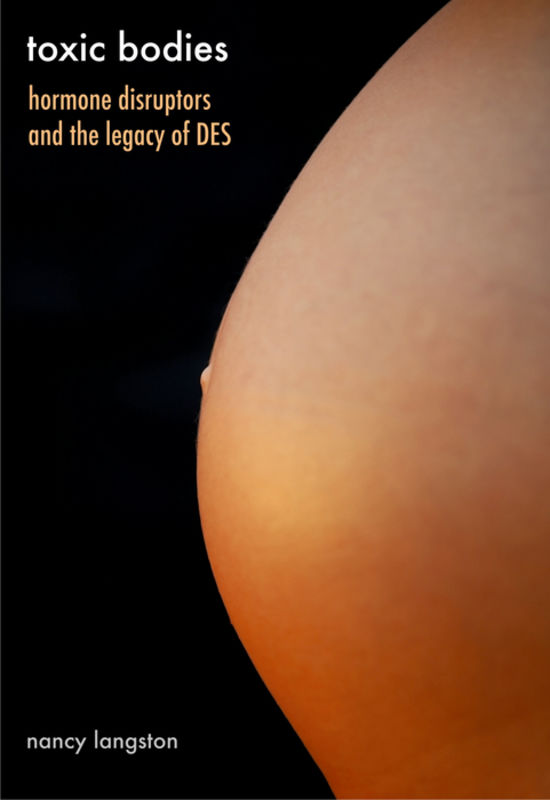
Toxic Bodies
In 1941 the Food and Drug Administration approved the use of diethylstilbestrol (DES), the first synthetic chemical to be marketed as an estrogen and one of the first to be identified as a hormone disruptor-a chemical that mimics hormones. Although researchers knew that DES caused cancer and disrupted sexual development, doctors prescribed it for millions of women, initially for menopause and then for miscarriage, while farmers gave cattle the hormone to promote rapid weight gain. Its residues, and those of other chemicals, in the American food supply are changing the internal ecosystems of human, livestock, and wildlife bodies in increasingly troubling ways.
In this gripping exploration, Nancy Langston shows how these chemicals have penetrated into every aspect of our bodies and ecosystems, yet the U.S. government has largely failed to regulate them and has skillfully manipulated scientific uncertainty to delay regulation. Personally affected by endocrine disruptors, Langston argues that the FDA needs to institute proper regulation of these commonly produced synthetic chemicals.
eBook

Learning about the endocrine and reproductive systems
\"Learn how these two wonderful systems work together to ensure the survival of the human race and discover some amazing facts about them both\"-- Provided by publisher.
Book

Long-Term Endocrine and Metabolic Consequences of Cancer Treatment: A Systematic Review
Abstract
The number of patients surviving ≥5 years after initial cancer diagnosis has significantly increased during the last decades due to considerable improvements in the treatment of many cancer entities. A negative consequence of this is that the emergence of long-term sequelae and endocrine disorders account for a high proportion of these. These late effects can occur decades after cancer treatment and affect up to 50% of childhood cancer survivors. Multiple predisposing factors for endocrine late effects have been identified, including radiation, sex, and age at the time of diagnosis. A systematic literature search has been conducted using the PubMed database to offer a detailed overview of the spectrum of late endocrine disorders following oncological treatment. Most data are based on late effects of treatment in former childhood cancer patients for whom specific guidelines and recommendations already exist, whereas current knowledge concerning late effects in adult-onset cancer survivors is much less clear. Endocrine sequelae of cancer therapy include functional alterations in hypothalamic-pituitary, thyroid, parathyroid, adrenal, and gonadal regulation as well as bone and metabolic complications. Surgery, radiotherapy, chemotherapy, and immunotherapy all contribute to these sequelae. Following irradiation, endocrine organs such as the thyroid are also at risk for subsequent malignancies. Although diagnosis and management of functional and neoplastic long-term consequences of cancer therapy are comparable to other causes of endocrine disorders, cancer survivors need individually structured follow-up care in specialized surveillance centers to improve care for this rapidly growing group of patients.
Journal Article

Endocrine-Disrupting Chemicals and Disease Endpoints
Endocrine-disrupting chemicals (EDCs) have significant impacts on biological systems, and have been shown to interfere with physiological systems, especially by disrupting the hormone balance. During the last few decades, EDCs have been shown to affect reproductive, neurological, and metabolic development and function and even stimulate tumor growth. EDC exposure during development can disrupt normal development patterns and alter susceptibility to disease. Many chemicals have endocrine-disrupting properties, including bisphenol A, organochlorines, polybrominated flame retardants, alkylphenols, and phthalates. These compounds have gradually been elucidated as risk factors for many diseases, such as reproductive, neural, and metabolic diseases and cancers. Endocrine disruption has been spread to wildlife and species that are connected to the food chains. Dietary uptake represents an important source of EDC exposure. Although EDCs represent a significant public health concern, the relationship and specific mechanism between EDCs and diseases remain unclear. This review focuses on the disease-EDC relationship and the disease endpoints associated with endocrine disruption for a better understanding of the relationship between EDCs-disease and elucidates the development of new prevention/treatment opportunities and screening methods.
Journal Article

Hormonal : the hidden intelligence of hormones : how they drive desire, shape relationships, influence our choices, and make us wiser
Examines the biological processes that so profoundly influence our behavior and sets forth a radical new understanding of women's bodies, minds, and sexual relationships, one that embraces hormonal cycles as adaptive solutions to genuine biological challenges.
Book

The impact of endocrine disruption: A consensus statement on the state of the science
In 2002, the joint International Programme on Chemical Safety (IPCS) of the World Health Organization (WHO), the United Nations Environment Programme (UNEP), and the International Labour Organisation (ILO) published a report titled Global Assessment of the State-of-the-Science of Endocrine Disruptors (http://www.who.int/ipcs/publications/new_issues/endocrine_disruptors/en/). Since 2002, intense scientific work has improved our understanding of the impacts of endocrine-disrupting chemicals (EDCs) on human and wildlife health, such that in 2012, the UNEP and WHO, in collaboration with international experts, have produced an updated document on EDCs, State of the Science of Endocrine Disrupting Chemicals - 2012 (http://www.who.int/ceh/publications/endocrine/en/index.html) that includes scientific information on human and wildlife impacts and lists key concerns for decision makers and others concerned about the future of human and wildlife health.
Journal Article


Lipid Management in Patients with Endocrine Disorders: An Endocrine Society Clinical Practice Guideline
Abstract
Objective
This guideline will provide the practicing endocrinologist with an approach to the assessment and treatment of dyslipidemia in patients with endocrine diseases, with the objective of preventing cardiovascular (CV) events and triglyceride-induced pancreatitis. The guideline reviews data on dyslipidemia and atherosclerotic cardiovascular disease (ASCVD) risk in patients with endocrine disorders and discusses the evidence for the correction of dyslipidemia by treatment of the endocrine disease. The guideline also addresses whether treatment of the endocrine disease reduces ASCVD risk.
Conclusion
This guideline focuses on lipid and lipoprotein abnormalities associated with endocrine diseases, including diabetes mellitus, and whether treatment of the endocrine disorder improves not only the lipid abnormalities, but also CV outcomes. Based on the available evidence, recommendations are made for the assessment and management of dyslipidemia in patients with endocrine diseases.
Journal Article