
Catalogue Search | MBRL


Are you sure you want to remove the book from the shelf?

{{itemTitle}}
1,973
result(s) for
"endocrine disrupting chemicals"
Sort by:

The obesogen effect : why we eat less and exercise more but still struggle to lose weight
\"In TOXIC WAIST, Dr. Bruce Blumberg reveals his landmark research as well as that by others in the field to show how hidden factors, such as environmental chemicals, might be important players in our 21st century obesity epidemic. According to leading-edge science, being overweight is not just the result of too many cheeseburgers and not enough exercise. A silent factor is contributing greatly to our obesity epidemic: \"obesogens.\" These chemicals in our diet and environment sabotage our efforts to lose weight by disrupting our hormonal system, altering how we create and store fat, and changing how we respond to dietary choices and calories. Even scarier: research has shown that the effects of obesogen exposure can be passed on to future generations by irreversibly interfering with the expression of our genes. And these chemicals are everywhere, from our food to our furniture to common, household products. TOXIC WAIST offers a synthesis of the latest research in the field, and a three-step action plan to prevent and minimize the damaging effects of obesogens. This book lays out what we know so far about obesogens, shows how they work and how we are exposed to them (get ready to throw out your plastic food storage containers). Most importantly, it arms us with the knowledge we need to protect ourselves from the harmful effects of obesogens\"-- Provided by publisher.
Book

Toxic Bodies
In 1941 the Food and Drug Administration approved the use of diethylstilbestrol (DES), the first synthetic chemical to be marketed as an estrogen and one of the first to be identified as a hormone disruptor-a chemical that mimics hormones. Although researchers knew that DES caused cancer and disrupted sexual development, doctors prescribed it for millions of women, initially for menopause and then for miscarriage, while farmers gave cattle the hormone to promote rapid weight gain. Its residues, and those of other chemicals, in the American food supply are changing the internal ecosystems of human, livestock, and wildlife bodies in increasingly troubling ways.
In this gripping exploration, Nancy Langston shows how these chemicals have penetrated into every aspect of our bodies and ecosystems, yet the U.S. government has largely failed to regulate them and has skillfully manipulated scientific uncertainty to delay regulation. Personally affected by endocrine disruptors, Langston argues that the FDA needs to institute proper regulation of these commonly produced synthetic chemicals.
eBook
Endocrine Disruptors in the Environment
For most of the last decade, the science of endocrine disruption has evolved with more definitive evidence of its damaging potential to health and the environment. This book lists the major environmental chemicals of concern and their mechanism of endocrine disruption including remedial measures for them. Divided into three parts, it begins with an overview of the endocrine system and endocrine disruptors. It then goes on to cover hormone-signaling mechanisms, followed by various broad classes of putative endocrine disruptors, before introducing readers to environmental epigenetic modifications. Part two of the book focuses on removal processes of various EDCs by biotic and abiotic transformation/degradation. The last section consists of four chapters embracing themes on finding solutions to environmental EDCs
eBook
Review of the Environmental Protection Agency's State-of-the-Science Evaluation of Nonmonotonic Dose-Response Relationships as they Apply to Endocrine Disruptors
Potential health effects from chemicals that disrupt endocrine function pose an environmental health concern because of their ability to interfere with normal hormone function in human and wildlife populations. The endocrine system regulates biological processes throughout the body and is sensitive to small changes in hormone concentrations. Endocrine-disruptor research has focused primarily on chemicals that affect three hormone pathways that play important roles in reproduction and development - the estrogen, androgen, and thyroid hormone pathways. Some of this research has identified dose-response relationships that have nonmonotonic curves. Nonmonotonic dose-response curves (NMDRs) are of concern because they do not follow the usual assumption made in toxicology that as dose decreases the response also decreases.
The existence of NMDRs has been a controversial topic for decades, and there has been considerable debate about their implications for how chemicals are tested and for how risks from such chemicals are assessed. Toxicity tests are designed to identify hazards and to characterize dose-response relationships, so tests are aimed at finding a (high) dose that elicits a response, and dose-response is explored by testing lower doses spaced to identify statistically a no- or lowest-observed-adverse-effect level. The concern for NMDRs is that such studies, as currently designed, might not detect the inflection of the dose-response curve if only a few doses are tested or if the change in inflection occurs below the range of doses tested. Another concern is that some NMDRs are found for biological effects that are not usually evaluated in toxicity tests. If current testing strategies are inadequate to account for NMDRs, changes to risk assessment practices might be necessary. To help address these issues, the U.S. Environmental Protection Agency (EPA) developed a draft State-of-the-Science Evaluation: Nonmonotonic Dose Responses as they Apply to Estrogen, Androgen, and Thyroid Pathways and EPA Testing and Assessment Procedures. EPA asked the National Research Council to conduct an independent review of this evaluation to ensure that it is scientifically sound and of high quality.
Review of Environmental Protection Agency's State-of-the-Science Evaluation of Nonmonotonic Dose-Response as they Apply to Endocrine Disrupters evaluates whether EPA's evaluation presents a scientifically sound and high-quality analysis of the literature on NMDRs. This report reviews how well the EPA evaluation described how the assessment was performed, whether consistent methods and criteria were applied in the analysis of different evidence streams, and whether appropriate methods were applied to evaluating the evidence. The report makes recommendations to improve EPA's process and strengthen the evaluation.
eBook

Endocrine‐disrupting chemicals and male reproductive health
Background A number of different types of endocrine‐disrupting chemicals (EDCs) including bisphenol A, phthalates, pesticides, and other environmental chemicals have been shown to adversely impact upon male reproductive health. Understanding the potential effects of EDCs on male reproductive health may enable the development of novel treatments and early prevention of the effects of EDCs on male infertility and their potential long‐term sequelae. This review critically evaluates the research performed in this area and explores potential harmful effects of EDCs in animals and humans, including the possibility of trans‐generational transmission. Methods A literature review was conducted using electronic databases using the following terms: ‘endocrine disrupt*’ OR ‘endocrine disruptors’ OR ‘endocrine disruptor chemicals’ OR ‘EDC’ AND ‘sperm*’ OR ‘spermatozoa’ OR ‘spermatozoon’ OR ‘male reproductive health’ OR’ male fertility’. Main findings Several studies have shown that EDCs have a variety of pathophysiological effects. These include failure of spermatogenesis, embryonic development, the association with testicular cancer, and long‐term metabolic effects. Conclusions Several studies observe correlations between chemical doses and at least one sperm parameter; however, such correlations are sometimes inconsistent between different studies. Mechanisms through which EDCs exert their pathophysiological effects have not yet been fully elucidated in human studies.
Journal Article
Revised Guidance Document 150 on Standardised Test Guidelines for Evaluating Chemicals for Endocrine Disruption
This guidance document was originally published in 2012 and updated in 2018 to reflect new and updated OECD test guidelines, as well as reflect on scientific advances in the use of test methods and assessment of the endocrine activity of chemicals. The document is intended to provide guidance for evaluating chemical using standardised test guidelines. Specific objectives include providing a description of the OECD conceptual framework for evaluating chemicals for endocrine disruption, background on the standardised test methods used, and guidance for interpreting the outcome of individual tests. The general approach taken by the document is primarily to provide guidance on how test results might be interpreted based on the outcome of standardised assays. Key questions addressed in the document concern likely mechanisms of endocrine action and any resulting apical effects that can be attributed to such action. The document is not proscriptive but provides suggestions for possible next steps in testing (if any) which might be appropriate for a regulatory authority to take, given the various data scenarios. The guidance document is focused primarily on endocrine modalities included in the conceptual framework; estrogen, androgen, and thyroid mediated endocrine disruption and chemicals that interfer with steroidogenesis.
eBook
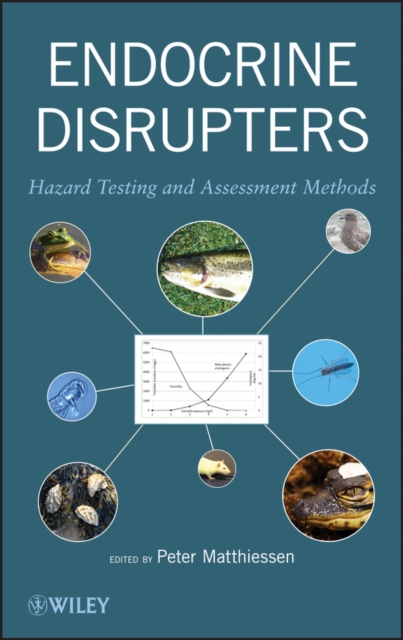
Endocrine Disrupters
\"This book describes methodology and applications for endocrine disrupter toxicity testing, an issue of considerable urgency, because of international regulatory authorities currently considering such testing schemes. The coverage examines major animal groups for sensitivity to endocrine disrupting chemicals (EDCs), identifying endpoints and procedures for testing guidelines. Three EDC screening methods (two using fish and one using amphibians) are examined in detail for their efficacy and applicability. Edited by, and with contributions from, a leading participant in regulatory efforts, the book outlines methods that combine sensitivity, efficiency, statistical power, acceptable cost, and minimum ethical concern\"--
eBook

Preparation and application of a novel magnetic molecularly imprinted polymer for simultaneous and rapid determination of three trace endocrine disrupting chemicals in lake water and milk samples
Exposure to endocrine disruptor substances will alter the function of the endocrine system and then cause adverse effects on human health. Among these endocrine disrupting chemicals, hexestrol, nonylphenol, and bisphenol A are most commonly used worldwide. In this study, we aim to develop a simple, rapid, and efficient analytical method for the simultaneous determination of trace hexestrol, nonylphenol, and bisphenol A in lake water and milk samples. A magnetic molecularly imprinted polymer-assisted magnetic solid-phase extraction technique was applied. The magnetic molecularly imprinted polymer was prepared and characterized by electron scanning microscopy and Fourier transform infrared spectroscopy. Subsequently, different experiments were conducted to optimize the magnetic solid-phase extraction conditions. High-performance liquid chromatography with UV detection was employed to determine hexestrol, nonylphenol, and bisphenol A. Limits of detection of the developed method were from 0.1 to 0.3 μg L−1 and spiked recoveries ranged from 89.9 to 102.5%, with a relative standard deviation of < 2.5% (intraday). Results obtained from this study showed that the proposed magnetic solid-phase extraction method was a simple, rapid, and sensitive sample pre-treatment method for the determination of trace hexestrol, nonylphenol, and bisphenol in different aqueous samples.
Journal Article

Carcinogenic effects of bisphenol A in breast and ovarian cancers
Endocrine-disrupting chemicals (EDCs) are exogenous chemical compounds ubiquitously found in everyday life of the modern world. EDCs enter the human body where they act similarly to endogenous hormones, altering the functions of the endocrine system and causing adverse effects on human health. Bisphenol A (BPA), the principal representative of this class, is a carbon-based synthetic plastic, and a key element in manufacturing cans, reusable water bottles and medical equipment. BPA mimics the actions of estrogen on multiple levels by activating estrogen receptors α and β. BPA regulates various processes, such as cell proliferation, migration and apoptosis, leading to neoplastic changes. Considering genetic mechanisms, BPA exerts its functions via multiple oncogenic signaling pathways, including the STAT3, PI3K/AKT and MAPK pathways. Furthermore, BPA is associated with various modifications of the reproductive system in both males and females. These alterations include benign lesions, such as endometrial hyperplasia, the development of ovarian cysts, an increase in the ductal density of mammary gland cells and other preneoplastic lesions. These benign lesions may continue to develop to breast or ovarian cancer; the effects of BPA depend on various molecular and epigenetic mechanisms that dictate whether the endocrine or reproductive system is impacted, wherein preexisting benign lesions can become cancerous. The present review supports the need for continuous research on BPA, considering its widespread use and most available data suggesting a carcinogenic effect of BPA on the female reproductive system. Although most studies on BPA have been conducted in vitro with human cells or in vivo with animal models, it can be argued that more studies should be conducted in vivo with humans to further promote understanding of the impact of BPA.
Journal Article

A Systematic Review of Bisphenol A from Dietary and Non-Dietary Sources during Pregnancy and Its Possible Connection with Fetal Growth Restriction: Investigating Its Potential Effects and the Window of Fetal Vulnerability
Bisphenol A (BPA), a ubiquitous endocrine-disrupting chemical (EDC), is increasingly hypothesized to be a factor contributing to changes in fetal growth velocity. BPA exposure may be environmental, occupational, and/or dietary, with canned foods and plastic bottles contributing significantly. Our systematic review aims to evaluate the current literature and to investigate the role of BPA in abnormal fetal growth patterns. A search was conducted in the PubMed and Cochrane databases. A total of 25 articles met the eligibility criteria and were included in this systematic review. Eleven of them failed to show a clear relationship between BPA and abnormal fetal growth. The majority of the remaining studies (9/14) found an inverse association of BPA with indicators of fetal growth, whereas three studies suggested increased fetal growth, and two studies produced contradictory findings. Of note, both of the studies that collected a sample (amniotic fluid) directly reflecting BPA concentration in the fetus during the first half of pregnancy revealed an inverse association with birth weight. In conclusion, there is mounting evidence that combined exposure to BPA from dietary and non-dietary sources during pregnancy may contribute to abnormal fetal growth; a tendency towards fetal growth restriction was shown, especially when exposure occurs during the first half.
Journal Article