
Catalogue Search | MBRL


Are you sure you want to remove the book from the shelf?

{{itemTitle}}
8,651
result(s) for
"learning French"
Sort by:

Acquisition of Variation in the Use of alors, donc, fait que by Advanced French-as-a-Second-Language Learners in Ontario, Canada
This study examines the acquisition of sociolinguistic variation in the use of French connectors alors/donc/fait que ‘so’ by two groups of advanced French-as-a-second language (FL2) learners in Ontario: (i) high school French Immersion (FI) students and (ii) university students. It considers two types of functions fulfilled by these connectors: (i) the grammatical function of expressing consequence between two clauses and (ii) a range of discursive functions, a dual focus not present in previous research, which considered only one or the other of these two types of functions. Our study shows that: (i) although these two FL2 groups’ use of the connectors is distant from the norms of FL1 speech, the university students achieve a more advanced level of acquisition of this case of variation than do the FI students, reflecting the positive effect of continued learning of French at the postsecondary level; (ii) ‘level of opportunities to interact in French with native speakers’ has a greater positive impact on the acquisition of alors/donc/fait que than ‘time spent learning French’; and (iii) both groups of students evidence incomplete acquisition of the linguistic constraints of connector choice.
Journal Article

Chinese students’ motivation for learning German and French in an intensive non-degree programme
This paper reports on a mixed method study that examined the motivation of 121 students in a 1-year intensive language course in German or French at a Chinese university. Drawing on Dörnyei’s (2009) theory of the L2 Motivational Self System (L2MSS), a survey was conducted to explore their motivation to learn German or French. Regression analyses revealed that learning experience and promotion-focused instrumentality were the predictors for the German learners’ intended learning effort, while ideal L2 self was the predictor for the French learners’ motivation. Furthermore, ought-to self, culture/community interest and prevention-focused instrumentality were excluded in both regression models. In addition, 17 participants’ qualitative data in the interviews suggested that most of them had lower expectations for the value of German or French than for the value of English in improving one’s employability. Instead, they were much more oriented to learn and appreciate the cultural values of these languages. The results provided insight into the complexity of motivation to learn Languages Other than English (LOTEs) in the university context in China, and suggested future direction for research on LOTE learning motivation
Journal Article

8. The Dramatic Literary Text as an Art Object in the Process of Teaching/Learning the French Language in the University Context
The given article focuses on the study of the dramatic literary text as an art object used in the process of the teaching/learning French as a foreign language. The dramatic literary text, being one of the main elements of the dramatic art, which in turn is a syncretic one, requires an integrated approach in the interpretation process, both as a literary product and as a performance.
Journal Article

The effects of collaborative models in second life on French learning
French is the ninth most widely used language globally, but French-learning environments in Taiwan have been insufficient. Language acquisition is easier in a natural setting, and so such a setting should be available to language learners wherever possible. This study aimed to (1) create an authentic environment for learning French in Second Life (SL), and then (2) determine the effects of different collaborative models on learners' French performance and their perceptions about learning French. Twenty-three college students participated in the study. They were asked to collaboratively execute tasks involving the creation of French-language movies in SL. Both the movies produced by the participants and the collaborative processes were collected and analyzed, with the results indicating that the students adopted different collaborative models that led to different learning outcomes. Three types of collaborative models were identified: context-inclusive collaboration, context-exclusive collaboration, and context-exclusive centralization. The results also indicated that the context-inclusive collaboration model had positive impacts on students' speaking capability and other aspects of their learning performance, and at the same time facilitated the effects of collaboration on how the students performed.
Journal Article

An Exploration of Rhythmic Grouping of Speech Sequences by French- and German-Learning Infants
Rhythm in music and speech can be characterized by a constellation of several acoustic cues. Individually, these cues have different effects on rhythmic perception: sequences of sounds alternating in duration are perceived as short-long pairs (weak-strong/iambic pattern), whereas sequences of sounds alternating in intensity or pitch are perceived as loud-soft, or high-low pairs (strong-weak/trochaic pattern). This perceptual bias-called the Iambic-Trochaic Law (ITL)-has been claimed to be an universal property of the auditory system applying in both the music and the language domains. Recent studies have shown that language experience can modulate the effects of the ITL on rhythmic perception of both speech and non-speech sequences in adults, and of non-speech sequences in 7.5-month-old infants. The goal of the present study was to explore whether language experience also modulates infants' grouping of speech. To do so, we presented sequences of syllables to monolingual French- and German-learning 7.5-month-olds. Using the Headturn Preference Procedure (HPP), we examined whether they were able to perceive a rhythmic structure in sequences of syllables that alternated in duration, pitch, or intensity. Our findings show that both French- and German-learning infants perceived a rhythmic structure when it was cued by duration or pitch but not intensity. Our findings also show differences in how these infants use duration and pitch cues to group syllable sequences, suggesting that pitch cues were the easier ones to use. Moreover, performance did not differ across languages, failing to reveal early language effects on rhythmic perception. These results contribute to our understanding of the origin of rhythmic perception and perceptual mechanisms shared across music and speech, which may bootstrap language acquisition.
Journal Article

Early Speech Segmentation in French-learning Infants: Monosyllabic Words versus Embedded Syllables
Lexical acquisition relies on many mechanisms, one of which corresponds to segmentation abilities, that is, the ability to extract word forms from fluent speech. This ability is important since words are rarely produced in isolation even when talking to infants. The present study explored whether young French-learning infants segment from fluent speech the rhythmic unit of their native language, the syllable. Using the Headturn Preference Procedure and the passage word order, we explored whether these infants can segment monosyllabic words (at 6 and 8 months), syllables embedded in bisyllabic words (at 6 months) and bisyllabic words (at 6 months). Our results bring direct evidence in support of the early rhythmic segmentation hypothesis, by establishing syllabic segmentation both for monosyllabic words and embedded syllables at 6 months, while failing to find segmentation of bisyllabic words at the same age. They also indirectly extend to French previously reported effects of coarticulation, acoustic variation and infant-directed speech on segmentation found in English. Therefore, our study contributes to a better understanding of the similarities and differences in early segmentation across languages, and thus to a better understanding of the mechanisms underlying segmentation.
Journal Article

El enfoque orientado a la acción aplicado al diseño de materiales en las secciones bilingües de francés en la Comunidad de Madrid
We will apply the task-based approach (Consejo de Europa: 2002) to the design of learning materials aimed for the bilingual instruction in CLIL subjects taught in French language in Spain (secondary education). Through an examination of the notion of “task” within a pragmatic paradigm, the direct connexion between task and discourse genres, functions and notions is determined. We show how functions determine grammar and how notions determine the vocabulary to be used and, finally, we will show the convenience of implementing this approach for teachers.
Journal Article
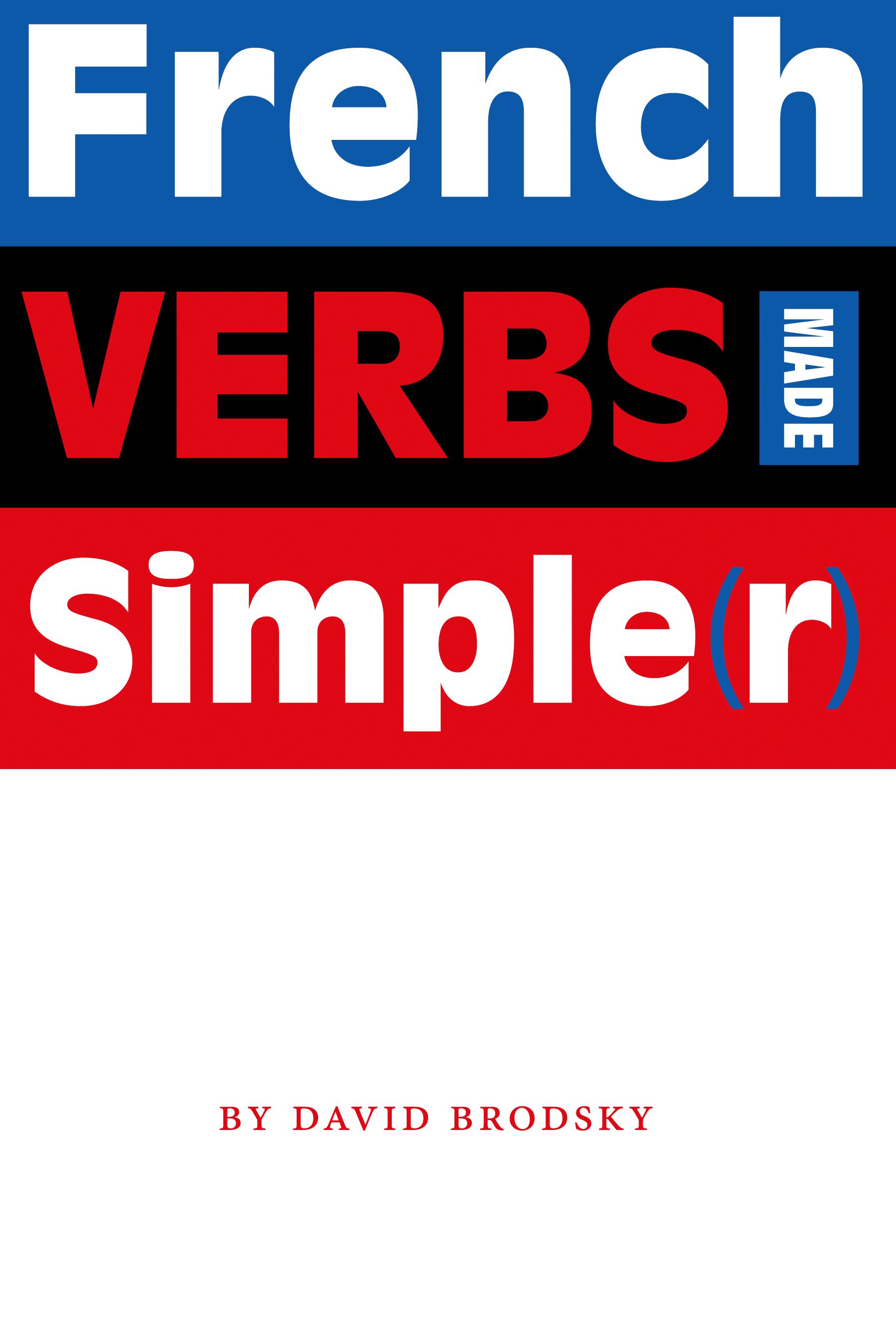
French Verbs Made Simple(r)
It's time for a new approach to learning French verbs. Unlike popular verb guides that require the rote memorization of hundreds of verb forms, this book clearly explains the rules that govern the conjugation of all classes of French verbs—especially the irregular ones that give second-language learners the most trouble. These straightforward, easy-to-understand rules for conjugating French verbs are effective learning tools for both beginning students and more advanced speakers who want to perfect their usage of French verb forms. French Verbs Made Simple(r) has many helpful features that you won't find in any other verb guide: Clear explanations of all verb tenses and forms.The simple patterns and rules that govern the conjugation of all verbs—including those verbs whose irregularities follow patterns that can be easily learned.A detailed discussion of how each verb form is used, with numerous examples.A full explanation of whether a verb should be conjugated with avoir or être, and the conditions under which the past participle is variable—two of the thorniest problems for students of French.An extended treatment of the subjunctive that will help you understand why it is used in some situations but not others.Complete conjugations for 57 basic model verbs (along with 27 \"variants\") and a comprehensive listing of some 6,200 verbs that indicates which of the models each verb follows. Going well beyond any other guide in the clarity and detail of its explanations—as well as the innovative manner in which individual verbs are linked to model conjugations—French Verbs Made Simple(r) is the only guide to French verbs a learner needs.
eBook

The Use of Pre-/Posttest and Self-Assessment Tools in a French Pronunciation Course
This study investigated the relationships between students' self‐assessments and experts' assessments in a university French pronunciation course for nonnative speakers using a pre‐/posttest design. Results indicated that students were relatively accurate when making a global assessment (Time 1) and when judging some specific aspects of their French pronunciation (Time 2), although they tended to overestimate the extent to which their abilities were native‐like. Their self‐assessments were most accurate when evaluating linguistic components for which they had learned concrete rules (e.g., liaisons). In addition, data revealed that students became more native‐like in their pronunciation, particularly with regard to nasal and other new vowel sounds, and a content analysis of students' responses to a free‐response self‐analysis query at the end of the course indicated that their awareness of their pronunciation difficulties had increased. Taken together, the study found that self‐assessment may be a valuable pedagogical tool for helping second language learners to acquire more authentic pronunciation.
Journal Article

Consonant and Vowel Processing in Word Form Segmentation: An Infant ERP Study
Segmentation skill and the preferential processing of consonants (C-bias) develop during the second half of the first year of life and it has been proposed that these facilitate language acquisition. We used Event-related brain potentials (ERPs) to investigate the neural bases of early word form segmentation, and of the early processing of onset consonants, medial vowels, and coda consonants, exploring how differences in these early skills might be related to later language outcomes. Our results with French-learning eight-month-old infants primarily support previous studies that found that the word familiarity effect in segmentation is developing from a positive to a negative polarity at this age. Although as a group infants exhibited an anterior-localized negative effect, inspection of individual results revealed that a majority of infants showed a negative-going response (Negative Responders), while a minority showed a positive-going response (Positive Responders). Furthermore, all infants demonstrated sensitivity to onset consonant mispronunciations, while Negative Responders demonstrated a lack of sensitivity to vowel mispronunciations, a developmental pattern similar to previous literature. Responses to coda consonant mispronunciations revealed neither sensitivity nor lack of sensitivity. We found that infants showing a more mature, negative response to newly segmented words compared to control words (evaluating segmentation skill) and mispronunciations (evaluating phonological processing) at test also had greater growth in word production over the second year of life than infants showing a more positive response. These results establish a relationship between early segmentation skills and phonological processing (not modulated by the type of mispronunciation) and later lexical skills.
Journal Article