
Catalogue Search | MBRL


Are you sure you want to remove the book from the shelf?

{{itemTitle}}
1,200
result(s) for
"memory improvement"
Sort by:

Memory activity book : engaging ways to stimulate the brain, for people living with memory loss or dementia
More than 70 brain-stimulating activities for people with memory loss or dementia, including Alzheimer's disease. Physical and mental activities along with social interaction may help maintain your brain health and slow the progress of memory loss and dementia, including Alzheimer's disease. They can also provide a meaningful way to connect. This book is packed with fun and creative ideas, from nature walks, gardening, and exercise to arts, crafts, puzzles, and games. Each activity includes step-by-step instructions, the specific benefits, and ways to adapt the activity for different abilities. Designed for people with memory loss or dementia along with their family, friends, and caregivers, AARP's Memory Activity Book is a valuable resource for everyone touched by these conditions.
Book

Synergistic Effect of Combined Walnut Peptide and Ginseng Extracts on Memory Improvement in C57BL/6 Mice and Potential Mechanism Exploration
This work aimed to investigate whether there are synergistic effects between walnut peptide (WNP) and ginseng extracts (GSE) treatments to ameliorate the memory impairment caused by scopolamine (SCOP). The Morris water maze trial, hippocampal neuron morphology, neurotransmitters, and synaptic ultrastructure were examined, along with brain-derived neurotrophic factor (BDNF)-related signaling pathway proteins. The results of the Morris water maze trial demonstrated that the combined administration of WNP and GSE effectively alleviated memory impairment in C57BL/6 rats caused by SCOP. Improvement in the morphology of hippocampal neurons, dendritic spines, and synaptic plasticity and upregulation of neurotransmitters AChE, ACh, ChAT, Glu, DA, and 5-HT supported the memory improvement effects of WNP + GSE. In addition, compared with the model group, WNP + GSE significantly enhanced the protein levels of VAChT, Trx-1, and the CREB/BDNF/TrkB pathway in hippocampal and PC12 cells induced by SCOP (p < 0.05). Notably, WNP + GSE boosted memory via multiple pathways, not only the BDNF/TrkB/CREB target.
Journal Article

Remembering : what 50 years of research with famous amnesia patient H.M. can teach us about memory and how it works
\"The psychologist who worked with a famous amnesiac patient for fifty years explains what his studies show about how memory functions and ways to keep the brain sharp. An ordinary man became famous by devoting his life to helping scientists understand his memory, mind, and brain, trusting in the promise that what they learned about him would \"help others.\" His name was Henry Moliason, but until recently, the general public knew him only as H.M. At age twenty-seven, Henry underwent brain surgery to remedy life-threatening epilepsy. This operation inadvertently destroyed his hippocampus, the engine in the brain for forming new memories. Henry suffered catastrophic memory failures for the rest of his life and he became the most studied amnesia patient in the history of the world. Dr. Donald MacKay worked with Henry for fifty years. MacKay's research shows how to keep memories sharp at any age and how to offset the degradation that aging and infrequent use inflict on memory. His studies also reveal the profound importance of memory: Memory decline impacts everything that makes a normal human mind and brain worth having: creative expression, artistic endeavors, awareness, the ability to plan, to comprehend, to detect and correct errors, to appreciate humor, to imagine hypothetical situations, and to perceive novelty in the world. Remembering summarizes other results of the revolution in scientific understanding of mind and memory that began with Henry. Importantly, it makes good on the promise that research with Henry would \"help others\" by focusing on what readers wishing to maintain the everyday functioning of memory, mind, and brain (their own or others') can learn from the still ongoing revolution that Henry inspired\"-- Provided by publisher.
Book

Deep Learning Architecture Improvement Based on Dynamic Pruning and Layer Fusion
The heavy workload of current deep learning architectures significantly impedes the application of deep learning, especially on resource-constrained devices. Pruning has provided a promising solution to compressing the bloated deep learning models by removing the redundancies of the networks. However, existing pruning methods mainly focus on compressing the superfluous channels without considering layer-level redundancies, which results in the channel-pruned models still suffering from serious redundancies. To mitigate this problem, we propose an effective compression algorithm for deep learning models that uses both the channel-level and layer-level compression techniques to optimize the enormous deep learning models. In detail, the channels are dynamically pruned first, and then the model is further optimized by fusing the redundant layers. Only a minor performance loss results. The experimental results show that the computations of ResNet-110 are reduced by 80.05%, yet the accuracy is only decreased by 0.72%. Forty-eight convolutional layers could be discarded from ResNet-110 with no loss of performance, which fully demonstrates the efficiency of the proposal.
Journal Article

Brain fitness : the easy way of keeping your mind sharp through qigong movements
The author shares her expertise in tai chi, qigong, and medicine, emphasizing how tai chi and qigong aid in memory, emotional balance, and lifelong learning. This book features an illustrated manual detailing tai chi and qigong exercises to prevent brain aging; and concise, accessible guidance in combining elements of eastern and western medicine to form a new vision of brain health.--Publisher.
Book
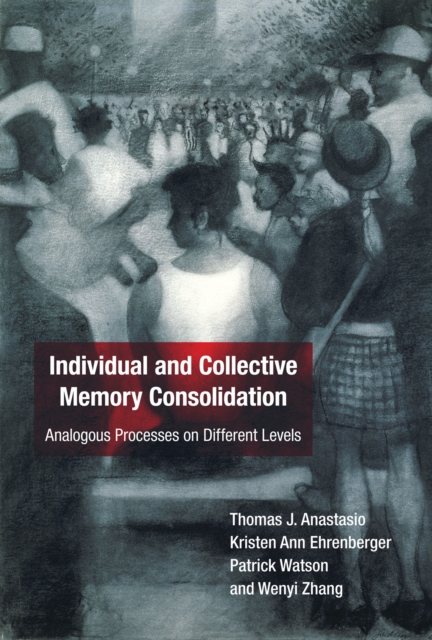
Individual and Collective Memory Consolidation
An argument that individuals and collectives form memories by analogous processes and a case study of collective retrograde amnesia.
We form individual memories by a process known as consolidation: the conversion of immediate and fleeting bits of information into a stable and accessible representation of facts and events. These memories provide a version of the past that helps us navigate the present and is critical to individual identity. In this book, Thomas Anastasio, Kristen Ann Ehrenberger, Patrick Watson, and Wenyi Zhang propose that social groups form collective memories by analogous processes. Using facts and insights from neuroscience, psychology, anthropology, and history, they describe a single process of consolidation with analogous—not merely comparable—manifestations on any level, whether brain, family, or society. They propose a three-in-one model of memory consolidation, composed of a buffer, a relator, and a generalizer, all within the consolidating entity, that can explain memory consolidation phenomena on individual and collective levels.
When consolidation is disrupted by traumatic injury to a brain structure known as the hippocampus, memories in the process of being consolidated are lost. In individuals, this is known as retrograde amnesia. The authors hypothesize a \"social hippocampus\" and argue that disruption at the collective level can result in collective retrograde amnesia. They offer the Chinese Cultural Revolution (1966–1976) as an example of trauma to the social hippocampus and present evidence for the loss of recent collective memory in mainland Chinese populations that experienced the Cultural Revolution.
eBook
Why We Do What We Do
Practical tools and tips to lead a healthy and productive lifeThe brain is the basis of everything we do: how we behave, communicate, feel, remember, pay attention, create, influence and decide.Why We Do What We Do combines scientific research with concrete examples and illustrative stories to clarify the complex mechanisms of the human brain. It offers valuable insights into how our brain works every day, at home and at work, and provides practical ideas and tips to help us lead happy, healthy and productive lives. • Learn about how your brain functions• Find out how emotions can be overcome or last a lifetime• Access your brain’s natural ability to focus and concentrate• Think creativelyThe thoughts you have and the words that you speak all have an effect on your neural architecture — and this book explains what that means in a way you can understand.
eBook

Efficacy and Safety of Panax ginseng Sprout Extract in Subjective Memory Impairment: A Randomized, Double-Blind, Placebo-Controlled Clinical Trial
Sprout ginseng extract (ThinkGIN™) manufactured through a smart farm system has been shown to improve memory in preclinical studies. This study conducted a 12-week randomized, double-blind, placebo-controlled clinical trial to evaluate the efficacy and safety of ThinkGIN™ for improving memory in subjective memory impairment (SMI). Subjects aged 55 to 75 years with SMI participated in this study. A total of 80 subjects who met the inclusion/exclusion criteria were assigned to the ThinkGIN™ group (n = 40, 450 mg ThinkGIN™/day) or a placebo group (n = 40). Efficacy and safety evaluations were conducted before intervention and at 12 weeks after intervention. As a result of 12 weeks of ThinkGIN™ intake, significant differences in SVLT, RCFT, MoCA-K, PSQI-K, and AChE were observed between the two groups. Safety evaluation (AEs, laboratory tests, vital signs, and electrocardiogram) revealed that ThinkGIN™ was safe with no clinically significant changes. Therefore, ThinkGIN™ has the potential to be used as a functional food to improve memory.
Journal Article

Discovery of a dual-action small molecule that improves neuropathological features of Alzheimer’s disease mice
Alzheimer’s disease (AD) is characterized by complex, multifactorial neuropathology, suggesting that small molecules targeting multiple neuropathological factors are likely required to successfully impact clinical progression. Acid sphingomyelinase (ASM) activation has been recognized as an important contributor to these neuropathological features in AD, leading to the concept of using ASM inhibitors for the treatment of this disorder. Here we report the identification of KARI 201, a direct ASM inhibitor evaluated for AD treatment. KARI 201 exhibits highly selective inhibition effects on ASM, with excellent pharmacokinetic properties, especially with regard to brain distribution. Unexpectedly, we found another role of KARI 201 as a ghrelin receptor agonist, which also has therapeutic potential for AD treatment. This dual role of KARI 201 in neurons efficiently rescued neuropathological features in AD mice, including amyloid beta deposition, autophagy dysfunction, neuroinflammation, synaptic loss, and decreased hippocampal neurogenesis and synaptic plasticity, leading to an improvement in memory function. Our data highlight the possibility of potential clinical application of KARI 201 as an innovative and multifaceted drug for AD treatment.
Journal Article

Standardization of Germinated Oat Extracts and Their Neuroprotective Effects Against Aβ1-42 Induced Cytotoxicity in SH-SY5Y Cells
The present study aimed to standardize germinated oat extracts (GOEs) by profiling avenanthramides (AVNs) and phenolic acids and evaluate their neuroprotective effects against Aβ1-42-induced cytotoxicity in human neuroblastoma (SH-SY5Y) cells. GOEs were standardized to contain 1652.56 ± 3.37 µg/g dry weight (dw) of total AVNs, including 468.52 ± 17.69 µg/g AVN A, 390.33 ± 10.26 µg/g AVN B, and 641.22 ± 13.89 µg/g AVN C, along with 490.03 ± 7.83 µg/g dw of ferulic acid, using a validated analytical method. Treatment with AVN C and GOEs significantly inhibited Aβ1-42-induced cytotoxicity (p < 0.05). Furthermore, both AVNs and GOEs markedly reduced Aβ1-42-induced reactive oxygen species (ROS) generation in SH-SY5Y cells, showing significant scavenging activity at concentrations of 25 μg/mL (AVNs) and 50 μg/mL (GOEs) (p < 0.05). RT-PCR analysis revealed that AVNs and GOEs effectively downregulated the expression of inflammation- and apoptosis-related genes triggered by Aβ1-42 exposure. These findings suggest that GOEs rich in AVNs may serve as a potential functional ingredient for enhancing memory function through the inhibition of neuroinflammation and oxidative stress.
Journal Article