
Catalogue Search | MBRL


Are you sure you want to remove the book from the shelf?

{{itemTitle}}
3,221
result(s) for
"public environment needs"
Sort by:
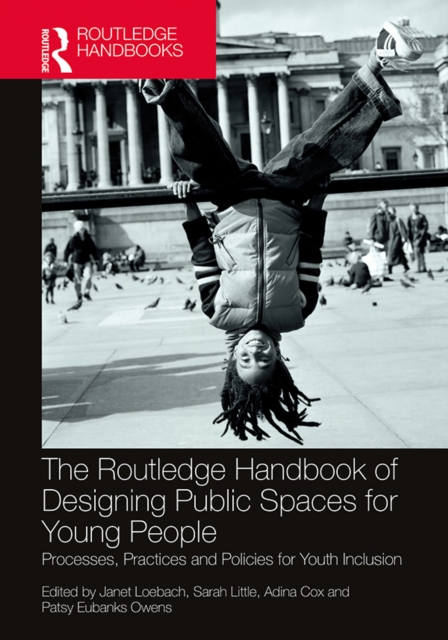
The Routledge Handbook of Designing Public Spaces for Young People
The Routledge Handbook of Designing Public Spaces for Young People is a thorough and practical resource for all who wish to influence policy and design decisions in order to increase young people's access to and use of public spaces, as well as their role in design and decision-making processes.
The ability of youth to freely enjoy public spaces, and to develop a sense of belonging and attachment to these environments, is critical for their physical, social, cognitive, and emotional development. Young people represent a vital citizen group with legitimate rights to occupy and shape their public environments, yet they are often driven out of public places by adult users, restrictive bylaws, or hostile designs. It is also important that children and youth have the opportunity to genuinely participate in the planning of public spaces, and to have their needs considered in the design of the public realm.
This book provides both evidence and tools to help effectively advocate for more youth-inclusive public environments, as well as integrate youth directly into both research and design processes related to the public realm. It is essential reading for researchers, design and planning professionals, community leaders, and youth advocates.
eBook

Prevention of chronic disease in the 21st century: elimination of the leading preventable causes of premature death and disability in the USA
With non-communicable conditions accounting for nearly two-thirds of deaths worldwide, the emergence of chronic diseases as the predominant challenge to global health is undisputed. In the USA, chronic diseases are the main causes of poor health, disability, and death, and account for most of health-care expenditures. The chronic disease burden in the USA largely results from a short list of risk factors—including tobacco use, poor diet and physical inactivity (both strongly associated with obesity), excessive alcohol consumption, uncontrolled high blood pressure, and hyperlipidaemia—that can be effectively addressed for individuals and populations. Increases in the burden of chronic diseases are attributable to incidence and prevalence of leading chronic conditions and risk factors (which occur individually and in combination), and population demographics, including ageing and health disparities. To effectively and equitably address the chronic disease burden, public health and health-care systems need to deploy integrated approaches that bundle strategies and interventions, address many risk factors and conditions simultaneously, create population-wide changes, help the population subgroups most affected, and rely on implementation by many sectors, including public–private partnerships and involvement from all stakeholders. To help to meet the chronic disease burden, the US Centers for Disease Control and Prevention (CDC) uses four cross-cutting strategies: (1) epidemiology and surveillance to monitor trends and inform programmes; (2) environmental approaches that promote health and support healthy behaviours; (3) health system interventions to improve the effective use of clinical and other preventive services; and (4) community resources linked to clinical services that sustain improved management of chronic conditions. Establishment of community conditions to support healthy behaviours and promote effective management of chronic conditions will deliver healthier students to schools, healthier workers to employers and businesses, and a healthier population to the health-care system. Collectively, these four strategies will prevent the occurrence of chronic diseases, foster early detection and slow disease progression in people with chronic conditions, reduce complications, support an improved quality of life, and reduce demand on the health-care system. Of crucial importance, with strengthened collaboration between the public health and health-care sectors, the health-care system better uses prevention and early detection services, and population health is improved and sustained by solidifying collaborations between communities and health-care providers. This collaborative approach will improve health equity by building communities that promote health rather than disease, have more accessible and direct care, and focus the health-care system on improving population health.
Journal Article

What are the needs of people with dementia in acute hospital settings, and what interventions are made to meet these needs? A systematic integrative review of the literature
Background
Research aiming to improve the hospital experience for patients with dementia and their informal carers is strongly recommended. The present review aimed to describe the research on interventions to meet the needs of people with dementia in acute hospital settings regarding physical environment, organization of care, and staff knowledge of dementia and competence in person-centred care. An integrative review design was applied. We searched for studies in PubMed, Ovid Medline, Cinahl, Embase, Swemed+, and Cochrane databases using the Mixed Methods Appraisal Tool (MMAT) for quality evaluation. Twenty-seven articles were included, describing the perspectives of people with dementia, informal carers, and professional carers. The MMAT score ranged from two to four. Twelve studies described needs and experiences, mostly using a qualitative design. Common themes and results were synthesized. The studies identified a need to enhance staff competence regarding dementia and person-centred care. Fifteen studies described interventions: two were qualitative; three used mixed method, and 10 were quantitative, of which two were randomized controlled trials and eight were observational studies. Five types of interventions were identified. Three types could positively impact staff knowledge about dementia and person-centred care. One type was experienced as positive regarding organisation of care for patients with dementia. None of the intervention studies found evidence for effects on the identified needs regarding physical environment.
Conclusion
The included studies suggest that staff need more knowledge regarding dementia and person-centred dementia care and that training interventions implemented to enhance staff competence had promising results. However, there is a need for research on the needs of patients with dementia in acute hospital settings regarding physical environment and effect of design elements. There is also a scarcity of intervention studies focusing on the effect of models of care that support the psychosocial needs of patients with dementia.
Journal Article

The State of the US Governmental Public Health Workforce, 2014–2017
Public health workforce development efforts during the past 50 years have evolved from a focus on enumerating workers to comprehensive strategies that address workforce size and composition, training, recruitment and retention, effectiveness, and expected competencies in public health practice. We provide new perspectives on the public health workforce, using data from the Public Health Workforce Interests and Needs Survey, the largest nationally representative survey of the governmental public health workforce in the United States. Five major thematic areas are explored: workforce diversity in a changing demographic environment; challenges of an aging workforce, including impending retirements and the need for succession planning; workers’ salaries and challenges of recruiting new staff; the growth of undergraduate public health education and what this means for the future public health workforce; and workers’ awareness and perceptions of national trends in the field. We discussed implications for policy and practice.
Journal Article

What Works for Whom in School-Based Anti-bullying Interventions? An Individual Participant Data Meta-analysis
The prevalence of bullying worldwide is high (UNESCO, 2018). Over the past decades, many anti-bullying interventions have been developed to remediate this problem. However, we lack insight into for whom these interventions work and what individual intervention components drive the total intervention effects. We conducted a large-scale individual participant data (IPD) meta-analysis using data from 39,793 children and adolescents aged five to 20 years (Mage = 12.58, SD = 2.34) who had participated in quasi-experimental or randomized controlled trials of school-based anti-bullying interventions (i.e., 10 studies testing nine interventions). Multilevel logistic regression analyses showed that anti-bullying interventions significantly reduced self-reported victimization (d = − 0.14) and bullying perpetration (d = − 0.07). Anti-bullying interventions more strongly reduced bullying perpetration in younger participants (i.e., under age 12) and victimization for youth who were more heavily victimized before the intervention. We did not find evidence to show that the inclusion of specific intervention components was related to higher overall intervention effects, except for an iatrogenic effect of non-punitive disciplinary methods–which was strongest for girls. Exploratory analyses suggested that school assemblies and playground supervision may have harmful effects for some, increasing bullying perpetration in youth who already bullied frequently at baseline. In conclusion, school-based anti-bullying interventions are generally effective and work especially well for younger children and youth who are most heavily victimized. Further tailoring of interventions may be necessary to more effectively meet the needs and strengths of specific subgroups of children and adolescents.
Journal Article

Measuring the food environment using geographical information systems: a methodological review
OBJECTIVE: Through a literature review, we investigated the geographic information systems (GIS) methods used to define the food environment and the types of spatial measurements they generate. DESIGN: Review study. SETTING: Searches were conducted in health science databases, including Medline/Pubmed, PsycINFO, Francis and GeoBase. We included studies using GIS-based measures of the food environment published up to 1 June 2008. RESULTS: Twenty-nine papers were included. Two different spatial approaches were identified. The density approach quantifies the availability of food outlets using the buffer method, kernel density estimation or spatial clustering. The proximity approach assesses the distance to food outlets by measuring distances or travel times. GIS network analysis tools enable the modelling of travel time between referent addresses (home) and food outlets for a given transportation network and mode, and the assumption of travel routing behaviours. Numerous studies combined both approaches to compare food outlet spatial accessibility between different types of neighbourhoods or to investigate relationships between characteristics of the food environment and individual food behaviour. CONCLUSIONS: GIS methods provide new approaches for assessing the food environment by modelling spatial accessibility to food outlets. On the basis of the available literature, it appears that only some GIS methods have been used, while other GIS methods combining availability and proximity, such as spatial interaction models, have not yet been applied to this field. Future research would also benefit from a combination of GIS methods with survey approaches to describe both spatial and social food outlet accessibility as important determinants of individual food behaviours.
Journal Article

Practices for Improving Secondary School Climate: A Systematic Review of the Research Literature
School climate has received increased attention in education policy and, in response, educators are seeking strategies to improve the climates of their middle and high schools. However, there has been no comprehensive synthesis of the empirical evidence for what works in school climate improvement. This article constitutes a systematic review of programs and practices with empirical support for improving school climate. It defines school climate and provides a methodology for identifying and evaluating relevant studies. The review identified 66 studies with varying strength of evidence and nine common elements that cut across reviewed programs and practices. The review concludes with a critical appraisal of what we know about school climate improvement and what we still need to know.
Journal Article

Mental Health Impact of COVID-19 among Children and College Students: A Systematic Review
The COVID-19 pandemic led to a worldwide lockdown and school closures, which have placed a substantial mental health burden on children and college students. Through a systematic search of the literature on PubMed and Collabovid of studies published January 2020–July 2021, our findings of five studies on children and 16 studies on college students found that both groups reported feeling more anxious, depressed, fatigued, and distressed than prior to the pandemic. Several risk factors such as living in rural areas, low family socioeconomic status, and being a family member or friend to a healthcare worker were strongly associated with worse mental health outcomes. As schools and researchers discuss future strategies on how to combine on-site teaching with online courses, our results indicate the importance of considering social contacts in students’ mental health to support students at higher risk of social isolation during the COVID-19 pandemic.
Journal Article

Comparative Study of Teachers in Regular Schools and Teachers in Specialized Schools in France, Working with Students with an Autism Spectrum Disorder: Stress, Social Support, Coping Strategies and Burnout
The inclusion of students with Autism Spectrum Disorder (ASD) in schools is a source of stress for teachers. Specialized teachers have, in theory, received special training. To compare the experiences of teachers dealing with students with ASD in different classroom environments. A total of 245 teachers filled out four self-report questionnaires measuring perceived stress, social support, coping strategies, and burnout. Specialized teachers perceive their teaching as a challenge, can count on receiving help from colleagues, use more problem-focused coping strategies and social support seeking behavior, and are less emotionally exhausted than teachers in regular classes. This study highlights that teachers in specialized schools and classes have better adjustment, probably due to their training, experience, and tailored classroom conditions.
Journal Article

Tailoring implementation of a youth-focused mental health intervention in Sierra Leone using an implementation blueprint methodology
Background
Identifying contextual factors that might support or hinder implementation of evidence-based mental health interventions for youth in low- and middle- income countries may improve implementation success by increasing the alignment of intervention implementation with local needs and resources. This study engaged community partners in Sierra Leone to: (a) investigate barriers and facilitators to implementing a mental health intervention within Sierra Leone’s schools; (b) develop an implementation blueprint to address identified implementation barriers; (c) explore the feasibility of using the implementation blueprint methodology in Sierra Leone.
Methods
We recruited Ministry of Education Officials (
n
= 2), teachers (
n
= 15) and principals
(
n
=
15) in Sierra Leone to participate in needs assessment qualitative interviews. We used a rapid qualitative analysis approach to analyze data. Three team members summarized transcripts based on domains aligned with the structured research questions, organized themes into a matrix, and identified and discussed key themes to arrive at consensus. We then reconvened community partners to discuss implementation strategies that could address identified barriers. Participants ranked barriers according to high/low feasibility and high/low importance and selected implementation strategies for the blueprint.
Results
Qualitative results revealed several implementation barriers: teacher/parent/student buy-in; teacher motivation; scheduling time; limited funding; waning interest; daily hardships outside of school. Strategies selected included: develop/distribute educational materials; conduct education meetings/outreach; identify and prepare champions; access new funding.
Conclusions
Engaging community partners to develop an implementation blueprint for integration of a mental health intervention within Sierra Leone’s schools was feasible and may increase implementation effectiveness.
Journal Article