
Catalogue Search | MBRL


Are you sure you want to remove the book from the shelf?

{{itemTitle}}
368
result(s) for
"rehabilitation programs for sex offenders"
Sort by:

Hound pound narrative
This is a detailed ethnographic study of a therapeutic prison unit in Canada for the treatment of sexual offenders. Utilizing extensive interviews and participant-observation over an eighteen month period of field work, the author takes the reader into the depths of what prison inmates commonly refer to as the \"hound pound.\" James Waldram provides a rich and powerful glimpse into the lives and treatment experiences of one of society's most hated groups. He brings together a variety of theoretical perspectives from psychological and medical anthropology, narrative theory, and cognitive science to capture the nature of sexual offender treatment, from the moment inmates arrive at the treatment facility to the day they are relased. This book explores the implications of an outside world that balks at any notion that sexual offenders can somehow be treated and rendered harmless. The author argues that the aggressive and confrontational nature of the prison's treatment approach is counterproductive to the goal of what he calls \"habilitation\" -- the creation of pro-social and moral individuals rendered safe for our communities.
eBook

Sex Offender Recidivism Revisited
The effectiveness of sex offender treatment programs continues to generate misinformation and disagreement. Some literature reviews conclude that treatment does not reduce recidivism while others suggest that specific types of treatment may warrant optimism. The principal purpose of this study is to update the most recent meta-analyses of sex offender treatments and to compare the findings with an earlier study that reviewed the meta-analytic studies published from 1995 to 2002. More importantly, this study examines effect sizes across different age populations and effect sizes across various sex offender treatments. Results of this review of meta-analyses suggest that sex offender treatments can be considered as “proven” or at least “promising,” while age of participants and intervention type may influence the success of treatment for sex offenders. The implications of these findings include achieving a broader understanding of intervention moderators, applying such interventions to juvenile and adult offenders, and outlining future areas of research.
Journal Article

Best practice in sexual offender rehabilitation and reintegration programs
PurposeThis paper aims to report on the results of a global search to identify the characteristics of successful sexual offender treatment programs, with a view to providing guidance for program development.Design/methodology/approachA keyword search was conducted of criminology and social science databases. Successful programs were selected on evaluations that used standard scientific designs.FindingsThis study identified 18 evaluations of 16 programs showing significant reductions in reconvictions. Most programs used cognitive behavioural therapy (CBT), with both group and individual sessions; and many evidenced multisystemic therapy (MST) approaches involving families and/or local communities. CBT-based approaches were also common in the 20 unsuccessful programs identified in the study, although fewer MST-oriented features were in evidence. Noncustodial settings, and combined custodial-noncustodial settings, were also more prominent in the successful programs.Research limitations/implicationsThere is a shortage of studies focused on the specific components of successful treatment programs for sexual offenders, including for subsets of offenders, such as ethnic minority groups and women.Practical implicationsThe findings demonstrate the need for more investment in treatment programs with strict evaluation processes. New and modified programs are likely to benefit from the application of CBT, MST and a community-based reintegration component. More research is needed on effective elements of sexual offender treatment programs.Originality/valueTo the best of the authors’ knowledge, this appears to be the first study that examines features of successful sexual offender treatment programs, compared to unsuccessful programs, using a case-study approach. The findings reinforce the known value of CBT and systemic approaches as core features of programs but raise important questions about what other components are key to activating success.
Journal Article

REHABILITATING CRIMINAL SELVES: Gendered Strategies in Community Corrections
As the community corrections system has moved away from a focus on rehabilitation, it has been suggested that criminal offenders are no longer understood psychologically, but rather as rational actors for whom criminality is a choice. Rehabilitative efforts thus aim to guide these choices. Utilizing mixed methodology that draws on observational, interview, and case note data collected within the probation/parole system of a western U.S. state, I suggest that both officers' conceptualizations of the criminal self and the rehabilitative strategies they use are gendered. I find that officers view the male criminal self as flawed or underdeveloped and the female as permeable and amorphous, that is, lacking firm boundaries. In response to these constructions, officers aim to rehabilitate men largely by encouraging economic roles and responsibilities, while for women, rehabilitation aims to solidify boundaries: discouraging relationship formation and containing emotions. The differences identified point to ways in which gendered concepts of the criminal self contribute to gender disparities in contemporary supervision.
Journal Article

Reconsidering the Responsivity Principle: A Way to Move Forward
The fourth principle was the override principle, which called for professional discretion in cases where behavior could not be explained with existing knowledge. Since 1990 the RNR model has expanded to include many more principles (Andrews & Bonta, 2010a; 2010b), but the principles of risk, need, and responsivity remain at the core. More recent tests of the risk principle with actuarial measures of offender risk at the individual level have been supportive of the risk principle for adult offenders (Bourgon & Armstrong, 2005; Lowenkamp & Latessa, 2005; Sperber, Latessa, 8c Makarios, 2013), female offenders (Lovins, Lowenkamp, Latessa, 8c Smith, 2007), violent offenders (Polaschek, 2011) and sex offenders (Lovins, Lowenkamp, 8c Latessa, 2009; Mailloux, Abracen, Serin, Cousineau, Malcolm, 8c Looman, 2003).
Trade Publication Article

Childhood Trauma and Women's Health Outcomes in a California Prison Population
Objectives. We sought to describe the prevalence of childhood traumatic events among incarcerated women in substance abuse treatment and to assess the relation between cumulative childhood traumatic events and adult physical and mental health problems. Methods. The study was modeled after the Adverse Childhood Events study’s findings. In-depth baseline interview data for 500 women participating in the Female Offender Treatment and Employment Program evaluation were analyzed. Results. Hypotheses were supported, and regression results showed that the impact of childhood traumatic events on health outcomes is strong and cumulative (greater exposure to childhood traumatic events increased the likelihood of 12 of 18 health-related outcomes, ranging from a 15% increase in the odds of reporting fair/poor health to a 40% increase in the odds of mental health treatment in adulthood). Conclusions. Our findings suggest a need for early prevention and intervention, and appropriate trauma treatment, within correctional treatment settings.
Journal Article
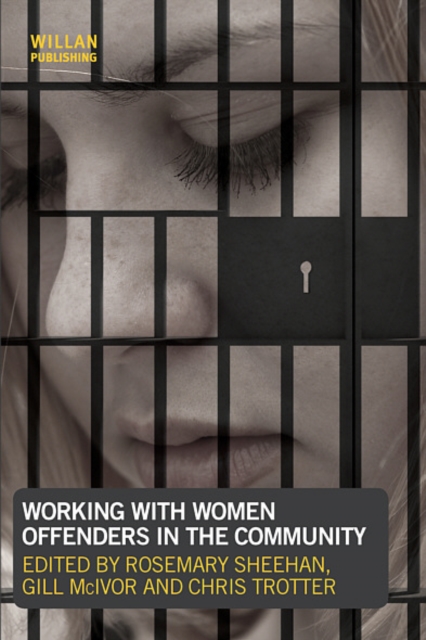
Working with Women Offenders in the Community
Though many more women offenders are supervised in the community than in custody, much less is known about their needs and effective approaches to their supervision, support and treatment. Whilst there has been recent attention paid to responding to the needs of women in prison, negligible attention has been paid to women exiting prison, or on community based orders, and what is needed to work with them to reduce re-offending or entry into prison. Contributions to this book challenge policy-makers and corrections systems to concentrate more on community provision for women offenders and resist popular calls for more punitive responses to all offenders, women included. Contributors come from a wide range of countries including Australia, Canada, UK and USA. They argue that the criminogenic lens applied to women’s offending must be gender-responsive if systems are to be successful at addressing the disadvantage and risk associated with offending behaviour. Working With Women Offenders in the Community builds on ideas presented in the editors’ previous book, What Works With Women Offenders (2007) , extending the focus particularly on women offenders in the community rather than in prison. This book concentrates on women who have committed criminal offences and who may have been placed on probation or other community based court orders or who have been released from prison on parole. It discusses the work done by professional workers including probation officers, community corrections officers and specialist case managers in areas such as drug treatment, housing, mental health or employment programmes. This book will be of interest to professional probation officers, case managers, drug treatment workers and others who work with women offenders. It will also be essential reading for students of criminology, social work, psychology, sociology and other disciplines who have an interest in women offenders.
Introduction, Rosemary Sheean, Gill, McIvor and Chris Trotter 1. Female offenders in the community: the context of female crime, Briege Nugent and Nancy Louks 2. Policy developments in England and Wales, Carol Hodderman 3. Policy developments in the USA, Maureen Buell, Phyllis Modley and Patricia Van Voorhis 4. Policy developments in Australia, Rosemary Sheehan 5. Coercion and women offenders, Dolores Blackwell 6. Victimisation and governance: gender-responsive discourses and correctional practice, Shoshana Pollack 7. Working with women offenders in the community: a view from England and Wales, Loraine Gelsthorpe 8. Beyond youth justice: working with girls and young women who offend, Gilly Sharpe 9. Breaking the cycle: addressing cultural difference in rehabilitation programs, Dot Goulding 10. Women, drugs and community interventions, Margaret Malloch and Gill McIvor 11. Managing risk in the community: how gender matters, Janet T. Davidson 12. Who cares? Fostering networks and relationships in prison and beyond, Jo Deakin and Jon Spencer 13. Mentoring, Chris Trotter 14. Community mentoring in the United States: an evaluation of the Rhode Island Women's Mentoring Programe, Dawn M. Salgado, Judith B. Fox and Kristen Quinlan 15. Maintaining and restoring family for women prisoners and their children, Rosemary Sarri 16. Connecting to the community: a case study in women's resettlement needs and experiences, Becky Hayes Boober and Erica Hansen King 17. Working with women offenders in the community: what works?, Rosemary Sheehan, Gill McIvor and Chris Trotter
eBook

Neither Villain nor Victim
Female drug addicts are often stereotyped either as promiscuous, lazy, and selfish, or as weak, scared, and trapped into addiction. These depictions typify the \"pathology and powerlessness\" narrative that has historically characterized popular and academic conversations about female substance abusers.Neither Villain Nor Victimattempts to correct these polarizing perspectives by presenting a critical feminist analysis of the drug world. By shifting the discussion to one centered on women's agency and empowerment, this book reveals the complex experiences and social relationships of women addicts.Essays explore a range of topics, including the many ways that women negotiate the illicit drug world, how former drug addicts manage the more intimate aspects of their lives as they try to achieve abstinence, how women tend to use intervention resources more positively than their male counterparts, and how society can improve its response to female substance abusers by moving away from social controls (such as the criminalization of prostitution) and rehabilitative programs that have been shown to fail women in the long term.Advancing important new perspectives about the position of women in the drug world, this book is essential reading in courses on women and crime, feminist theory, and criminal justice.
eBook

Recent Research Related to Juvenile Sex Offending: Findings and Directions for Further Research
Serious scholarly inquiry into juvenile sex offending represents a relatively new field, dating from the mid 1940s. During the next 4 decades, a mere handful of articles exploring aspects of juvenile sex offending were added to the available literature. By the 1980s, however, the literature began to increase rapidly, a trend that continues today. The purpose of this article is a focused review of the juvenile sex offender literature cited in PubMed over the last 5 years (2009-2013). The authors have chosen studies that will bring readers up to date on research they believe impacts our current understanding of best practices in the management of juvenile sex offending. For convenience, our review is organized into topical categories including research into characteristics and typologies of juvenile sex offenders, risk assessment and recidivism, assessment and treatment, the ongoing debate about mandatory registration of sex offenders as it applies to juveniles, and other thought provoking studies that do not fit neatly into the aforementioned categories. The studies included contain findings that both reinforce and challenge currently held notions about best practices concerning treatment and public policy, suggesting that our knowledge of the field continues to evolve in important ways.
Journal Article

Mental health status among male and female methamphetamine-dependent inmates in Japan
Background Although the prevalence of drug addiction in Japan is lower than that of in European and/or American countries, the number of methamphetamine-related arrests in this decade has exceeded 10,000 every year, with 66.2% of the arrests made in 2017 being of re-offenders. This study was performed to assess the mental health status among prison inmates whose sentences were related to methamphetamine use. Methods Face-to-face individual interviews using a questionnaire including self-rated health questions (answered on a 4-point Likert scale) and the Kessler 6-item psychological distress scale (K6, range: 0-24) was established by the authors and conducted with 30 methamphetamine-dependent inmates (15 male and 15 female inmates) in Japan. Results The age of inmates ranged from the 20s to the 70s. The median time served in adulthood was 5 (range: 2 - 12) among male inmates, and 4.5 (range: 2 - 12) among female inmates (Mann-Whitney U test, P = 0.202). The median K6 scores were 4 (0-8) for the male inmates and 6 (1-17) for the female inmates (Mann-Whitney U test, P = 0.074). The cut-off point for K6 exhibited variation, and the authors considered a participant psychologically distressed if K6 was 10 or higher. Six (40.0%) female inmates were found to be psychologically distressed, which was a higher proportion than among the male inmates (0.0%) (Fisher's exact test, P = 0.017). Regarding self-rated health, 13 (86.7%) of both male and female inmates reported being in “very good/good health” (Cochran-Armitage Test, P ¬= 1.000). There was no statistical correlation between the K6 scores and the self-rated health scores among the male inmates (ρ = 0.148, P = 0.599) or the female inmates (ρ = -0.499, P = 0.058). Conclusions Although the interviewees were not representative samples, the male inmates demonstrated better mental health status than the female inmates did; however, there was no difference in self-rated health between the two genders. Key messages The male inmates demonstrated better mental health status than the female inmates did; however, there was no difference in self-rated health between the two genders. Gender differences in mental health status among inmates, should be considered when a drug addiction recovery program is implemented to ensure the successful prevention of relapse.
Journal Article