
Catalogue Search | MBRL


Are you sure you want to remove the book from the shelf?

{{itemTitle}}
54,400
result(s) for
"screenplay"
Sort by:

Notions of Genre
Much of the writing in film studies published today can be understood as genre criticism, broadly speaking. And even before film studies emerged as an academic discipline in the 1970s, cultural observers within and beyond the academy were writing about genre films and making fascinating attempts to understand their conventions and how they speak to, for, and about the culture that produces them. While this early writing on genre film was often unsystematic, impressionistic, journalistic, and judgmental, it nonetheless produced insights that remain relevant and valuable today. Notions of Genre gathers the most important early writing on film genre and genre films published between 1945 and 1969. It includes articles by such notable critics as Susan Sontag, Dwight Macdonald, Siegfried Kracauer, James Agee, André Bazin, Robert Warshow, and Claude Chabrol, as well as essays by scholars in academic disciplines such as history, sociology, and theater. Their writings address major issues in genre studies, including definition, representation, ideology, audiences, and industry practices, across genres ranging from comedy and westerns to horror, science fiction, fantasy, gangster films, and thrillers. The only single-volume source for this early writing on genre films, Notions of Genre will be an invaluable resource for scholars and students of film genre, film history, film theory, cultural studies, and popular culture.
eBook

The Monomyth or the Hero’s Journey in William Faulkner’s Screenplays: The Last Slaver and Drums Along the Mohawk
Numerous critical works have dealt with the fiction of William Faulkner. However, little research has been done about his significant work for the screen. Most studies that have dealt with Faulkner’s screenplays focus on comparing between the fiction and the screenplays detecting especially how cinematic elements have found their way into the author’s works of literature. Hence, this article explores two of Faulkner’s 1930s screenplays, looking at the narrative structures of the scripts, seeking to find out to what extent they are consistent with the structure of the monomyth, the concept introduced by Joseph Campbell. Moreover, the study depicts the main stages of the monomyth, or the hero’s journey, as it traces the main protagonist’s path from the start of his quest till he reaches the end of his adventure and goes through the main trials he has to experience. By applying Campbell’s theory of the mythological hero’s journey and referring to Carl Jung’s ideas on the process of individuation, the study exhibits the psychological development of the main protagonists through the different phases of the monomyth and presents their final transformation and full growth as a result of the tests they have undertaken throughout the journey.
Journal Article
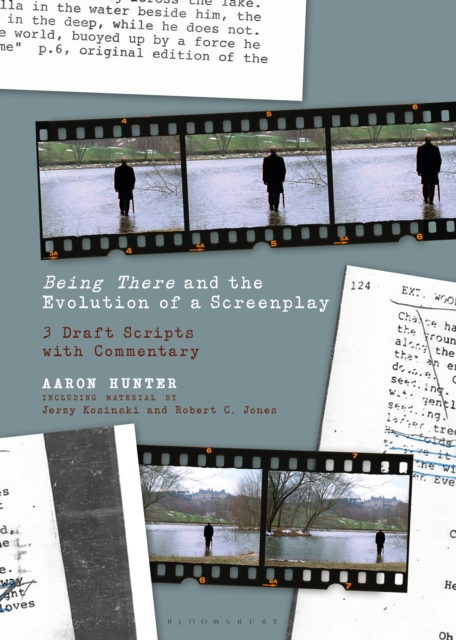
Being There and the Evolution of a Screenplay
Being There and the Evolution of a Screenplay provides an insightful look at the drafting of one of Hollywood history's greatest scripts.Being There (1979) is generally considered the final film in Hal Ashby's triumphant 1970s career, which included the likes of Harold and Maude (1971) and Shampoo (1975).
eBook

Broadcasting Hollywood
Broadcasting Hollywood: The Struggle Over Feature Films on Early Television uses extensive archival research into the files of studios, networks, advertising agencies, unions and guilds, theatre associations, the FCC, and key legal cases to analyze the tensions and synergies between the film and television industries in the early years of television. This analysis of the case study of the struggle over Hollywood’s feature films appearing on television in the 1940s and 1950s illustrates that the notion of an industry misunderstands the complex array of stakeholders who work in and profit from a media sector, and models a variegated examination of the history of media industries. Ultimately, it draws a parallel to the contemporary period and the introduction of digital media to highlight the fact that history repeats itself and can therefore play a key role in helping media industry scholars and practitioners to understand and navigate contemporary industrial phenomena.
eBook

The Grim Reader
Many authors draw from headlines or movies rather than
personal experience to write drug-related scenes, and the result
may be more fiction than fact. So, how can you craft a convincing
scene involving accidental use of fentanyl-tainted pot or a murder
attempt with grandma's pain pills?
A much-needed resource, The Grim Reader details how to
write medical scenarios that result in realistic page-turners. As
drug inaccuracies multiply in screenplays, scripts, novels, and
audio plays, Dr. Miffie Seideman, Pharm.D. provides writers (and
editors) with the background and authenticity necessary to develop
plausible plotlines, including:
• Pertinent drug facts, tips, and symptoms • Symptom timelines •
Tips for developing historically accurate scenes • Common street
drug names and slang • Sample scenarios to demonstrate how to weave
the information into a believable scene • Writing prompts to
provide scene starters and offer practice
Combining Seideman's pharmacology knowledge with her love for
creative writing, The Grim Reader is the ultimate guide to
help authors craft accurate drug scenes and avoid medical
mistakes.
eBook
Through their own lens : the Appalachian Media Institute
Through Their Own Lens: The Appalachian Media Institute celebrates the Appalachian Media Institute's (AMI) 36-year history and its profound impact on the Central Appalachian region and the lives of its interns. Through interviews with former program directors and participants, the film explores the transformative power of youth media, creativity, and self-expression. AMI, established in 1988, has built a lasting legacy of empowering Appalachian youth to take control of their narratives, telling their own stories and those of their communities through the lens of their creativity.
Streaming Video
Polish Screenplay in English Translation
Screenplay is the script of a film, including acting instructions and scene directions. There is a long way from finished screenplay to the moment when the film is distributed and the audience can watch it on the screen in the cinema. If the film is a co-production engaging foreign actors and foreign financing, one of the stages in the process is translation of the screenplay from native to another language, for instance English. Screenplay itself is a literary text, but its final product is a film. Screenplay has a specific formatting style, and it is written according to set guidelines. It combines specialized text and literary text. Screenplay is both a work of art, inspiring all the people engaged in the process of film production, and a technical blueprint for the future movie. This article describes the task of the translation of a screenplay for production and shooting purposes, discusses the elements that must be taken into account while translating it, and focuses on possible issues connected to translation of this type of modular text.
Journal Article

Reconstructing the Self and the City: Wolfgang Koeppen's Rubble Film Bei Betty (1946–1948)
This article discusses Wolfgang Koeppen's to date unpublished screenplay Bei Betty (ca. 1948) and makes a case for its importance both within Koeppen's oeuvre and as an artifact of postwar German culture that helps us understand the category of the Trümmerfilm as well as the complexity of the “zero hour.” In contrast to other rubble films, Bei Betty portrays postwar reconstruction (Wiederaufbau) as an ambivalent process, allowing some individuals to “remake” themselves while others remain damaged by the war. This visual narrative thus links physical reconstruction with acts of self‐refashioning in the aftermath of the war, highlighting the political and social stakes of performing a “new” self in response to the Allied occupation. In contrast to Koeppen's novels, full of interior monologue, the screenplay emphasizes the impenetrability of surfaces and performed social selves, the acts of concealment and masquerade that proliferated after the war's end.
Journal Article

The Value Gap
How female directors, producers, and writers navigate
the challenges and barriers facing female-driven projects at each
stage of filmmaking in contemporary Hollywood.
Conversations about gender equity in the workplace accelerated in
the 2010s, with debates inside Hollywood specifically pointing to
broader systemic problems of employment disparities and
exploitative labor practices. Compounded by the devastating #MeToo
revelations, these problems led to a wide-scale call for change.
The Value Gap traces female-driven filmmaking across
development, financing, production, film festivals, marketing, and
distribution, examining the realities facing women working in the
industry during this transformative moment. Drawing from five years
of extensive interviews with female producers, writers, and
directors at different stages of their careers, Courtney Brannon
Donoghue examines how Hollywood business cultures \"value\"
female-driven projects as risky or not bankable. Industry claims
that \"movies targeting female audiences don't make money\" or \"women
can't direct big-budget blockbusters\" have long circulated to
rationalize systemic gender inequities and have served to normalize
studios prioritizing the white male-driven status quo. Through a
critical media industry studies lens, The Value Gap
challenges this pervasive logic with firsthand accounts of women
actively navigating the male-dominated and conglomerate-owned
industrial landscape.
eBook

On Story—Screenwriters and Filmmakers on Their Iconic Films
“On Story is film school in a box, a lifetime’s worth of filmmaking knowledge squeezed into half-hour packages.\"—Kenneth Turan, film critic for the Los Angeles Times Austin Film Festival (AFF) is the first organization focused on the writer’s creative contribution to film. Its annual Film Festival and Conference offers screenings, panels, workshops, and roundtable discussions that help new writers and filmmakers connect with mentors and gain advice and insight from masters, as well as refreshing veterans with new ideas. To extend the festival’s reach, AFF produces On Story, a television series currently airing on PBS-affiliated stations and streaming online that presents footage of high-caliber artists talking candidly and provocatively about the art and craft of screenwriting and filmmaking, often using examples from their own films. On Story—Screenwriters and Filmmakers on Their Iconic Films presents renowned, award-winning screenwriters and filmmakers discussing their careers and the stories behind the production of their iconic films such as L.A. Confidential, Thelma & Louise, Groundhog Day, Guardians of the Galaxy, The Silence of the Lambs, In the Name of the Father, Apollo 13, and more. In their own lively words transcribed from interviews and panel discussions, Ron Howard, Callie Khouri, Jonathan Demme, Ted Tally, Jenny Lumet, Harold Ramis, and others talk about creating stories that resonate with one’s life experiences or topical social issues, as well as how to create appealing characters and bring them to life. Their insights, production tales, and fresh, practical, and proven advice make this book ideal for film lovers, screenwriting students, and filmmakers and screenwriters seeking inspiration.
eBook