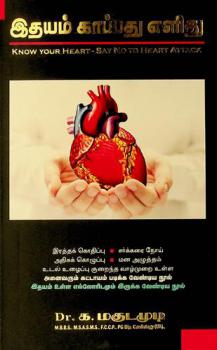
Asset Details
Do you wish to reserve the book?

Immediate versus staged complete revascularisation in patients presenting with acute coronary syndrome and multivessel coronary disease (BIOVASC): a prospective, open-label, non-inferiority, randomised trial

Hey, we have placed the reservation for you!
By the way, why not check out events that you can attend while you pick your title.

Oops! Something went wrong.
Looks like we were not able to place the reservation. Kindly try again later.
Are you sure you want to remove the book from the shelf?
Immediate versus staged complete revascularisation in patients presenting with acute coronary syndrome and multivessel coronary disease (BIOVASC): a prospective, open-label, non-inferiority, randomised trial

Do you wish to request the book?
Immediate versus staged complete revascularisation in patients presenting with acute coronary syndrome and multivessel coronary disease (BIOVASC): a prospective, open-label, non-inferiority, randomised trial
Please be aware that the book you have requested cannot be checked out. If you would like to checkout this book, you can reserve another copy

We have requested the book for you!
Your request is successful and it will be processed during the Library working hours. Please check the status of your request in My Requests.
Oops! Something went wrong.
Looks like we were not able to place your request. Kindly try again later.

Journal Article
Immediate versus staged complete revascularisation in patients presenting with acute coronary syndrome and multivessel coronary disease (BIOVASC): a prospective, open-label, non-inferiority, randomised trial
2023
Overview
In patients with acute coronary syndrome and multivessel coronary disease, complete revascularisation by percutaneous coronary intervention (PCI) is associated with improved clinical outcomes. We aimed to investigate whether PCI for non-culprit lesions should be attempted during the index procedure or staged.
This prospective, open-label, non-inferiority, randomised trial was done at 29 hospitals across Belgium, Italy, the Netherlands, and Spain. We included patients aged 18–85 years presenting with ST-segment elevation myocardial infarction or non-ST-segment elevation acute coronary syndrome and multivessel (ie, two or more coronary arteries with a diameter of 2·5 mm or more and ≥70% stenosis based on visual estimation or positive coronary physiology testing) coronary artery disease with a clearly identifiable culprit lesion. A web-based randomisation module was used to randomly assign patients (1:1), with a random block size of four to eight, stratified by study centre, to undergo immediate complete revascularisation (PCI of the culprit lesion first, followed by other non-culprit lesions deemed to be clinically significant by the operator during the index procedure) or staged complete revascularisation (PCI of only the culprit lesion during the index procedure and PCI of all non-culprit lesions deemed to be clinically significant by the operator within 6 weeks after the index procedure). The primary outcome was the composite of all-cause mortality, myocardial infarction, any unplanned ischaemia-driven revascularisation, or cerebrovascular events at 1 year after the index procedure. Secondary outcomes included all-cause mortality, myocardial infarction, and unplanned ischaemia-driven revascularisation at 1 year after the index procedure. Primary and secondary outcomes were assessed in all randomly assigned patients by intention to treat. Non-inferiority of immediate to staged complete revascularisation was considered to be met if the upper boundary of the 95% CI of the hazard ratio (HR) for the primary outcome did not exceed 1·39. This trial is registered with ClinicalTrials.gov, NCT03621501.
Between June 26, 2018, and Oct 21, 2021, 764 patients (median age 65·7 years [IQR 57·2–72·9] and 598 [78·3%] males) were randomly assigned to the immediate complete revascularisation group and 761 patients (median age 65·3 years [58·6–72·9] and 589 [77·4%] males) were randomly assigned to the staged complete revascularisation group, and were included in the intention-to-treat population. The primary outcome at 1 year occurred in 57 (7·6%) of 764 patients in the immediate complete revascularisation group and in 71 (9·4%) of 761 patients in the staged complete revascularisation group (HR 0·78, 95% CI 0·55–1·11, pnon-inferiority=0·0011). There was no difference in all-cause death between the immediate and staged complete revascularisation groups (14 [1·9%] vs nine [1·2%]; HR 1·56, 95% CI 0·68–3·61, p=0·30). Myocardial infarction occurred in 14 (1·9%) patients in the immediate complete revascularisation group and in 34 (4·5%) patients in the staged complete revascularisation group (HR 0·41, 95% CI 0·22–0·76, p=0·0045). More unplanned ischaemia-driven revascularisations were performed in the staged complete revascularisation group than in the immediate complete revascularisation group (50 [6·7%] patients vs 31 [4·2%] patients; HR 0·61, 95% CI 0·39–0·95, p=0·030).
In patients presenting with acute coronary syndrome and multivessel disease, immediate complete revascularisation was non-inferior to staged complete revascularisation for the primary composite outcome and was associated with a reduction in myocardial infarction and unplanned ischaemia-driven revascularisation.
Erasmus University Medical Center and Biotronik.
Publisher
Elsevier Ltd,Elsevier Limited