
Catalogue Search | MBRL


Are you sure you want to remove the book from the shelf?

{{itemTitle}}
8
result(s) for
"Biseth, Heidi"
Sort by:

Human Rights in the Field of Comparative Education
There is no single answer to the question: what are human rights? The answer depends on whom you ask.
eBook

Human Rights in the Field ofComparative Education
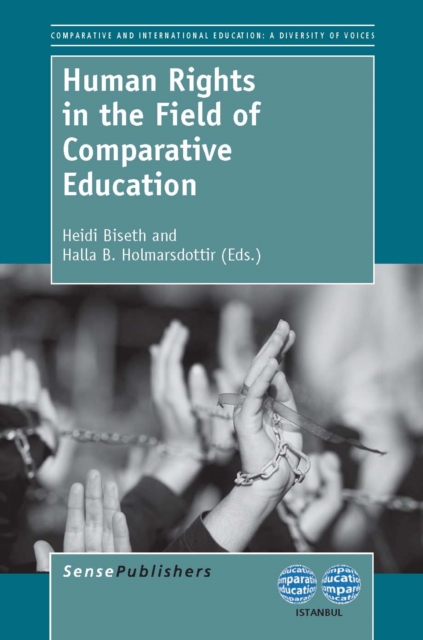
There is no single answer to the question: what are human rights? The answer depends on whom you ask. Several of the papers presented at Fourteenth World Congress of Comparative Education held at BogE azici University in Istanbul, Turkey, in June 2010 discussed issues related to human rights from a comparative education viewpoint. The nine papers presented in this book spans from policy analysis to practices in classrooms. They include analyses of human rights from a regional or country perspective, including Greece, Jordan, the Latin American region, Morocco, Northern Ireland, Portugal, the UK, the US, and Turkey. In facilitating a clarification of the ways in which we understand and talk about human rights in the field of comparative education, the editors have analysed and visualized the chapter contributions using Marie-Bndicte Dembour's categorization of human rights discourses. This is a fruitful exercise as it unravels the fact that we do not always mean the same thing when talking about human rights and also sheds light on the issues within human rights to which we are silent, issues that we should conceivably be discussing. Our engagement in human rights seems to focus on using these rights as leverage to promote our arguments about education, not engaging in a more philosophical debate about human rights. Human rights can be used as an ethical lingua franca and thus providing a fertile ground for nuancing our understanding of human rights. Since we experience a huge gap between morality and reality, an engagement in the ethical perspectives of human rights can help us on the way to closing this gap.
eBook

Multilingualism and Education for Democracy
This essay attempts to show the importance of linguistic issues in education for democracy and the close relationship between democracy and multilingualism. Increasingly nation-states are having to adapt to linguistic diversity within their borders and to recognize that democracy requires the participation of all citizens, including those belonging to linguistic minorities. Democracy also requires that all linguistic groups share a sense of community. The author argues the need for educational policies that address these challenges. /// Cet essai tente de montrer l'importance des questions linguistiques dans l'éducation à la democratic et le rapport étroit entre la démocratie et le plurilinguisme. De plus en plus, les états-nations doivent s'adapter à la diversité linguistique au sein de leurs frontières et admettre que la démocratic exige la participation de tous les citoyens, y compris ceux appartenant aux minorités linguistiques. La démocratie exige également que tous les groupes linguistiques partagent un sens de la communauté. L'auteur maintient la nécessité de politiques éducatives abordant ces défis. /// Das Artikel versucht die Bedeutung sprachlicher Gesichtspunkte für Demokratiebildung und die enge Beziehung zwischen Demokratie und Vielsprachigkeit aufzuzeigen. Staaten müssen sich zunehmend innerhalb ihrer Grenzen auf sprachliche Vielfalt einstellen und anerkennen, dass Demokratie die Teilhabe aller Bürger voraussetzt, auch derer, die sprachlichen Minderheiten angehören. Demokratie beinhaltet auch, dass alle sprachlichen Gruppen eine soziale Zusammengehörigkeit empfinden. Der Autor argumentiert für die Notwendigkeit von Bildungsstrategien, die diesen Herausforderungen begegnen. /// La autora trata de mostrar con este ensayo la importancia que revisten los aspectos lingüísticos en la educación para la democracia y la estrecha relación que existe entre la democracia y el multilingualismo. Un creciente número de Estados-nación se ven en la necesidad de adaptarse a la diversidad lingüistica existente dentro de sus límites y a reconocer que la democracia requiere la participación de todos los ciudadanos, con inclusión de los que pertenecen a minorías lingüisticas. La democracia también requiere que todos los grupos lingüísticos compartan la sensación de pertenecer a una misma comunidad. La autora sostiene que se necesitan políticas educativas que respondan a este desafío. /// В данной статье предпринимается попытка показать значимость лингвистических вопросов в образовании для демократ-ического общества и тесное взаимоотношение между демократией и полилингвальностью. Все больше и больше государствам-нациям приходится адаптироваться к лингвистическому разнообразию внугри своих границ и признавать, что демокpaтия требует yчacтия всех граждан, вкпючая и тех, кто принадлежит к лингвистическим меньшинствам. Демократня также требует, чтобы все лингвистические группы раздeпяпи чувство общности. Автор данной статьи утверждает, что необходима тaкaя образовательная политика, которая была бы направлена на эти вызовы.
Journal Article
Tension between National Citizenship and Human Rights: Perspectives in Greece and Turkey
In this chapter we intend to investigate the potential role of citizenship education as a conveyor of human rights through critically examining the policy documents prescribing the values of the education systems of Greece and Turkey. We dare the assumption that citizenship education can be considered as a value package for the school system, usually including human rights, but sometimes rather conflicting with human rights perspectives.
Book Chapter
Human Rights in the Field of Comparative Education
This volume consists of a selection of nine papers presented at the Fourteenth World Congress of Comparative Education. The Congress was organized by the Turkish Comparative Education Society and held at Boğaziçi University located in Istanbul, Turkey, in June 2010.
Book Chapter