
Catalogue Search | MBRL


Are you sure you want to remove the book from the shelf?

{{itemTitle}}
35
result(s) for
"Martínez Flor, Alicia"
Sort by:
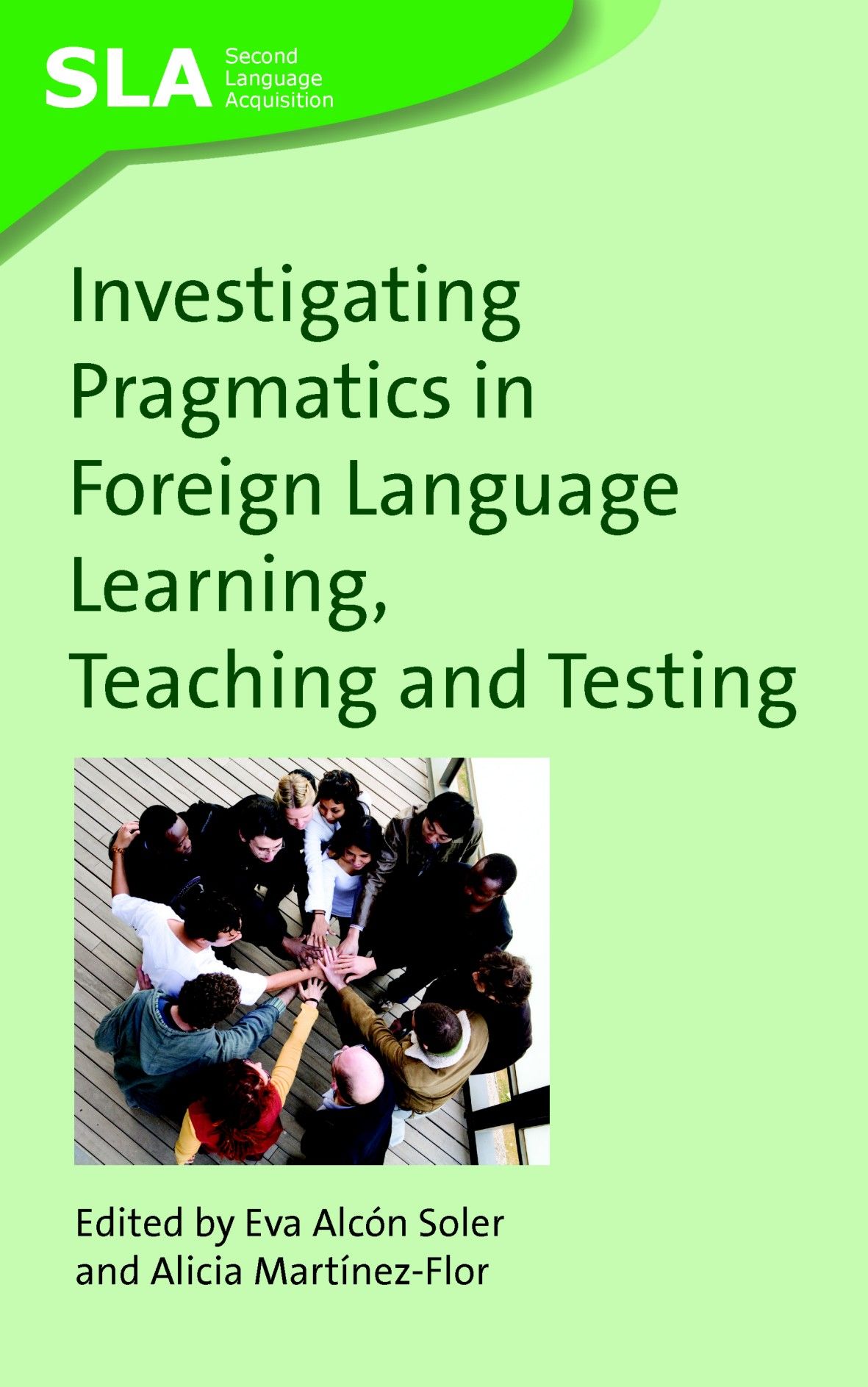
Investigating Pragmatics in Foreign Language Learning, Teaching and Testing
The book focuses on investigating pragmatic learning, teaching and testing in foreign language contexts. The volume brings together research that investigates these three areas in different formal language learning settings. The number and variety of languages involved both as the first language (e.g. English, Finnish, Iranian, Spanish, Japanese) as well as the target foreign language (e.g. English, French, German, Indonesian, Korean, Spanish) makes the volume specially attractive for language educators in different sociocultural foreign language contexts. Additionally, the different approaches adopted by the researchers participating in this volume, such as information processing, sociocultural, language socialization, computer-mediated or conversation analysis should be of interest to graduate students and researchers working in the area of second language acquisition.
eBook

Exploring the Connections Between EFL Learners’ Motivation, Engagement and Pragmatic Development in Self-Access Web-Based Instruction
The present study investigates the relationship between initial learner motivation, engagement, and pragmatic development within a self-access web-based instructional environment. Focused on the development of awareness and production of English email requests to faculty, the study involved 65 first-year English Studies students at a Spanish public university. Motivation was assessed qualitatively through open-ended responses which were classified as having Pragmatic orientation, Linguistic orientation, or No orientation. Engagement was captured multidimensionally via project-linked indices of behavioural, cognitive, and affective involvement. Findings reveal that initial motivation predicted greater overall engagement, including increased time invested and deeper cognitive processing. A distinct modality gap was identified: while engagement related positively to pragmatic gains, it exerted stronger effects on awareness than production. Most crucially, profile analyses revealed that sustained engagement can override initial motivational deficits. Learners who entered the module with no initial orientation but still engaged at a moderate level significantly outperformed unmotivated, disengaged peers and achieved gains comparable to those of more motivated students. These findings underscore the mediating role of engagement in pragmatic instruction and advocate for specific motivational and engagement assessments over general scales to better account for the effects of these individual differences in L2 pragmatic gains.
Journal Article
The Effects of Self-Access Web-Based Pragmatic Instruction and L2 Proficiency on EFL Students’ Email Request Production and Confidence
The present study pursued three objectives: (i) to examine whether self-access web-based instruction could significantly improve EFL students’ ability to formulate pragmatically appropriate email requests; (ii) to determine whether L2 proficiency influenced students’ pragmatic performance and their gains following instruction; and (iii) to explore changes in learners’ confidence when evaluating the appropriateness of their own email requests. Sixty-eight first-year English Studies students at a Spanish university completed a five-week intervention integrated into their curriculum. Their L2 proficiency was assessed using the Oxford Placement Test, which categorized them into B1 (n = 22), B2 (n = 23), and C1 (n = 23) levels. Using a pre–post-test design, learners’ performance was assessed through email tasks varying in imposition, and their confidence was measured via Likert-scale ratings. Results showed statistically significant improvements across all dimensions of an analytic rubric—particularly in request appropriateness and organization—indicating that self-access instruction effectively enhanced learners’ pragmatic competence. Gains were similar across the three proficiency groups, with B2 students showing slightly higher though not statistically significant improvements. Participants also reported significantly increased confidence in evaluating their own email appropriateness post-intervention. Findings support the integration of self-access pragmatic resources into EFL curricula to develop academic communication skills in higher education contexts.
Journal Article
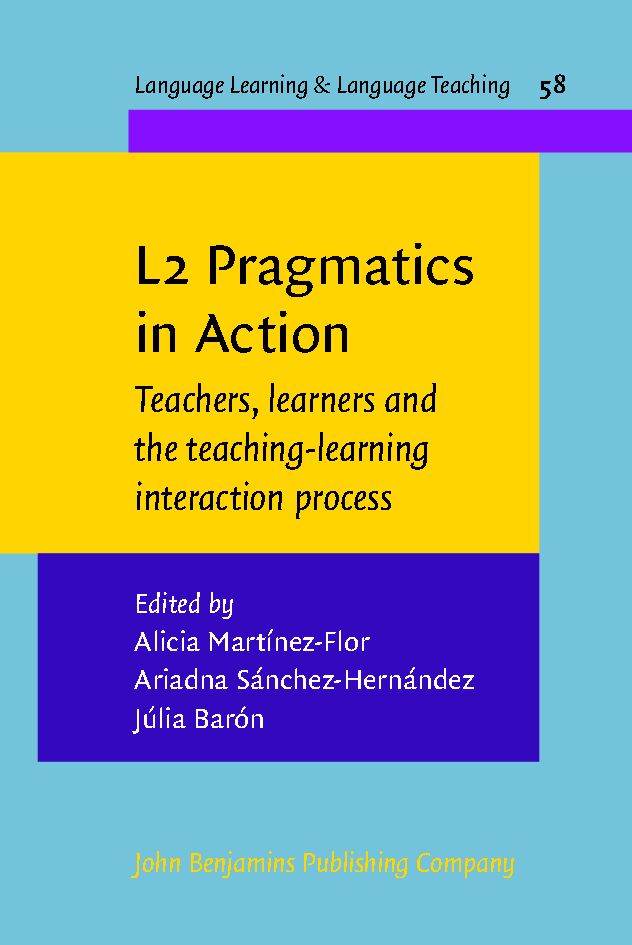
L2 pragmatics in action : teachers, learners and the teaching-learning interaction process
This is the first edited volume dedicated to both teachers and learners of second/foreign language (L2) pragmatics. It comprises a collection of studies that explore how teachers background and practices, and individual learners differences contribute to the teaching and learning of L2 pragmatics. Also included are chapters that present pedagogical approaches that bring teachers and learners together in action in the classroom setting. Written by an international team of experts, the volume examines the most relevant topics on instructional pragmatics in a variety of language contexts, including Brazil, China, Germany, Japan, Spain, the United States, and Vietnam. This global perspective represents a key contribution in the current increasingly multilingual and multicultural society. Taken together, the findings presented have diverse research and pedagogical implications, and provide new directions to explore L2 pragmatic competence. This innovative book will be a valuable resource for researchers and graduate students, as well as for language teachers and course developers.
eBook

Suggestions: An integrated taxonomy and its pedagogical application in L2 pragmatic instruction
This article presents a unified taxonomy of linguistic strategies and politeness markers for making suggestions in English, alongside guidelines for its integration into second/foreign language (L2) pragmatics instruction. In response to the lack of systematic frameworks for analyzing this speech act in recent decades, the development of such a typology is essential. Drawing on four existing classification systems, the taxonomy incorporates both the inherent features of the speech act and language-related factors, such as directness and mitigation, that influence its realization. The second part of the article proposes an instructional sequence for teaching suggestions in L2 contexts, designed to implement the unified taxonomy while incorporating five key instructional components: input presentation, awareness-raising, metapragmatic instruction, communicative practice, and feedback. This sequence aligns with current conceptualizations of L2 pragmatics, promotes learner agency, and underscores the teacher’s role in supporting learners as they negotiate their identity through pragmatic choices.
Journal Article
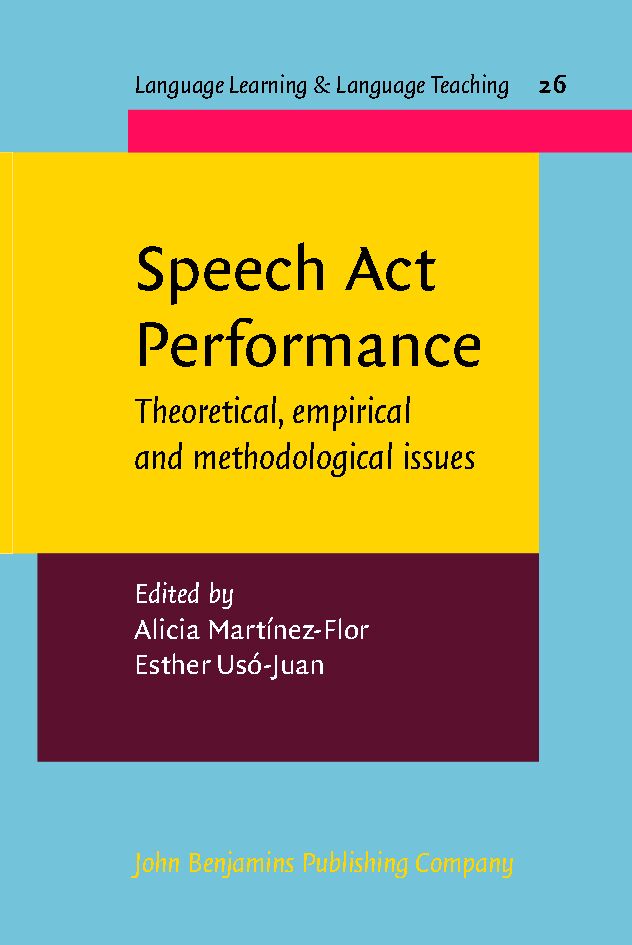
Speech act performance : theoretical, empirical and methodological issues
Suggestions are acts in which the speaker asks the hearer to perform an action that will potentially benefit the hearer (Rintell, 1979). Despite this fact, they have been regarded as face-threatening acts, since the speaker is in some way intruding into the hearer's world by performing an act that concerns what the latter should do (Brown & Levinson, 1987). For this reason, formulating pragmatically appropriate suggestions that do not result in impolite or rude behaviour may be especially difficult for second language learners whose contact with the target language is very limited. With that aim in mind, and based on previous studies on this speech act, this chapter proposes a pedagogical approach that ranges from awareness-raising to production activities.
eBook

The Interactive Effects of Pragmatic-Eliciting Tasks and Pragmatic Instruction
: the effects of data‐gathering methods on pragmatic data have been well documented, yet an inquiry into the interactive effects of assessment tasks with pragmatic instruction has received scant attention. This study investigated the interaction between two assessment tasks (e‐mail and phone) and two types of pragmatic instruction (explicit and implicit). Forty‐nine Spanish learners of English engaged in these two tasks as pre‐ and posttests. The explicit group received 12 hours of metapragmatic information on head acts and hedges in suggestions while the implicit group was the recipient of recast and input enhancement activities. The results showed that postin‐structional improvement of the explicit condition was significantly more than that of the implicit condition in the phone task, although improvements of these two conditions were on par in the e‐mail task. This task‐induced variability might have been caused by an interaction between the feature of the two types of knowledge (i.e., monitoring capability) and an access to the knowledge bases (i.e., the role of attention to appropriateness and accuracy) in the two tasks.
Journal Article


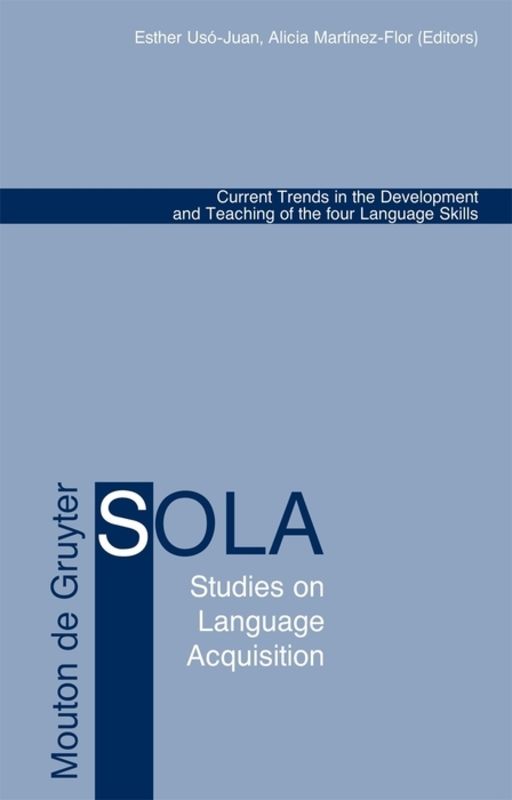
Current Trends in the Development and Teaching of the four Language Skills
Current Trends in the Development and Teaching of the four Language Skills builds connections from theory in the four language skills to instructional practices. It comprises twenty-one chapters that are grouped in five sections. The first section includes an introductory chapter which presents a communicative competence framework developed by the editors in order to highlight the key role the four skills play in language learning and teaching. The next four sections each represent a language skill: Section II is devoted to listening, Section III to speaking, Section IV to reading and Section V to writing. In order to provide an extensive treatment of each of the four skills, each section starts with a theoretical chapter which briefly illustrates advances in the understanding of how each skill is likely to be learned and taught, followed by four didactically oriented chapters authored by leading international specialists. These pedagogical chapters deal specifically with four key topics: 1) areas of research that influence the teaching of a particular skill; 2) an overview of strategies or techniques necessary for developing a particular skill; 3) an approach to the academic orientation of a particular skill, and 4) unique aspects of teaching each skill. Moreover, all chapters incorporate two common sections: pre-reading questions at the beginning of the chapter in order to stimulate readers' interest in its content, and a section entitled suggested activities at the end of the chapter in order to allow readers put the ideas and concepts presented into practice. The accessible style and practical focus of the volume make it an ideal tool for teachers, teacher trainers, and teacher trainees who are involved in teaching the four language skills in a second or foreign language context.
eBook