
Catalogue Search | MBRL


Are you sure you want to remove the book from the shelf?

{{itemTitle}}
177,660
result(s) for
"Display"
Sort by:


Surface Display Technology for Biosensor Applications: A Review
Surface display is a recombinant technology that expresses target proteins on cell membranes and can be applied to almost all types of biological entities from viruses to mammalian cells. This technique has been used for various biotechnical and biomedical applications such as drug screening, biocatalysts, library screening, quantitative assays, and biosensors. In this review, the use of surface display technology in biosensor applications is discussed. In detail, phage display, bacterial surface display of Gram-negative and Gram-positive bacteria, and eukaryotic yeast cell surface display systems are presented. The review describes the advantages of surface display systems for biosensor applications and summarizes the applications of surface displays to biosensors.
Journal Article


Phage display and other peptide display technologies
ABSTRACT
Phage display technology, which is based on the presentation of peptide sequences on the surface of bacteriophage virions, was developed over 30 years ago. Improvements in phage display systems have allowed us to employ this method in numerous fields of biotechnology, as diverse as immunological and biomedical applications, the formation of novel materials and many others. The importance of phage display platforms was recognized by awarding the Nobel Prize in 2018 ‘for the phage display of peptides and antibodies’. In contrast to many review articles concerning specific applications of phage display systems published in recent years, we present an overview of this technology, including a comparison of various display systems, their advantages and disadvantages, and examples of applications in various fields of science, medicine and the broad sense of biotechnology. Other peptide display technologies, which employ bacterial, yeast and mammalian cells, as well as eukaryotic viruses and cell-free systems, are also discussed. These powerful methods are still being developed and improved; thus, novel sophisticated tools based on phage display and other peptide display systems are constantly emerging, and new opportunities to solve various scientific, medical and technological problems can be expected to become available in the near future.
Journal Article
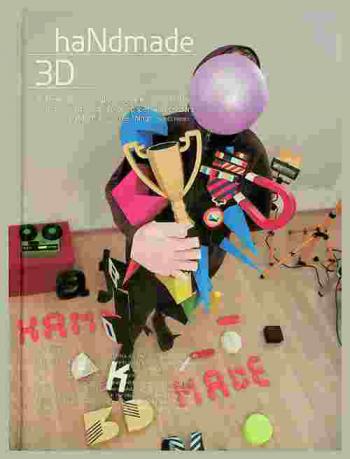
Handmade 3D : a time will come when people turn off their computers and start to cut paper with scissors, glue cardboard, making nice things
Profiles of projects by over 50 designers and artists. The three dimensional works are mostly created from paper but other materials, polystyrene, foam, fabric etc., are represented.
Book

Redesigning of Microbial Cell Surface and Its Application to Whole-Cell Biocatalysis and Biosensors
Microbial cell surface display technology can redesign cell surfaces with functional proteins and peptides to endow cells some unique features. Foreign peptides or proteins are transported out of cells and immobilized on cell surface by fusing with anchoring proteins, which is an effective solution to avoid substance transfer limitation, enzyme purification, and enzyme instability. As the most frequently used prokaryotic and eukaryotic protein surface display system, bacterial and yeast surface display systems have been widely applied in vaccine, biocatalysis, biosensor, bioadsorption, and polypeptide library screening. In this review of bacterial and yeast surface display systems, different cell surface display mechanisms and their applications in biocatalysis as well as biosensors are described with their strengths and shortcomings. In addition to single enzyme display systems, multi-enzyme co-display systems are presented here. Finally, future developments based on our and other previous reports are discussed.
Journal Article


Prey with hidden colour defences benefit from their similarity to aposematic signals: Survival value of hidden colour defences,Prey with hidden colour defences benefit from their similarity to aposematic signals
Some camouflaged animals hide colour signals and display them only transiently. These hidden colour signals are often conspicuous and are used as a secondary defence to warn or startle predators (deimatic displays) and/or to confuse them (flash displays). The hidden signals used in these displays frequently resemble typical aposematic signals, so it is possible that prey with hidden signals have evolved to employ colour patterns of a form that predators have previously learned to associate with unprofitability. Here, we tested this hypothesis by conducting two experiments that examined the effect of predator avoidance learning on the efficacy of deimatic and flash displays. We found that the survival benefits of both deimatic and flash displays were substantially higher against predators that had previously learned to associate the hidden colours with unprofitability than against naive predators. These findings help explain the phenological patterns we found in 1568 macro-lepidopteran species on three continents: species with hidden signals tend to occur later in the season than species without hidden signals.
Journal Article

Introduction to 3D game programming with DirectX 12
\"This updated bestseller provides an introduction to programming interactive computer graphics, with an emphasis on game development using DirectX 12. The book is divided into three main parts: basic mathematical tools, fundamental tasks in Direct3D, and techniques and special effects. It includes new Direct3D 12 features such as hardware tessellation and the compute shader, and covers advanced rendering techniques such as ambient occlusion, normal and displacement mapping, shadow rendering, particle systems, and character animation. Includes a companion DVD with code and figures.\"--Page 4 of cover.
Book

Physically based rendering : from theory to implementation
Physically Based Rendering, Second Edition describes both the mathematical theory behind a modern photorealistic rendering system as well as its practical implementation. A method known as \"literate programming\" combines human-readable documentation and source code into a single reference that is specifically designed to aid comprehension. The result is a stunning achievement in graphics education. Through the ideas and software in this book, you will learn to design and employ a full-featured rendering system for creating stunning imagery. This new edition greatly refines its best-selling predecessor by streamlining all obsolete code as well as adding sections on parallel rendering and system design; animating transformations; multispectral rendering; realistic lens systems; blue noise and adaptive sampling patterns and reconstruction; measured BRDFs; and instant global illumination, as well as subsurface and multiple-scattering integrators. These updates reflect the current state-of-the-art technology, and along with the lucid pairing of text and code, ensure the book's leading position as a reference text for those working with images, whether it is for film, video, photography, digital design, visualization, or gaming. The author team of Matt Pharr, Greg Humphreys, and Pat Hanrahan garnered a 2014 Academy Award for Scientific and Technical Achievement from the Academy of Motion Picture Arts and Sciences based on the knowlege shared in this book.The Academy called the book a \"widely adopted practical roadmap for most physically based shading and lighting systems used in film production.\"
The book that won its authors a 2014 Academy Award for Scientific and Technical Achievement from the Academy of Motion Picture Arts and SciencesNew sections on subsurface scattering, Metropolis light transport, precomputed light transport, multispectral rendering, and much moreIncludes a companion site complete with source code for the rendering system described in the book, with support for Windows, OS X, and Linux: visit www.pbrt.orgCode and text are tightly woven together through a unique indexing feature that lists each function, variable, and method on the page that they are first described
eBook