
Catalogue Search | MBRL


Are you sure you want to remove the book from the shelf?

{{itemTitle}}
876
result(s) for
"SUPLEMENTOS"
Sort by:

Celestina: Documento bibliográfico (suplemento número 46)
Suplemento bibliográfico. Bibliographical Supplement.
Journal Article

Supporting baby’s physical growth through improving the quality of food for pregnant
Objective: The quality of food consumed by pregnant women greatly affects the growth and development of the fetus in the womb until giving birth and breastfeeding the baby. A healthy and balanced diet, especially one rich in protein, is very much needed by pregnant women to help form the body tissues of the fetus and baby such as the heart, liver, brain, bones, muscles, skin, and others. This study aims to increase breast milk production and physical growth of infants through local foods rich in protein, namely Cerbung fish and Moringa leaves, as additional food in the form of noodles. Methodology: This research is experimental research, through pre and post-tests. Subjects of this research are 18 mothers pregnant for treatment groups and 20 mothers pregnant for control groups—the range aged 21 - 30 years. Data collection was done by giving food addition results that were best for the mother in the third trimester of pregnancy and continued after the mother gave birth and breastfed. Before providing additional food, the researcher developed a food addition product made from fish flour and flour leaf Moringa in the form of instant noodles, organoleptic test, and analysis of nutritional content. The research data were then analyzed using SPSS software through independent sample tests. Results: The research showed that combination of Moringa leaves and Cerbung fish in instant noodles could potentially enhance breast milk production and support the physical growth of babies. Discussion: Moringa leaves have been shown to significantly increase milk production and improve various growth parameters in babies. While specific data on Cerbung fish is not provided, its general nutritional benefits could complement the effects of Moringa leaves. Conclusions: Further research specifically on the combination of these two ingredients would be beneficial to confirm these effects. Objetivo: Este estudio busca aumentar la producción de leche materna y el crecimiento físico de los bebés mediante el consumo de alimentos locales ricos en proteínas, como el pez Cerbung y las hojas de Moringa, como alimento adicional en forma de fideos. Metodología: Esta investigación es experimental, con pruebas previas y posteriores. Los participantes fueron 18 madres embarazadas de los grupos de tratamiento y 20 madres embarazadas de los grupos de control, con edades comprendidas entre los 21 y los 30 años. La recopilación de datos se realizó mediante la presentación de los resultados de la adición de alimentos que resultaron más beneficiosos para la madre en el tercer trimestre del embarazo y que continuaron después del parto y la lactancia. Resultados: Se ha demostrado que las hojas de Moringa aumentan significativamente la producción de leche y mejoran diversos parámetros de crecimiento en los bebés. Si bien no se proporcionan datos específicos sobre el pez Cerbung, sus beneficios nutricionales generales podrían complementar los efectos de las hojas de Moringa. Conclusiones: Sería beneficioso realizar más investigaciones específicas sobre la combinación de estos dos ingredientes para confirmar estos efectos. Objectivo: Este estudo procura aumentar a produção de leite materno e o crescimento físico dos bebés através do consumo de alimentos locais ricos em proteínas, como o pedaço de Cerbung e as hojas de Moringa, como alimento adicional sob a forma de fideos. Metodologia: Esta investigação é experimental, com testes anteriores e posteriores. Os participantes foram 18 mães embaraçadas dos grupos de tratamento e 20 mães embaraçadas dos grupos de controlo, com idades compreendidas entre os 21 e os 30 anos. A recolha de dados foi realizada através da apresentação dos resultados da adição de alimentos que resultaram mais benéficos para a mãe no terceiro trimestre do embaraço e que continuaram após o parto e a lactação. Resultados: Foi demonstrado que as hojas de Moringa aumentaram significativamente a produção de leite e melhoraram diversos parâmetros de crescimento nos bebés. Se bem não forem fornecidos dados específicos sobre o pedaço de Cerbung, os seus benefícios nutricionais gerais poderão complementar os efeitos das hojas de Moringa. Conclusões: Seria benéfico realizar mais investigações específicas sobre a combinação destes ingredientes para confirmar estes efeitos.
Journal Article
Betaine as an Ergogenic Aid to Improve Muscle Fatigue in Physical Exercise: A Systematic Review of Randomized Clinical Trials
Objectives:This systematic review aims to investigate the influence of betaine supplementation on muscle fatigue during exercise.Methodology: To this end, the PRISMA guidelines were adopted and the study was registered with PROSPERO (CRD42023469111).Searches were conducted using specific keywords according to the PICOS strategy on March 12, 2024, in the PubMed, Cochrane Library, Web of Science, Embase and SCOPUS databases. Randomized clinical trials(RCTs)in adults of both sexes that used betaine as a supplement, compared to placebo, to improve muscle fatigue during physical exercise were included. Animal studies and studies with concomitant use of betaine and other supplements were excluded. Muscle fatigue was assessed using the one-repetition maximum test and blood lactate during leg press or squat and bench press exercises. The risk of bias of the included studies was assessed using the Cochrane RoB2 tool and the certainty of the evidence using GRADE. Results: Five RCTs were included, inwhich a total of 93 participants were evaluated; all were male, with 57 individuals allocated to the intervention group with a mean age of 19.18±2.67 years, and 58 individuals in the control group with a mean age of 19.66±2.44 years. Betaine promoted more repetitions until muscle fatigue in the leg press or squat (n = 3) and bench press (n = 2), with reductions in serum lactate in two of these studies. Conclusion: Betaine can be considered as a potential ergogenic resource for improving muscle fatigue, providing a greater number of repetitions in exercises and eliminating lactate in the blood.
Objetivos: Esta revisión sistemática investigóla influencia de la suplementación con betaína en la fatiga muscular durante el ejercicio. Metodología: Para ello se ocupólas directrices PRISMA y se registró el estudio en PROSPERO (CRD42023469111). Se realizaron búsquedas utilizando palabras clave específicas según la estrategia PICOS en el 12 de marzo de 2024 en las bases de datos PubMed, Cochrane Library, Web of Science, Embase y SCOPUS. Se incluyeron ensayos clínicos aleatorios(ECA)en adultos de ambos sexos que utilizaron betaína como suplemento, en comparación con placebo, para mejorar la fatiga muscular durante el ejercicio físico. Se excluyeron los estudios en animales y los estudios con uso concomitante de betaína y otros suplementos. La fatiga muscularse evaluó mediante la prueba de una repetición máxima y el lactato sanguíneo durante los ejercicios de leg-press,o sentadilla y press de banca. El riesgo de sesgo de los estudios incluidos se evaluó mediante la herramienta Cochrane RoB2 y la certeza de las pruebas mediante GRADE. Resultados: Se incluyeron cinco ECA, en los que se evaluó a un total de 93 participantes; todos eran varones, con 57 individuos asignados al grupo de intervención con una edad media de 19,18±2,67 años, y 58 individuos en el grupo de control con una edadmedia de 19,66±2,44 años. La betaína promovió más repeticiones hasta la fatiga muscular en el leg-presso sentadilla (n = 3) y en el press de banca (n = 2), con menores nivelsdel lactato sérico en dos estudios. Conclusiones: La betaína puede considerarse un potencial recurso ergogénico para mejorar la fatiga muscular, proporcionar un mayor número de repeticiones en los ejercicios y eliminar el lactato en sangre.
Journal Article

Food supplementation policy for pregnant women: analysis of coverage in Brazilian regions in the light of COVID-19
Objective: in the context of Brazil, a peripheral country, pregnant women are a vulnerable class. Proper nutrition and fetal health depend directly on maternal nutrition, which is often precarious. Thus, the food supplement, which has already changed the health scenario of malnutrition in children, is big important in the best Prenatal Care. The objective is to analyze the quality and supply of food supplementation for pregnant women in Brazil, before and during the COVID-19 pandemic. Methods: analysis of public domain data, from pregnant women registered in the E-manager primary care system, between 2019 and 2021. Results: the micronutrients offered in Brazil in the public policy of supplementation for pregnant women are iron and folic acid, since 2005 until the present date. Data analysis showed that the offer of those both in the pre-pandemic year and in the pandemic was inadequate, reaching less than 20% of pregnant women in the five regions of the country, with only one state in the northeast region, of the 27 national states, having an adequate supply to 100% of pregnant women. Conclusion: supplementation rich in several micronutrients, used preventively during pregnancy, reduces maternal and fetal diseases. However, in Brazil, the supplementation policy during pregnancy is poor in quality, offering only folic acid and iron for years, as well as inadequate distribution of these. This fact proved to be unrelated to the health crisis of the pandemic, as it occurred since the pre-pandemic and worse in numbers before than during it. Therefore, a set of “poor quality and low supply” was identified in the supplementation of pregnant women in Brazil, which contributes to maintaining greater maternal-fetal and child morbidity and mortality. Objetivo: No Brasil, um país periférico, as mulheres grávidas são uma classe vulnerável. A adequada nutrição e saúde fetal dependem diretamente da nutrição materna, que muitas vezes é precária. Assim o suplemento alimentar, que mudou o cenário da desnutrição de crianças, tem grande importância no melhor Cuidado Pré-Natal. Objetiva-se analisar a qualidade e oferta da suplementação alimentar de gestantes no Brasil, antes e durante a pandemia da COVID-19. Método: Análise de dados de domínio público de gestantes cadastras entre 2019 e 2021. Resultados: Os micronutrientes ofertados no Brasil na política pública de suplementação de gestantes são ferro e ácido fólico, desde 2005. A análise dos dados mostrou que a oferta daqueles tanto no ano pré-pandemia quanto na pandemia foi inadequada, alcançando menos de 20% das gestantes nas cinco regiões do país, tendo apenas um estado na região nordeste tido oferta adequada a 100% das gestantes. Conclusão: A suplementação rica em micronutrientes, usada preventivamente na gestação, reduz doenças maternas e fetais. Todavia no Brasil a política de suplementação na gravidez encontra-se pobre em qualidade, oferecendo há anos apenas ácido fólico e ferro, bem como apresentou distribuição caseira dessas. Tal fato resistiu não ter relação com a pandemia, pois ocorreu desde a pré pandemia e pior em números antes dela. Portanto, identificou-se na suplementação de gestantes no Brasil um conjunto de “má qualidade e baixa oferta”, possivelmente confiante com maior morbimortalidade materno-fetal e infantil.
Journal Article
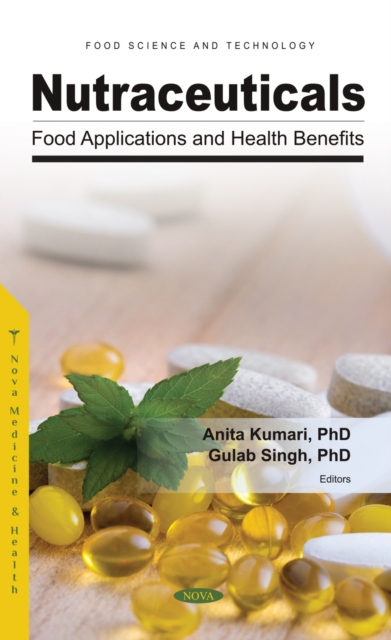
Nutraceuticals: Food Applications and Health Benefits
Nutraceutical and functional foods are in trend nowadays. Consumers are showing great interest in adapting nutraceutical/functional foods in their regular diet because they not only provide good nutrition but also have therapeutic properties. Various nutraceuticals have different mechanisms of action and are hence used as alternative pharmaceuticals for mitigating health problems. Research in the field of health-promoting foods has been escalating since the last decade. In recent years, a growing interest related to nutraceuticals has arisen among different vulnerable groups of the society because they act as an alternative to modern medicine. This book will provide the latest scientific information on different aspects of nutraceuticals and functional foods. From production to processing, and marketing of nutraceuticals, one must have knowledge of national regulations on nutraceuticals. The contents of this book have been formulated by considering the syllabus of UG and PG level in various central, state and other deemed and private universities and the book is a valuable resource for students, researchers, academicians, food technologists, food scientists, nutritionists, health professionals and for those who are involved in the agriculture, pharmaceutical and food processing sectors. Students and leading researchers can find information related to nutraceuticals, functional foods, strategies for formulation of functional foods, the role of nanotechnology in the food industry, extraction of nutraceuticals, role of probiotics, prebiotics, synbiotics for health benefits, bioactive proteins and peptides, role of nutraceuticals in disease management, role of omega 3 fatty acid and herbs in health and diseases as well as role of nutraceuticals in food packaging in a single book. The book will prove to be a valuable reference book for graduate as well as post-graduate students in the fields of Food Science and Nutrition, Clinical Nutrition and Dietetics, Applied Nutrition, Nutrition Biology, Food Science and Nutrition Food Technology/Food Engineering, Food Biotechnology, Food Microbiology, Post-Harvest Technology, Biochemical Engineering and Life Sciences. Tables and schematic figures have also been given in the book chapters for better understanding and to simplify the complex matter. References including textbooks, journals, and relevant websites are given. Teachers, students and researchers can have direct access to the references used. This book is a complete package for students, researchers and industry personnel working in this field.
eBook

Compliance iron supplement intake on maternal anemia and low birth weight in indonesia: meta-analysis
Background: According to the Indonesia Ministry of Health in 2023, only 20% of pregnant women adhared to iron supplement intake. Poor adherence to iron supplementation also leads to increased prevalence of maternal anaemia and low birth weight. Objective. This review to analyze the adherence or compliance to iron supplement intake among pregnant women. Methods. The study employed a systematic review and meta-analysis based on the PRISMA 2020 guidelines. During the article selection, the study applied inclusion criteria, such as original research articles conducted in Indonesia, using Indonesian or English language, and published between 2019 and 2024. Additionally, the articles must discuss the effect of adherence to iron supplement intake on the incidence of maternal anemia and low birth weight. They were systematically searched in the following databases: PubMed, Science Direct, Springer, Google Scholar, and Proquest. To facilitate the systematic review analysis, the Odds ratio (OR) was analyzed using Review Manager 5.4. Results. A total of 16 studies (10 articles on maternal anemia and 6 articles on low birth weight) were included in this meta-analysis. The results revealed that maternal anemia had a significant relationship with adherence to iron supplement intake (OR: 0.10, 95%CI 0.06 - 0.14; p-value <0.001) and also low birth weight (OR: 0.42, 95%CI 0.21 - 0.86; p-value: 0.02). Conclusion. Based on this finding, poor adherence to iron supplement intake significantly increase risk of maternal anemia and low birth weight. Antecedentes: Según el Ministerio de Salud de Indonesia, solo el 20% de las embarazadas se adhirieron a la suplementación con hierro en 2023. La mala adherencia a la suplementación con hierro conlleva un aumento de la prevalencia de anemia materna y bajo peso al nacer. Objetivo: Esta revisión busca examinar la adherencia a la suplementación con hierro en embarazadas. Métodos: Este estudio utilizó la observación sistemática y un metanálisis basado en las directrices PRISMA de 2020. Los criterios de inclusión para la selección de artículos fueron artículos de investigación realizados en Indonesia, escritos en indonesio o inglés, y publicados entre 2019 y 2024. Además, los artículos debían abordar la relación entre la adherencia a la suplementación con hierro y la incidencia de anemia materna y bajo peso al nacer. Se realizó una búsqueda sistemática en las siguientes bases de datos: PubMed, Science Direct, Springer, Google Scholar y Proquest. En un análisis descriptivo sistemático, se analizaron las razones de probabilidades (OR) con Review Manager 5.4. Resultados: Se incluyeron en el metanálisis un total de 16 estudios (10 artículos sobre anemia materna y 6 artículos sobre bajo peso al nacer). Los resultados mostraron que la anemia materna se asoció significativamente con la suplementación con hierro (OR: 0,10; IC95%: 0,06-0,14; valor p <0,001) y el bajo peso al nacer (OR: 0,42; IC95%: 0,21-0,86; valor p: 0,02). Conclusión: Según estos hallazgos, la suplementación deficiente con hierro aumenta significativamente el riesgo de anemia materna y bajo peso al nacer.
Journal Article

Long-term demographic and genetic effects of releasing captive-born individuals into the wild
Because of continued habitat destruction and species extirpations, the need to use captive breeding for conservation purposes has been increasing steadily. However, the long-term demographic and genetic effects associated with releasing captive-born individuals with varied life histories into the wild remain largely unknown. To address this question, we developed forward-time, agent-based models for 4 species with long-running captive-breeding and release programs: coho salmon (Oncorhynchus kisutch), golden lion tamarin (Leontopithecus rosalia), western toad (Anaxyrus boreas), and Whooping Crane (Grus americana). We measured the effects of supplementation by comparing population size and neutral genetic diversity in supplemented populations to the same characteristics in unaltered populations 100 years after supplementation ended. Releasing even slightly less fit captive-born individuals to supplement wild populations typically resulted in reductions in population sizes and genetic diversity over the long term when the fitness reductions were heritable (i.e., due to genetic adaptation to captivity) and populations continued to be regulated by density-dependent mechanisms over time. Negative effects for species with longer life spans and lower rates of population replacement were smaller than for species with shorter life spans and higher rates of population replacement. Programs that released captive-born individuals over fewer years or that avoided breeding individuals with captive ancestry had smaller reductions in population size and genetic diversity over the long term. Relying on selection in the wild to remove individuals with reduced fitness mitigated some negative demographic effects, but at a substantial cost to neutral genetic diversity. Our results suggest that conservation-focused captive-breeding programs should take measures to prevent even small amounts of genetic adaptation to captivity, quantitatively determine the minimum number of captive-born individuals to release each year, and fully account for the interactions among genetic adaptation to captivity, population regulation, and life-history variation.
Debido a la continua destrucción de hábitats y a la extracción de especies, la necesidad de utilizar la reproducción en cautiverio con motivos de conservación ha aumentado constantemente. Sin embargo, los efectos genéticos y demográficos a largo plazo asociados con la liberación de individuos nacidos en cautiverio con historias de vida variadas permanecen en gran parte desconocidos. Para responder a la pregunta anterior desarrollamos modelos de tiempo futuro basados en agentes para cuatro especies con programas de reproducción en cautiverio y liberación con una larga duración: el salmón plateado (Oncorhynchus kisutch), la marmoseta dorada (Leontopithecus rosalia), el sapo occidental (Anaxyrus boreas), y la grulla trompetera (Grus americana). Medimos los efectos de la suplementación al comparar el tamaño poblacional y la diversidad genética neutra en las poblaciones suplementadas con las mismas características en poblaciones sin alteraciones 100 años después de la suplementación. La liberación de individuos criados en cautiverio con una mínima aptitud física como suplemento para las poblaciones silvestres resultó típicamente en la reducción del tamaño poblacional y de la diversidad genética a largo plazo cuando la reducción en la aptitud fue heredable (es decir, debido a la adaptación genética al cautiverio) y las poblaciones siguieron reguladas a lo largo del tiempo por los mecanismos dependientes de la densidad. Los efectos negativos para las especies con ciclos de vida mayores y tasas más bajas de reemplazo poblacional fueron menores que para aquellas especies con ciclos de vida más cortos y tasas más altas de reemplazo poblacional. Los programas que liberaron individuos criados en cautiverio durante menos años o que evitaron reproducir individuos con ascendencia en cautiverio tuvieron reducciones menores en el tamaño poblacional y en la diversidad genética a largo plazo. La dependencia de la selección silvestre para extirpar a los individuos con aptitud física reducida mitigó algunos efectos demográficos negativos, pero a un precio sustancial para la diversidad genética neutra. Nuestros resultados sugieren que los programas de reproducción en cautiverio enfocados en la conservación deberían tomar medidas para prevenir las más mínimas cantidades de adaptación genética al cautiverio, determinar cuantitativamente el número mínimo de individuos nacidos en cautiverio para liberar cada año, y compensar totalmente las interacciones entre la adaptación genética al cautiverio, la regulación poblacional, y la variación en historias de vida.
由于持续的栖息地破坏和物种灭绝, 出于物种保护目的进行圈养繁殖的需求一直在稳步增加。然而,将有 着不同生活史的圈养繁殖个体放归到野外所带来的长期的种群和遗传效应尚不得而知。为解决:这个何题,我们 对银鲑鱼 (Oncorbyncbus kisutch), 金狮狨 (Leontopithecus rosalia), 西部蟾蜍 (Anaxyrus boreas) 和美洲鹤 (Grus americana) 这四个有长期圏养繁殖和放归项目的物种, 设计了基于主体、具体前瞻性的模型。我们通过 比较实施种群补充ー百年后的补充种群与初始种群的种群大小和中性遗传多祥性,来评价种群补充的效果。放 归适合度稍低的圏养繁殖个体来补充野生种群,当适合度的降彳氏可以遗传由于对圈养条件的遗传适应) 时, 通常会导致种群大小和遗传多样性长期的下降,且随着时间推移,种群持续受到密度依赖机制的调控。寿命较 长、种群更替率较低的物种受到的负面影响小于寿命短、种群更替快的物种。郷些放归在较短年限中圈养繁 殖的个体,或避免有圈养血统的个体的放归项目,从长期看来,种群大小和遗传多祥性下降得较少。依靠野外的 选择来除去适合度降低的个体,可以减轻一些负面的种群效应,イ旦同时会造成中性遗传多祥性的巨大损失。我 们的结果表明,以种群保护为目标的圏养繁殖项目应采取措施来避免任何对圏养条件的遗传适应,确定每年释 放的圈养繁殖个体的最小数量,并充分考虑对圈养条件的遗传适应.
Journal Article
Use of dietary supplements: patterns, prevalence, and determinants among physically active adults in Albania
Introduction: Dietary supplements (DSs) are products intended to address nutritional deficiencies and support overall health. Although DS consumption has risen globally, evidence on their use, patterns, and determinants among physically active adults in Albania remains very limited. Objectives: This study explored DS use among adults engaged in physical activity in Albania focusing on use patterns, motivations, and factors influencing intake. Methods: A cross-sectional study was conducted between March and September 2025. An anonymous questionnaire was distributed among 570 individuals engaged in physical activity in Albania. Results: Overall, 52.3% of participants reported using DSs. Proteins (58.1%), vitamins and minerals (46.0%) and creatine (27.5%) were the most used supplements. The main reasons for supplement use were energy increase (44.9%), muscle gain (34.2%), and performance improvement (34.2%), all significantly associated with supplement user status (p < 0.001; q = 0.002). Supplement type was significantly related to motivations for use (all p < 0.001; q = 0.014). Weekly training hours and receiving advice from a coach were the strongest predictors of DS use in multivariable analyses (OR = 28.90 and OR = 16.62, both p < 0.001). Conclusions: DS use is common among physically active adults in Albania and is primarily influenced by training load and coach advice. Supplementation practices reflected performance and muscle-related motivations, while non-use was driven by perceptions of adequate diet and uncertainty regarding supplement efficacy. These findings provide baseline evidence to inform future research and promote safe and informed supplement use in this population. Introducción: Los suplementos dietéticos (SD) son productos destinados a abordar deficiencias nutricionales y apoyar la salud general. Aunque el consumo de SD ha aumentado globalmente, la evidencia sobre su uso, patrones y determinantes entre adultos físicamente activos en Albania sigue siendo muy limitada. Objetivos: Este estudio exploró el uso de SD entre adultos que practican actividad física en Albania, centrándose en los patrones de consumo, las motivaciones y los factores que influyen en su ingesta. Métodos: Se realizó un estudio transversal entre marzo y septiembre de 2025. Se distribuyó un cuestionario anónimo a 570 individuos físicamente activos en Albania. Resultados: En total, el 52,3% de los participantes informó utilizar SD. Las proteínas (58,1%), las vitaminas y minerales (46,0%) y la creatina (27,5%) fueron los suplementos más consumidos. Las principales razones para el uso de suplementos fueron el aumento de energía (44,9%), la ganancia muscular (34,2%) y la mejora del rendimiento (34,2%), todas significativamente asociadas con el estado de usuario de suplementos (p < 0,001; q = 0,002). El tipo de suplemento se relacionó significativamente con las motivaciones de uso (todos p < 0,001; q = 0,014). Las horas semanales de entrenamiento y recibir asesoramiento de un entrenador fueron los predictores más fuertes del uso de SD en los análisis multivariados (OR = 28,90 y OR = 16,62; ambos p < 0,001). Conclusión: El uso de SD es común entre los adultos físicamente activos en Albania y está influenciado principalmente por la carga de entrenamiento y el asesoramiento del entrenador. Las prácticas de suplementación reflejan motivaciones relacionadas con el rendimiento y la ganancia muscular, mientras que el no uso se debe a la percepción de una dieta adecuada y a la incertidumbre sobre la eficacia de los suplementos. Estos hallazgos proporcionan evidencia basal para orientar futuras investigaciones y promover un uso seguro e informado de suplementos en esta población. Introdução: Os suplementos alimentares (SD) são produtos destinados a abordar as deficiências nutricionais e a apoiar a saúde em geral. Embora o consumo de SD tenha aumentado globalmente, a evidência sobre a sua utilização, padrões e determinantes entre adultos fisicamente activos na Albânia continua a ser muito limitada. Objectivos: Este estúdio explorou a utilização de SD entre adultos que praticam actividade física na Albânia, centrando-se nos padrões de consumo, nas motivações e nos factores que influenciam a sua ingestão. Métodos: Foi realizado um estudo transversal entre março e setembro de 2025. Um questionário anónimo foi distribuído a 570 indivíduos fisicamente ativos na Albânia. Resultados: No total, 52,3% dos participantes referiu utilizar SD. As proteínas (58,1%), as vitaminas e minerais (46,0%) e a creatina (27,5%) são os suplementos mais consumidos. As principais razões para o uso de suplementos foram o aumento de energia (44,9%), o ganho muscular (34,2%) e a melhoria do rendimento (34,2%), todos significativamente associados ao estado de uso de suplementos (p < 0,001; q = 0,002). O tipo de suplemento relacionou-se significativamente com as motivações de utilização (todos p < 0,001; q = 0,014). As horas semanais de treino e receber avaliação de um treinador foram os preditores mais fortes do uso de SD na análise multivariada (OR = 28,90 e OR = 16,62; ambos p < 0,001). Conclusão: O uso de SD é comum entre os adultos fisicamente ativos na Albânia e é influenciado principalmente pela carga de treino e pela ocupação do treinador. As práticas de suplementação refletem motivações relacionadas com o rendimento e o ganho muscular, enquanto a não utilização se deve à perceção de uma dieta adequada e à incerteza sobre a eficácia dos suplementos. Estes hallazgos fornecem evidências básicas para orientar futuras investigações e promover um uso seguro e informado de suplementos nesta população.
Journal Article

Milk quality of dual-purpose cows supplemented with biological fish silage (Pterygoplichthys sp.) as a protein source
Background: Devilfish (Pterygoplichthys sp.) is a pest of high impact in aquaculture production systems. Through a biological fermentation process, it could be used as a source of protein for dairy cows. However, milk palatability and smell could be limiting factors. Objective: to evaluate the quality of milk from cows supplemented with biological fish silage (Pterygoplichthys sp.) as a protein source. Methods: The treatments (T) evaluated were T1, 0% biological fish silage; T2, 10% biological fish silage; and T3, 20% biological fish silage. Twelve randomly selected cows were used in a Latin square experimental design, in which three treatments were tested with all of the cows during three time periods. Each period lasted 20 days (15-day adaptation period and 5-day experimental phase). Milk was analyzed for physicochemical, microbiological, sanitary condition and sensory characteristics. Analyses of variance were performed for all the response variables. Results: No significant differences for physicochemical variables were found among the treatments studied. Differences were observed in microbiological and sanitary variables among treatments, but values were in the range for high quality milk standards (˂100,000 CFU mL-1 aerobic mesophilic bacteria, and ˂400,000 somatic cells mL-1). In the sensory analyses, panelists did not detect strange odors nor fishy taste or odor in the milk of any of the treatments. Conclusion: Biological fish silage can be included up to 20% as a protein source in supplements for lactating cows.
Journal Article
Suitability of Amphibians and Reptiles for Translocation
Translocations are important tools in the field of conservation. Despite increased use over the last few decades, the appropriateness of translocations for amphibians and reptiles has been debated widely over the past 20 years. To provide a comprehensive evaluation of the suitability of amphibians and reptiles for translocation, we reviewed the results of amphibian and reptile translocation projects published between 1991 and 2006. The success rate of amphibian and reptile translocations reported over this period was twice that reported in an earlier review in 1991. Success and failure rates were independent of the taxonomic class (Amphibia or Reptilia) released. Reptile translocations driven by human-wildlife conflict mitigation had a higher failure rate than those motivated by conservation, and more recent projects of reptile translocations had unknown outcomes. The outcomes of amphibian translocations were significantly related to the number of animals released, with projects releasing over 1000 individuals being most successful. The most common reported causes of translocation failure were homing and migration of introduced individuals out of release sites and poor habitat. The increased success of amphibian and reptile translocations reviewed in this study compared with the 1991 review is encouraging for future conservation projects. Nevertheless, more preparation, monitoring, reporting of results, and experimental testing of techniques and reintroduction questions need to occur to improve translocations of amphibians and reptiles as a whole.
Journal Article