
Catalogue Search | MBRL


Are you sure you want to remove the book from the shelf?

{{itemTitle}}
1,498
result(s) for
"Three-dimensional display systems."
Sort by:


Physically Based Rendering
Physically Based Rendering, Second Edition, describes both the mathematical theory behind a modern photorealistic rendering system as well as its practical implementation.A method known as literate programming combines human-readable documentation and source code into a single reference that is specifically designed to aid comprehension.
eBook
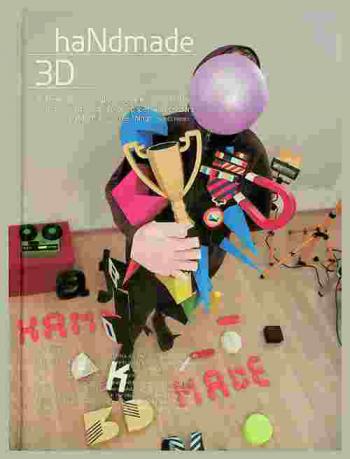
Handmade 3D : a time will come when people turn off their computers and start to cut paper with scissors, glue cardboard, making nice things
Profiles of projects by over 50 designers and artists. The three dimensional works are mostly created from paper but other materials, polystyrene, foam, fabric etc., are represented.
Book

Augmented reality : an emerging technologies guide to AR
With the explosive growth in mobile phone usage and rapid rise in search engine technologies over the last decade, augmented reality (AR) is poised to be one of this decade's most disruptive technologies, as the information that is constantly flowing around us is brought into view, in real-time, through augmented reality.
eBook

Introduction to 3D game programming with DirectX 12
\"This updated bestseller provides an introduction to programming interactive computer graphics, with an emphasis on game development using DirectX 12. The book is divided into three main parts: basic mathematical tools, fundamental tasks in Direct3D, and techniques and special effects. It includes new Direct3D 12 features such as hardware tessellation and the compute shader, and covers advanced rendering techniques such as ambient occlusion, normal and displacement mapping, shadow rendering, particle systems, and character animation. Includes a companion DVD with code and figures.\"--Page 4 of cover.
Book

X3d
In the early days of the Web a need was recognized for a language to display 3D objects through a browser. An HTML-like language, VRML, was proposed in 1994 and became the standard for describing interactive 3D objects and worlds on the Web. 3D Web courses were started, several best-selling books were published, and VRML continues to be used today. However VRML, because it was based on HTML, is a stodgy language that is not easy to incorporate with other applications and has been difficult to add features to. Meanwhile, applications for interactive 3D graphics have been exploding in areas such as medicine, science, industry, and entertainment. There is a strong need for a set of modern Web-based technologies, applied within a standard extensible framework, to enable a new generation of modeling simulation applications to emerge, develop, and interoperate. X3D is the next generation open standard for 3D on the web. It is the result of several years of development by the Web 3D Consortium's X3D Task Group. Instead of a large monolithic specification (like VRML), which requires full adoption for compliance, X3D is a component-based architecture that can support applications ranging from a simple non-interactive animation to the latest streaming or rendering applications. X3D replaces VRML, but also provides compatibility with existing VRML content and browsers. Don Brutzman organized the first symposium on VRML and is playing a similar role with X3D; he is a founding member of the consortium. Len Daly is a professional member of the consortium and both Len and Don have been involved with the development of the standard from the start. * The first book on the new way to present interactive 3D content over the Web, written by two of the designers of the standard* Plentiful illustrations and screen shots in the full color text* Companion website with extensive content, including the X3D specification, sample code and applications, content creation tools, and demos of compatible Web browsers
eBook


Blender Lighting & Compositing for Beginners
Unlock the secrets of stunning 3D visuals with our Blender Lighting & Compositing course, designed for beginners to transform their scenes with professional lighting and effects Key Features: Learn Blender's lighting tools. Explore Eevee and Cycles renderersCraft night scenes with emission. course Description: The course begins with an essential overview, preparing you to dive into the world of Blender with a focus on lighting and compositing fundamentals. It progresses to cover lighting basics, where you'll learn to manipulate area, point, spot, and sunlight sources, and understand their properties for creating mood and atmosphere. The course focuses on Blender's Eevee renderer to teach ambient occlusion, bloom effects, and real-time rendering options, enhancing the visual fidelity of your projects. Advanced lessons explore techniques for reducing render times, Exploreing HDRI skybox lighting, and achieving stylistic effects with cell shading. The course wraps up with practical applications in night scene lighting, professional 3-point setups, interior and studio lighting configurations, and the intricacies of 3D environment presentation. By the end, you'll be equipped to add depth, realism, and emotion to your 3D scenes through proficient lighting and compositing. What you will learn: Apply HDRI skyboxes for environmental lighting. Utilize Eevee renderer for ambient and bloom effects. Accelerate Blender render times efficiently. Implement cell shading with Freestyle. Light night scenes and create volumetric fogSet up professional 3-point lighting. Who this course is for: This course is ideal for beginners and hobbyists eager to delve into 3D art, with a focus on lighting and compositing. No prior knowledge of Blender is required, making this course perfect for those new to 3D modeling and looking to enhance their visual storytelling skills.
Streaming Video


Blender 4 - Geometry Nodes for Beginners
Dive into the transformative world of 3D modeling with this course. It is your gateway to mastering intricate designs with Blender 4's groundbreaking geometry nodes feature. Key Features: Beginner-friendly, comprehensive lessons spanning 4 hours. Project-based learning with a focus on practical application. Step-by-step instructions for easy learning. . course Description: Embark on a transformative journey into the world of 3D design with our comprehensive Blender 4 Geometry Nodes course. Designed for beginners, this course covers everything from setting up your Blender project to mastering the intricacies of Geometry Nodes for creating stunning 3D models. You'll start with the basics, learning how to manipulate grid meshes and transform them into complex staircase designs. As you progress, the course introduces you to advanced techniques for railing construction, pole support creation, and optimizing your models for efficiency and precision. This hands-on approach is complemented by lessons on mesh manipulation, dynamic staircase shaping, and advanced node group creation, ensuring a comprehensive understanding of 3D modeling techniques. Whether your interest lies in game art, architectural visualization, or digital artistry, this course equips you with the skills to bring your imaginative concepts to life. By understanding the importance of each concept, you'll be able to apply these skills across various projects, enhancing your portfolio and opening up new career opportunities. What you will learn: Navigate and utilize Blender 4's interface effectively. Understand and apply geometry node basics for 3D modeling. Design and manipulate grid meshes with curve length density. Transform 2D planes into 3D staircase models seamlessly. Create scalable controls and ensure uniformity in stair steps. Construct complex geometry node groups for detailed modeling. Who this course is for: This course welcomes everyone from beginners with no prior experience in Blender or 3D modeling to those looking to enhance their skills. It is ideal for beginners, aspiring artists, architects, digital creators, game developers, and educators eager to master 3D modeling with Blender 4's geometry nodes.
Streaming Video