
Catalogue Search | MBRL


Are you sure you want to remove the book from the shelf?

{{itemTitle}}
55
result(s) for
"TZE-YUE G. HU"
Sort by:

Frames of Anime
Japanese anime has long fascinated the world, and its mythical heroes and dazzling colors increasingly influence popular culture genres in the West. Tze-yue G. Hu analyzes the “language-medium” of this remarkable expressive platform and its many socio-cultural dimensions from a distinctly Asian frame of reference, tracing its layers of concentric radiation from Japan throughout Asia. Her work, rooted in archival investigations, interviews with animators and producers in Japan as well as other Asian animation studios, and interdisciplinary research in linguistics and performance theory, shows how dialectical aspects of anime are linked to Japan’s unique experience of modernity and its cultural associations in Asia, including its reliance on low-wage outsourcing. Her study also provides English readers with insights on numerous Japanese secondary sources, as well as a number of original illustrations offered by animators and producers she interviewed.
eBook

Japanese Animation
Japanese Animation: East Asian Perspectives makes
available for the first time to English readership a selection of
viewpoints from media practitioners, designers, educators, and
scholars working in the East Asian Pacific. This collection not
only engages a multidisciplinary approach in understanding the
subject of Japanese animation but also shows ways to research,
teach, and more fully explore this multidimensional world.
Presented in six sections, the translated essays cross-reference
each other. The collection adopts a wide range of critical,
historical, practical, and experimental approaches. This variety
provides a creative and fascinating edge for both specialist and
nonspecialist readers. Contributors' works share a common
relevance, interest, and involvement despite their regional
considerations and the different modes of analysis demonstrated.
They form a composite of teaching and research ideas on Japanese
animation.
eBook
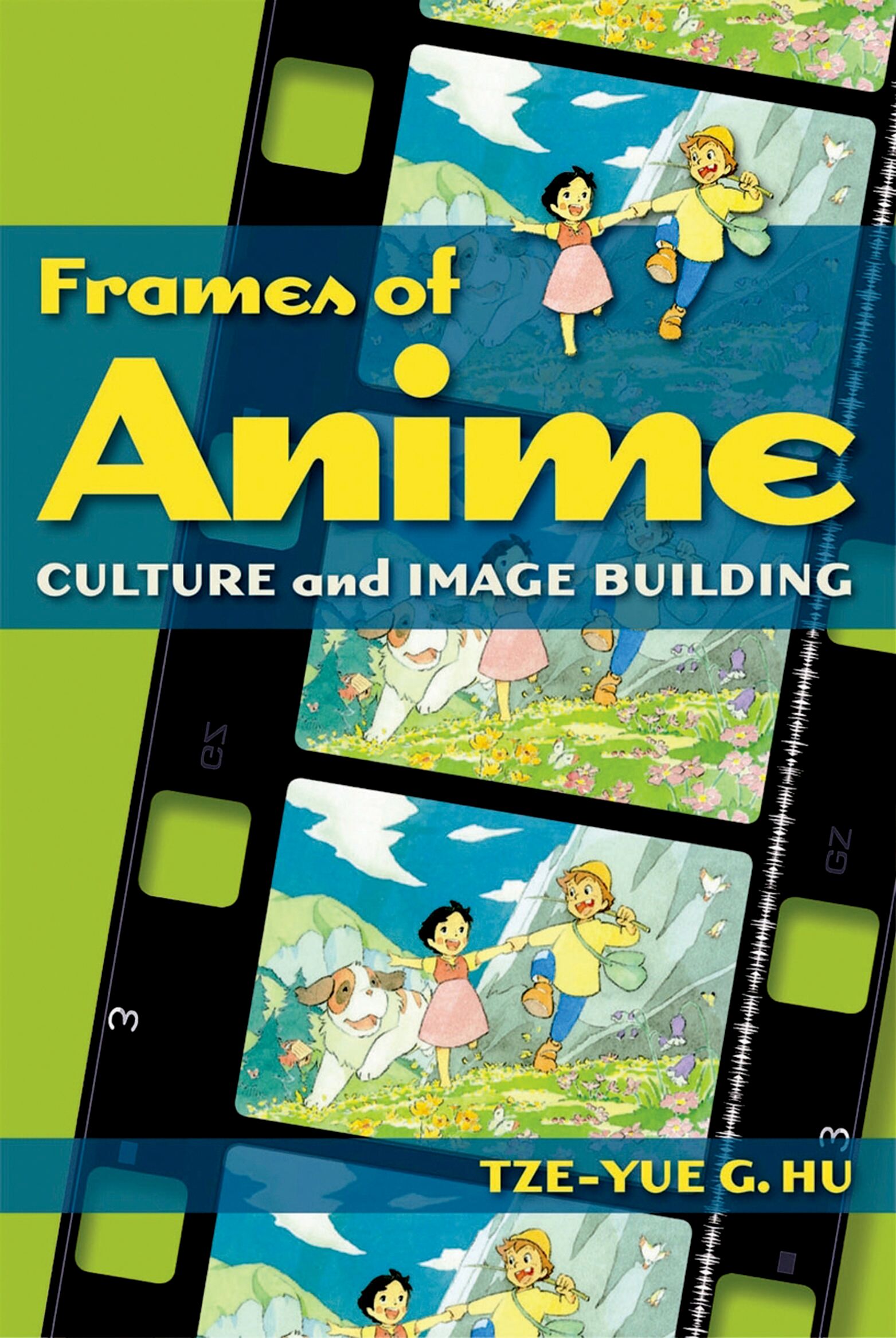
Frames of Anime
Japanese anime has long fascinated the world, and its mythical heroes and dazzling colors increasingly influence popular culture genres in the West. Tze-yue G. Hu analyzes the “language-medium” of this remarkable expressive platform and its many socio-cultural dimensions from a distinctly Asian frame of reference, tracing its layers of concentric radiation from Japan throughout Asia. Her work, rooted in archival investigations, interviews with animators and producers in Japan as well as other Asian animation studios, and interdisciplinary research in linguistics and performance theory, shows how dialectical aspects of anime are linked to Japan’s unique experience of modernity and its cultural associations in Asia, including its reliance on low-wage outsourcing. Her study also provides English readers with insights on numerous Japanese secondary sources, as well as a number of original illustrations offered by animators and producers she interviewed.
eBook

Animating for “Whom” in the Aftermath of a World War
In this chapter I will focus on the development of animation in postwar Japan, with emphasis on the period of the Allied Forces Occupation from 1945 to 1952. Hirano Kyōko’s (1992) groundbreaking work about the state of the Japanese cinema during that period should have been the most direct reference for this research. However, like other similar publications, it does not cover the animating medium, giving the overall impression that Japan had stopped producing animation after the end of the Second World War. Among the notable publications in English that have appeared so far and have given due emphasis to
Book Chapter
Reflections on the Wan Brothers’ Letter to Japan
Whether in peace or war, the human condition continually adjusts, adapts, and reacts to new circumstances and contexts. In times of war, the situation tends to present a darker veil on existence, all the more so since the main call of the day is physical survival. In recent years, scholars researching contemporary and historical instances of collaboration between cultures, warring regimes, economic blocs, and the like have highlighted the important role of the individual, his or her interests and experiences in advancing a certain mode of action—a choice, a decision, and the underlying complexity in which a collaborative position
Book Chapter
Frameworks of Teaching and Researching Japanese Animation
Over the past quarter century, anime, a popular form of Japanese animation (comprising manga and video game characteristics), has engendered tremendous amount of interest both in the academic and nonacademic sectors. This book, however, is not about anime per se. It seeks to present a well-rounded study of Japanese animation as a whole consisting of a collection of essays written by scholars and practitioners originating and residing in Japan and the East Asian region.
The beginning of this project and its theme subject, “Teaching and Researching Japanese Animation: Some East Asian Perspectives,” dates back to a conference panel session that
Book Chapter
Origins of the Japanese Art of Animating
Animation is a visual language and an act of communicating. Technically defined, it is a movement-based medium in which each image is captured through the camera in order to create a series of alleged movements. The image may be hand-drawn or computer-generated; the material-base may be a cel sheet (transparent celluloid), a glass pane or a platform of beach-sand. Other forms of traditional hand-manipulated images include the use of wood puppets, clay figures, and cut-out paper puppets. To animate is essentially to communicate, to tell a story for oneself or others or for both, via a chain of manipulated and
Book Chapter
Continuity of Art Forms and Their Visualness
Every country has its own repository of art forms, but whether it takes pride and interest in preserving them, re-understanding the contexts of their production, or even has the means to constantly exhibit them worldwide is another matter. In Afghanistan and places that are situated on the western portions of the Silk Road, we hear of stories such as the one describing how colossal and cliff-sized sculptures of Buddha were destroyed and damaged due to warfare and religious reasons. In Japan, so far, despite the heated arguments about “datsu –A–,” many of the imported art forms from Asia, particularly those
Book Chapter
Miyazaki and Takahata Anime Cinema
This chapter continues to trace the postwar development of Japanese animation from the 1970s onward. In particular, the rise of master animator Miyazaki Hayao and his colleague, animation director Takahata Isao, will be discussed in detail. In examining the eminence of Japan’s animation industry, the close working relationship of Miyazaki and Takahata in the past cannot be overlooked. It is important to examine the common elements found in their works. They founded Studio Ghibli in 1985, which almost equaled the status of Toei Dōga. The establishment of such a Toei-like animation studio was aimed primarily to produce animated feature films.
Book Chapter